









Interviews & tips
Tips and tricks
Always keep a list of destinations and seasons in your head. You never know where a truly knockout deal will find you, and you will have to make a decision: do I fly or not? At that point there is no time to consult your partner or study the calendar. (How do you consult your boss? Hmm… I don't know; it is best not to have a boss.)
Keep a shortlist of places you would like to visit, and when an opportunity comes up, buy straight away. I bought super-cheap flights to Shanghai and New Zealand; they were on my shortlist. Remember that summer in the tropics is unbearable for a European, while winter is wonderful. On the equator it is always the same.

Car hire, sleep and safe food
- Wherever it is allowed, always hire a car. You will save time and money. Do it at the airport, and book in advance. Airports are usually a long way from the cities, especially those served by low-cost airlines. And airports are where you find the most cunning taxi drivers, so that is where it is easiest to overpay. In a few countries tourists cannot hire a car, or it does not pay. You cannot hire a car in India. In Thailand, on the other hand, it is not worth it.
- Inspect the hire car very carefully and photograph any damage. If you scratch it, you will pay a fortune. I once paid several hundred (yes, several hundred!) euros for a small scratch on the bumper. I will not name the hire company, because I later had good experiences with it. To this day I consider it a scandal, and I am convinced that hire companies make their money not on renting cars but on charging for tiny scratches.
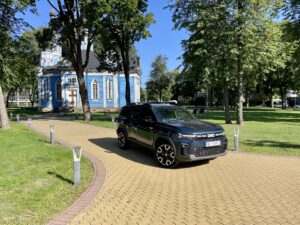
- Book the smallest car you can. These days a small car is not really small. Recently I hired a Skoda Citigo. There are hardly any smaller cars. And this Skoda took two adults and a child, plus two large suitcases (in the boot!). We had to send the parcel shelf flying into orbit, but never mind. It was a genuinely comfortable drive. Hire companies have few of the smallest cars, so there is a good chance you will get a free upgrade to the next class up.

Rent-a-car, the Balkans A small car in the Balkans
- Take an eye mask. I am particularly sensitive to light: the dawn wakes me up. If you are flying long-haul and crossing time zones, an eye mask will give you darkness. You will sleep better and gain minutes, maybe even hours, of extra rest.
- Be cheerful. A sunny disposition helps everywhere. If you look like a thug and behave like a thug, you are unlikely to win anyone over. Goodwill helps on the road: you will see more and experience things more fully. I remember how we walked into local people's huts on Zanzibar with smiles on our faces. Smiles and trust opened doors for us. Just as when we accepted an invitation to the home of a retired teacher on Bali. Thanks to that visit, we tasted home cooking and were able to join his family in prayer in their garden shrine.
- Do not eat in smart restaurants: it is much easier to get food poisoning in a nice air-conditioned restaurant with white tablecloths than from street food. I am talking about exotic countries, of course. Eat food that has been cooked, whether boiled, fried or baked. That kind of food is the safest. And drink plenty of Coca-Cola, cold but without ice.
Trip planning: maps, jet lag and accommodation

Grilled seafood - Consider travelling as a larger group. A larger group means 4 people, not 8 or 10. Bigger groups are hard work. I remember a trip to Portugal with 6 people. After the first excursion I had planned, the group began to grumble, and after the second the excursion plan went out of the window. The team rebelled, and my carefully laid plans had to go in the bin. Travelling as two couples can save you 50% on some costs, such as car hire.
- Take paper maps. It may be uncool in the age of Google Maps and other apps, but 20 PLN spent on a map will help you visualise where you are going and what you will see along the way. Scenic routes marked in green will let you leave the main road, and you will see more.
- Make a photocopy of your passport. Take it with you, and leave a scan with your family along with a short note on where you will be.
- Always take antibacterial wet wipes. And look after your intimate hygiene. Always use them after a number two. In a hot, humid climate, that is exactly where skin gets irritated most easily. It will hurt with every step. And if you combine chafing with swimming in salt water, every movement becomes torture.
- Do not take too many clothes. In many countries we used a laundry halfway through the trip. You can easily plan a wash like that in the USA, Thailand or Vietnam. Your luggage will be half as heavy and easier to handle. Change your definition of dirty clothes: dirty clothes are not those with a small stain; dirty clothes are sweat-soaked clothes.
- Start the day very early. You do not take time off just to sleep through it! Mornings are more interesting. In the morning you can see the real locals. The locals are already at work while the tourists are still asleep. Fish markets are particularly good for early visits; a great deal really goes on there, and it happens at dawn. Early-morning visits to a fish market in Sri Lanka and to Tsukiji in Tokyo were among the highlights of those trips for me.
- Fight jet lag. The battle will last 3 days, but you will win it. Do not try to catch up on sleep according to the old time zone. Be firm, and against the wishes of your body, which will be crying out for sleep, live according to the new time. You can take melatonin, but it does not work for me. Perhaps Kalms are better, to help you fall asleep when you need to.
- Do not plan your route in too much detail. Plan your nights. Planning one night in a given place gives you anything from zero to two days there. If you arrive in the morning, you have the whole of day number 1. If, after your night there, you leave only in the evening, you have day number 2 at your disposal. At the other extreme, you may only reach a place in the evening and leave first thing in the morning, spending no time there apart from a purely technical overnight stop.
- Book accommodation with breakfast. Remember the old proverb, “bee wisdom” as we jokingly call it in Poland: “Eat your breakfast yourself, share your lunch with a friend and give your dinner to your enemy”. Yes, breakfast is the most important meal. I always start the day with breakfast; it gives you energy and comfort. Once you throw yourself into exploring, you will not forget it, and you will not begrudge the time spent eating when there are so many attractions around you. Eat breakfast at the hotel and that is one thing off your mind.

Krabi, Thailand Vaccinations, malaria and ways to save money
- Take what you are given. If there is bottled water in your hotel room, take it with you when you go out. If there is a kettle in the hotel, you can boil water in the evening and fill your bottles in the morning. If there are miniature toiletries in the bathroom, take them; you never know when and for what they might come in handy (a little laundry?). If you have a car, they can travel with you for the whole trip. Get rid of them when they get in the way. Making sandwiches and stuffing your pockets with food at a buffet breakfast is seriously uncool. But taking a banana or a mini yoghurt “to go” is fine.
- Do not waste food. In many places, such as hostels in Iceland, it is good form to leave unused food in special containers so that others can help themselves. On the other hand, you can help yourself too, saving money and adding variety to your diet.
- Get vaccinated and take antimalarials. You must be vaccinated if the authorities say so. The yellow vaccination booklet has to be shown at the border in some exotic countries. Vaccinations are expensive, it is true. But often, after two doses, you are protected for 10 years. With malaria, it really is a case of better safe than sorry. People rarely die of malaria, and the risk of infection is low. Medical recommendations are also out of date: in areas considered at risk of malaria, nobody has heard of it for a long time. I remember the surprise of the locals on Lombok in Indonesia when they found out we were taking tablets. “Malaria? Yes, my grandfather told me that when he was young he heard of someone living high up in the mountains who had a problem with malaria”, one of the islanders told me. But take the tablets anyway. Some people buy Malarone online; it is much cheaper than at the pharmacy. Be careful, even if you are buying from someone posted to “malarial” places or a soldier back from a mission. The packaging may be battered, but check the expiry date.
- Make use of business lounge access. Buy or open a bank account that gives you entry. Internet, a beer or a glass of wine to help you sleep, free food, a nap, sometimes even a shower. Diners Club, for example, offers such an account. The card currently on offer, with a chip and contactless payment, is a convenient way to pay.
- Split your money into two parts, roughly half and half. Give the second half to your travelling companion
- Take a waterproof pouch for your documents. When you are on the move, leave valuables either in a locked suitcase (one with a combination lock) or in… the car. The car must then have a lockable glovebox, so you have double protection: a locked car and a locked glovebox. Nobody steals cars, and certainly not on islands. If you leave nothing on the seats in plain view, the risk of a break-in is also low.
- In Poland we are not used to tides. The sea level can rise by as much as several metres. Your way back from a beach that is being flooded can be cut off, so keep an eye on the tide tables posted at beach entrances and in places frequented by tourists.
- Hot ready meals bought in supermarkets are a good solution. Many a time, roast chickens eaten as a picnic have saved us time and money, all with nature around us. In Norway and New Zealand this formula worked very well.

A riverside picnic, New Zealand - Fill up at supermarkets. Petrol stations next to shops usually offer the cheapest fuel. They are self-service, and you pay by card.
- Remember that the fuel gauge only starts to move after about 100 km on a full tank. That is why many hire companies ask to see a receipt from a nearby petrol station showing the time you filled up, so that they can be sure you are returning the car with a full tank.


