









Ko Chang - one island, two faces
Ko Chang is Thailand's third-largest island, located off the east coast, right by the border with Cambodia. It is a mountainous island, where the mountainous interior separates two contrasting parts of the island, giving it two faces. The east is wild, the west has been taken over by tourists.

There is no airport on Ko Chang; the nearest is on the mainland, at Trat, where planes from Bangkok land regularly. Unfortunately, Trat has no direct flights to the capital of northern Thailand, Chiang Mai, so you are stuck with a flight via Bangkok or, after landing in Bangkok or Pattaya, a transfer to the island. Pattaya (UTP airport) is a little closer and cheaper; a private transfer will take about 4 - 5 hours and cost 3,500 baht one way. The price includes the drive to the ferry pier, the ferry fare and the drive to your destination on the island. That is the route we chose, booking the transfer in advance through our hotel.
The east coast: Salak Khok and fishing villages

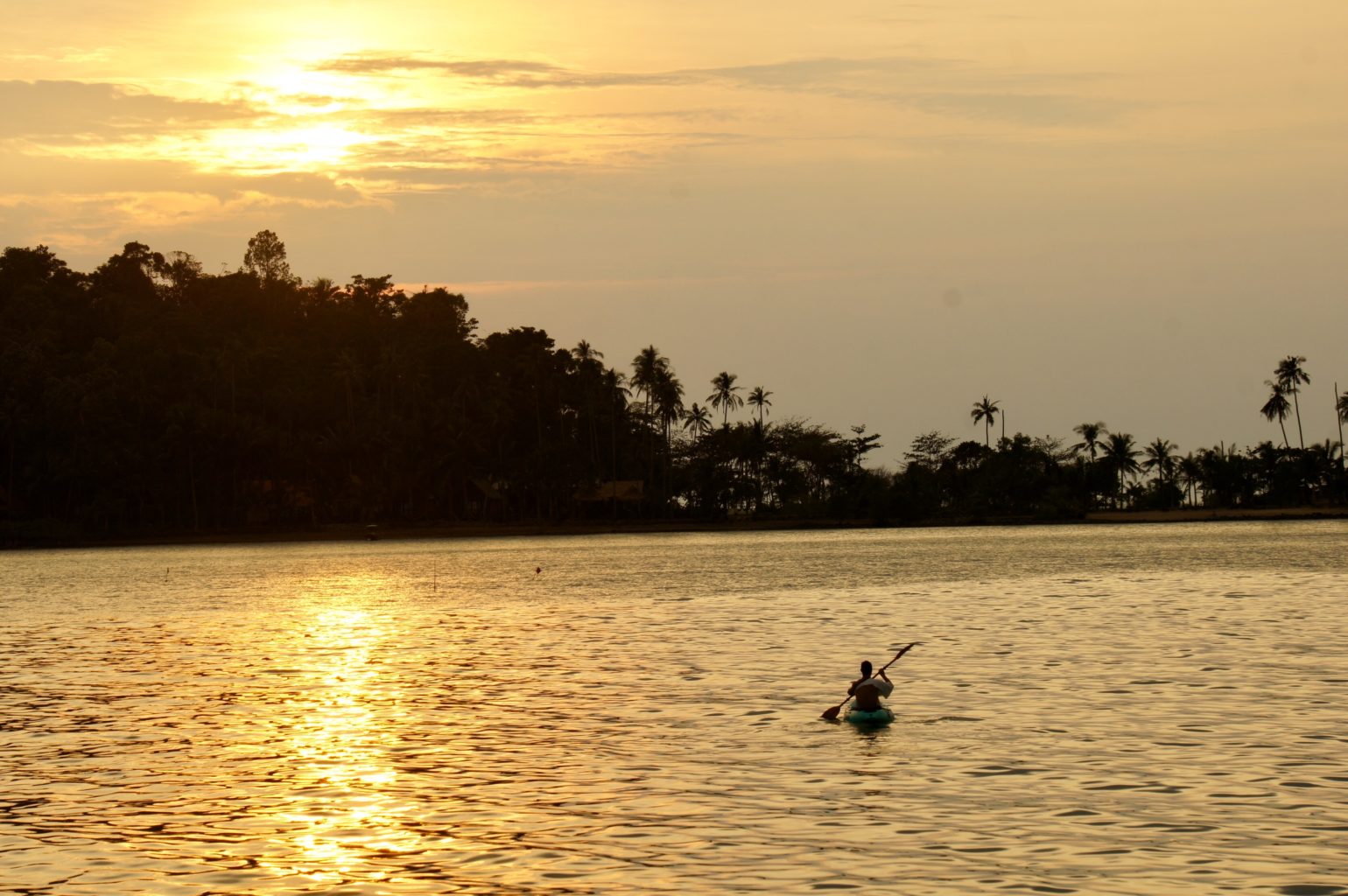
The island has two faces. The east, where we spent our first three nights, is undeveloped, with sparse buildings and no access to beaches, but it is very authentic, with fishing villages and mangrove forests. We booked the Spa Ko Chang Resort, one of the few hotels on the east coast. The hotel positions itself as a place for mental rest and detox. Every day you can indulge in morning meditation, savour vegetarian and vegan dishes and stroll along flower-lined paths, staying in elegantly furnished cottages set on terraces. Staying among world-weary middle-aged Scandinavian women and men who had been through a lot transported us into scenes of existential dialogue straight out of a Woody Allen film. Besides massages, the menu of health treatments even includes an item for connoisseurs, namely an enema, whose graphic presentation in the hotel brochure you can study over your morning coffee. We, however, opted for traditional physical activities: apart from using the pool, we borrowed a kayak and bikes (both free of charge). By kayak, paddling through the mangrove thickets, you can reach the fishing villages. Salak Khok is an authentic place, where a silently gliding kayak is no intruder and lets you watch Thai fishermen at work.

Further south, at Koh Mapring, on the south-eastern tip of the island, it is worth having lunch on the terrace of one of the piers that reach far out into the bay. The views are gorgeous. The silence is only rarely broken by the chugging engines of small fishing boats returning from their catch. Driving further still, you reach another fishing village and harbour, where larger fishing boats moor around a small lighthouse.

The mountainous interior and riding a scooter
The interior of the island is mountainous, hard to reach and protected as a national park. Side roads lead away from the coast to waterfalls. Elephant rides are also organised, from whose backs you can watch troops of monkeys. Interestingly, and somewhat irritatingly, you cannot drive all the way around the island. The roughly 50-kilometre road around the island is not closed in the south; only about 3 km are missing. The only way to get from east to west or vice versa is via the northern tip, where the two ferry piers are. The road linking the tourist villages on the western side of the island runs in places along hairpin bends with shockingly steep climbs and descents. Be very careful if you want to hire a scooter when the weather is uncertain. On wet roads there are many accidents, with scooters skidding when braking on descents or bends.
The west coast: beaches, hotels and excursions

The western part of the island has been taken over by tourists. Hat Kai Khao is now White Sand Beach, Hat Kai Mook is Pearl Beach, and what Lonely Beach is called in Thai nobody knows any more. Driving along the main road, every few kilometres you will find tourist villages with everything a tourist needs. Near the beaches there are bungalows and resorts, and along the road little restaurants, bars, massage parlours, clothes shops, laundries, scooter rental shops and small agencies arranging excursions and transfers. We stayed at the Mercure Hideaway hotel on Bailan Beach. It is a fairly large hotel, but tastefully blended into the greenery and surrounded by palm trees. A nice pool, a clean beach with a beach bar and a few kayaks for hire. Definitely worth recommending, and good value if you don't go for the option with breakfast. The breakfasts are excellent but outrageously expensive; it is worth hunting for deals where they are included free. Don't take the cheapest rooms, because their windows look out onto the car park and they probably date from the first generation of the property.
There is a wide choice of excursions on Ko Chang. One interesting option is a full-day boat trip, during which you "tick off" 4 small islands south of Ko Chang and get the chance to go snorkelling and watch underwater life. Lunch is usually included, and the boats leave from Bang Bao pier. You can also go to Cambodia, but these are multi-day trips and fairly expensive; although a fast boat could get you to the eastern neighbour in about 2 hours, you cannot cross the border by sea, so you have to take a bus, heading north and inland. Also on the mainland is Chanthaburi, known as a centre of the gem trade. Every weekend sapphires and rubies are traded there, from local mines but also from Burma and Cambodia. I didn't manage to get there, but I am sure it is worth stopping if time and circumstances allow.
Bang Bao and Khong Koi Beach

Bang Bao is an interesting place. Advertised as a "real fishing village", it is a caricature of one in the fullest sense of the word. As you approach, you already pass meadows and yards serving as paid car parks. The crowds of tourists have to park their scooters and hire cars somewhere, and there has to be room for tuk-tuks and taxis too. The main pier leading out into the bay is a shopping street full of shops and restaurants. What a different sight from what you see in the east. The smaller piers end in restaurants. After the initial shock, you can get used to your surroundings and see the good sides. The restaurants offer a wide choice of freshly caught fish, and most of them have a great view of the bay and a palm-covered headland. A sunset in this setting can be magical. The shops are very well stocked; however many presents you have to take home, you will find everything here in one place. At the very end of the pier large tourist boats are moored; it is absorbing to watch the crew bustling about, getting the boat ready for the morning trip. If you have run out of something essential, you can do your shopping at the entrance to the village, in a large supermarket of the "7 Eleven" chain, popular across Thailand.

In the far south of the island, beyond Bang Bao, you can reach Khong Koi Beach, where the road ends. It is a very pretty place. The lovely beach is surrounded by simple bungalows; everyone walks about slowly and barefoot, sipping beer or drinking coffee half-reclined, trying to chase away thoughts of the video conferences and crushing targets waiting for them as soon as they get back. Khong Koi Beach is the Thailand of years gone by. Looking at the balding guests with their beer bellies, in your mind's eye you see slim, long-haired blonds who once wove flowers into their hair and gave themselves over to free love.

Ko Chang has a charm it owes to its two faces. In the east you can enjoy wild, unspoilt nature of a kind that is increasingly rare and watch village life, while in the west you will want for nothing for a good Thai holiday of beach time and Thai food.


