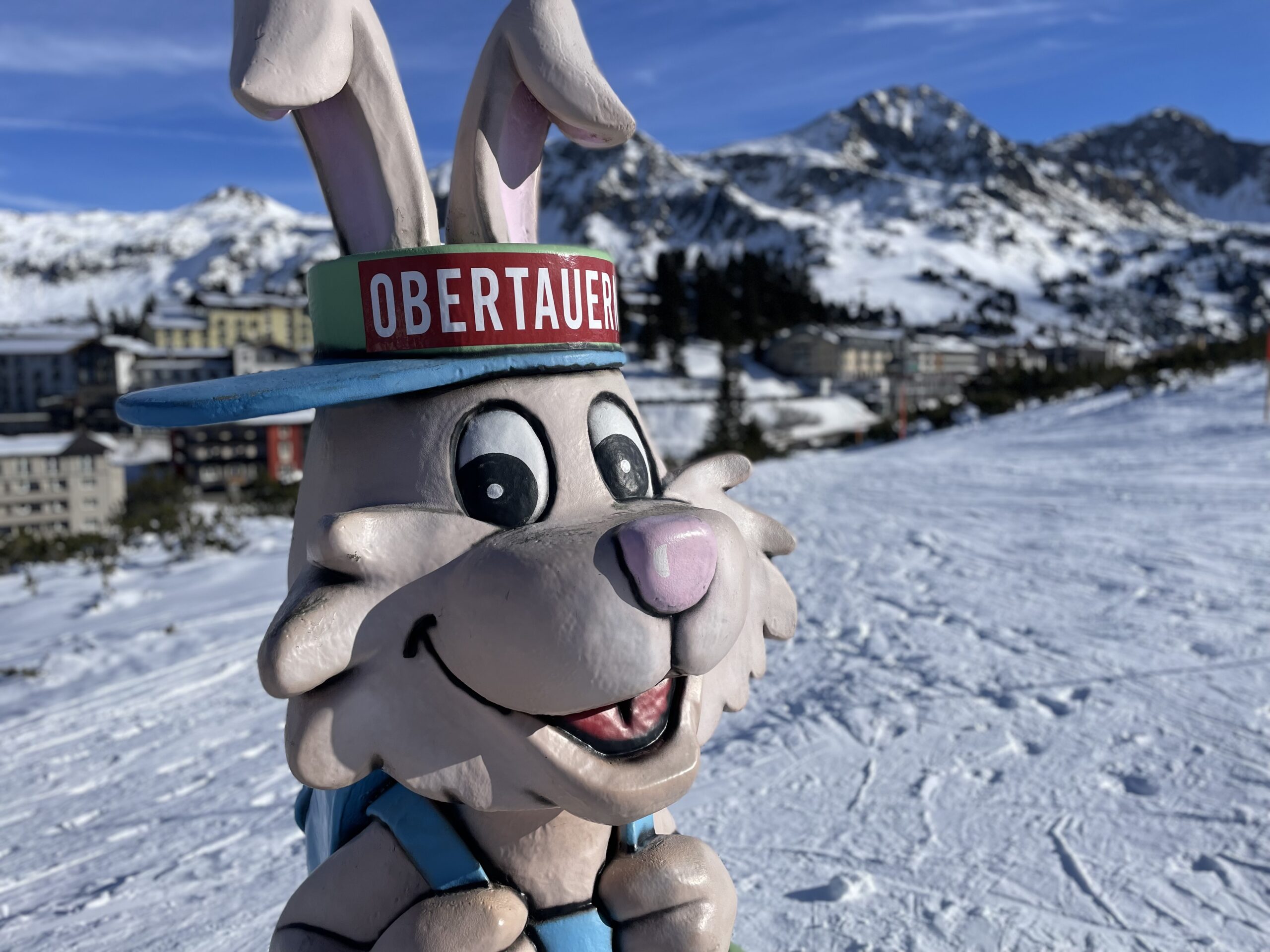
Obertauern - comfortable skiing with guaranteed snow
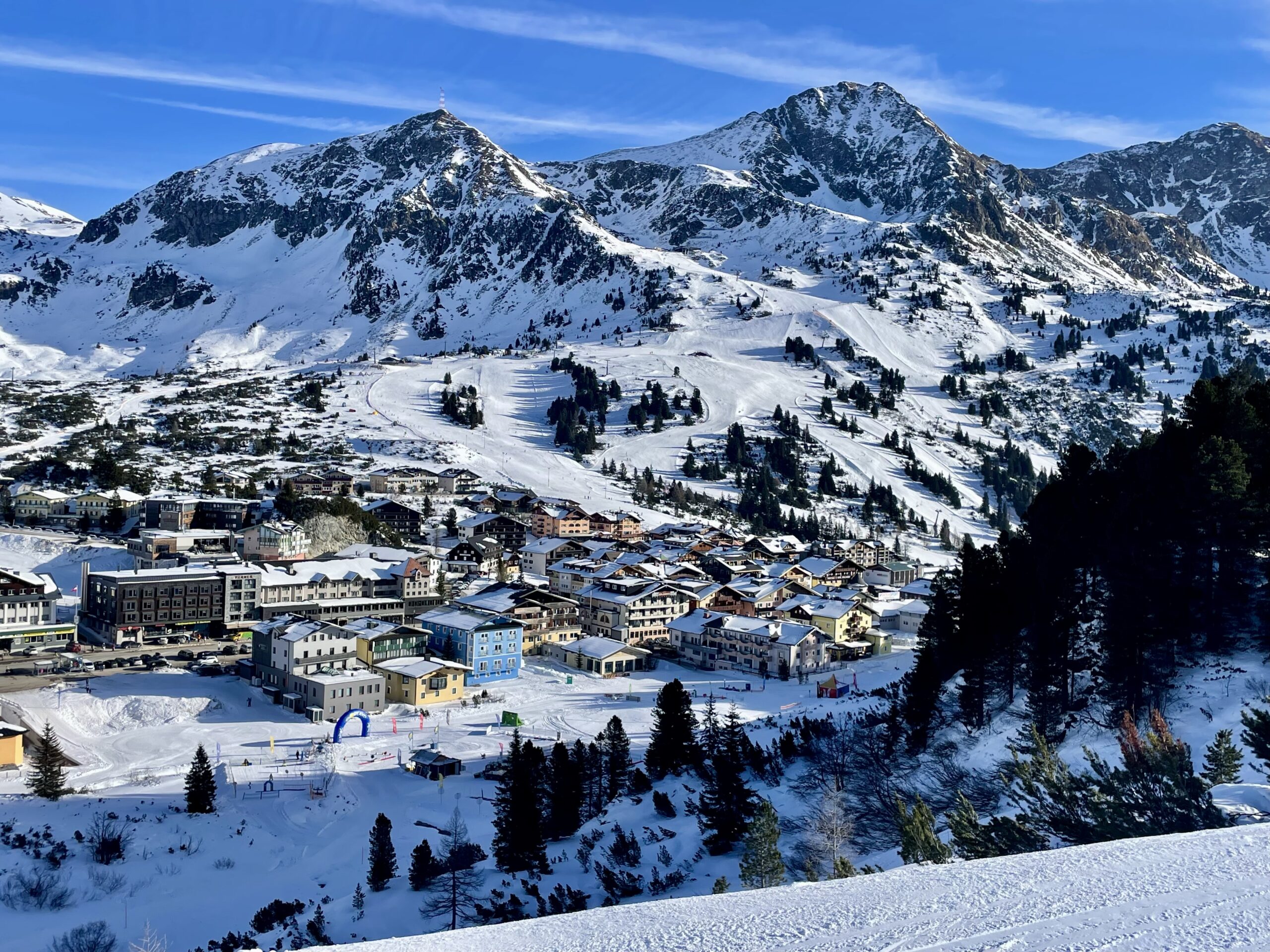
Among the many Alpine ski resorts, Obertauern holds a special place. Guaranteed natural snow, easy access to the slopes, quality accommodation and the length of the pistes in this, the highest ski area in SalzburgerLand, make its offer unique among Austrian winter resorts.
The resort's history and the Beatles in Obertauern
The first mention of skiers in Obertauern dates back to 1902. After the First World War, around 1920, skiing began to attract larger numbers of visitors: they arrived on foot, while their luggage was carried by sledge. After this pioneering period, Obertauern quickly began to develop as a winter resort, and 8 December 1929 is regarded as the village's “birthday”: that was when regular winter traffic over the Tauern Pass began for the first time, making access easier and boosting ski tourism. In 1948 the first ski lift was installed. Bear in mind that in those days skiers prepared the slopes themselves and received free rides in return. The years 1952-1961 saw the rapid installation of modern cable cars, gondolas and lifts, laying the foundations for today's ski area. The Zehnerkar gondola, opened in 1961, is still one of the favourites among winter sports fans. The Swiss cabins in use today date from 2003.
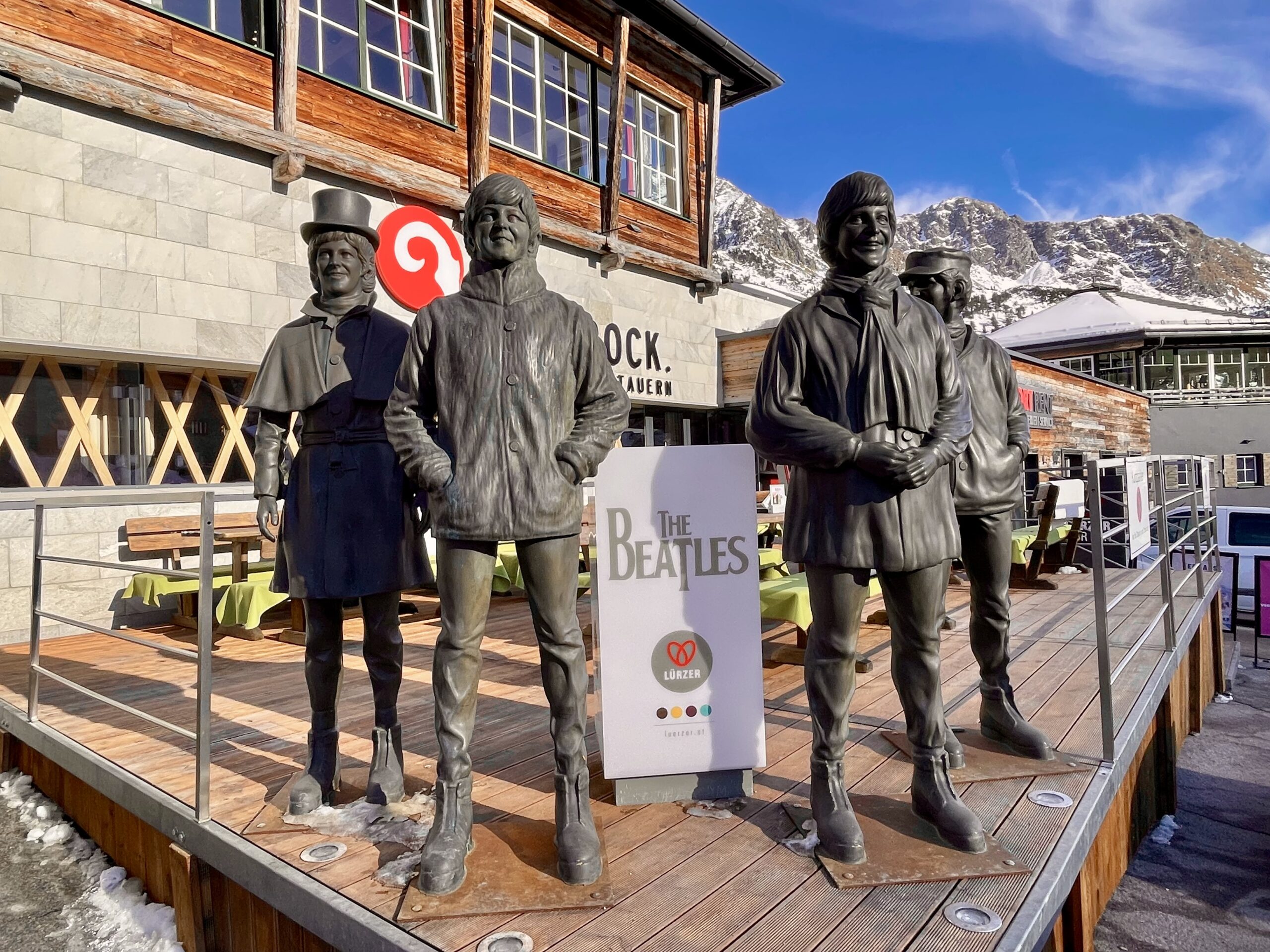
Another turning point in Obertauern's history came in March 1965, when the legendary Beatles spent a few days here shooting scenes for the film “Help!”. Although the musicians did not ski, they filmed outdoor scenes here, mainly comic chase sequences and funny shots in the snow. They stayed at the local Hotel Edelweiss, which still exists today and displays figures of the members of the cult band in front of its entrance.
Ski-in/ski-out hotels and getting there from Salzburg
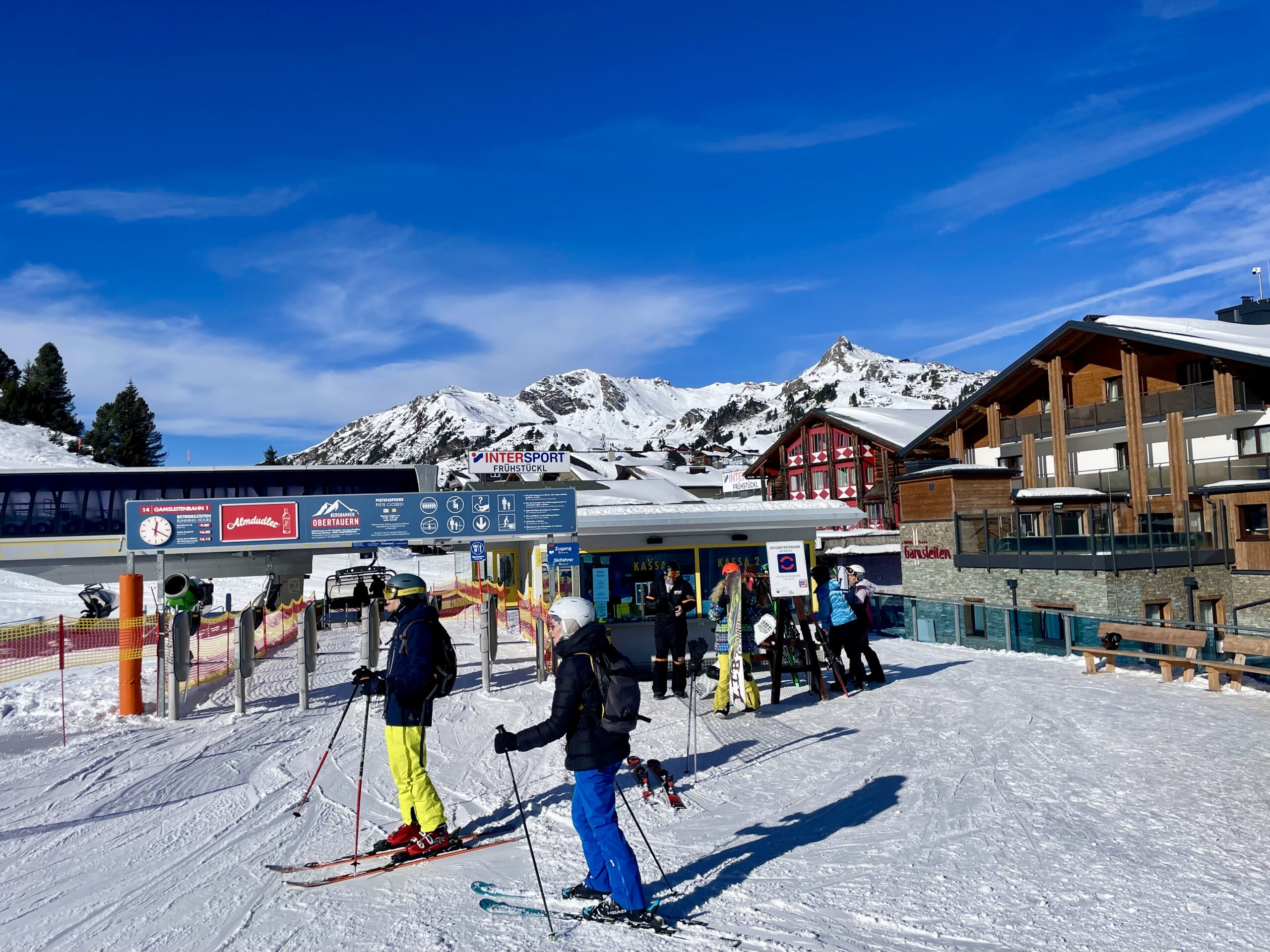
Obertauern is an hour's drive from the Salzburg transport hub, with its airport and a direct night train connection from Poland. Most of the hotels here are “ski-in/ski-out”, as they are located right next to a slope or lift. The resort has 11 lift base stations, so you can start skiing or snowboarding as soon as you step outside and ski back almost to the door, without needing your own car or the ski bus, or walking around in heavy boots. Once you have parked your car, you will not start it again until the end of your stay. Many people are willing to pay more for this kind of convenience, so the hotels here are usually 4 or 5-star, but there are no palatial properties or boutique glitz. The hotels are unpretentious, comfortable and well kept, more practical than luxurious. This resort is far from snobbish: what counts here is skiing, not showing off.
Ski runs and two circuits around Obertauern
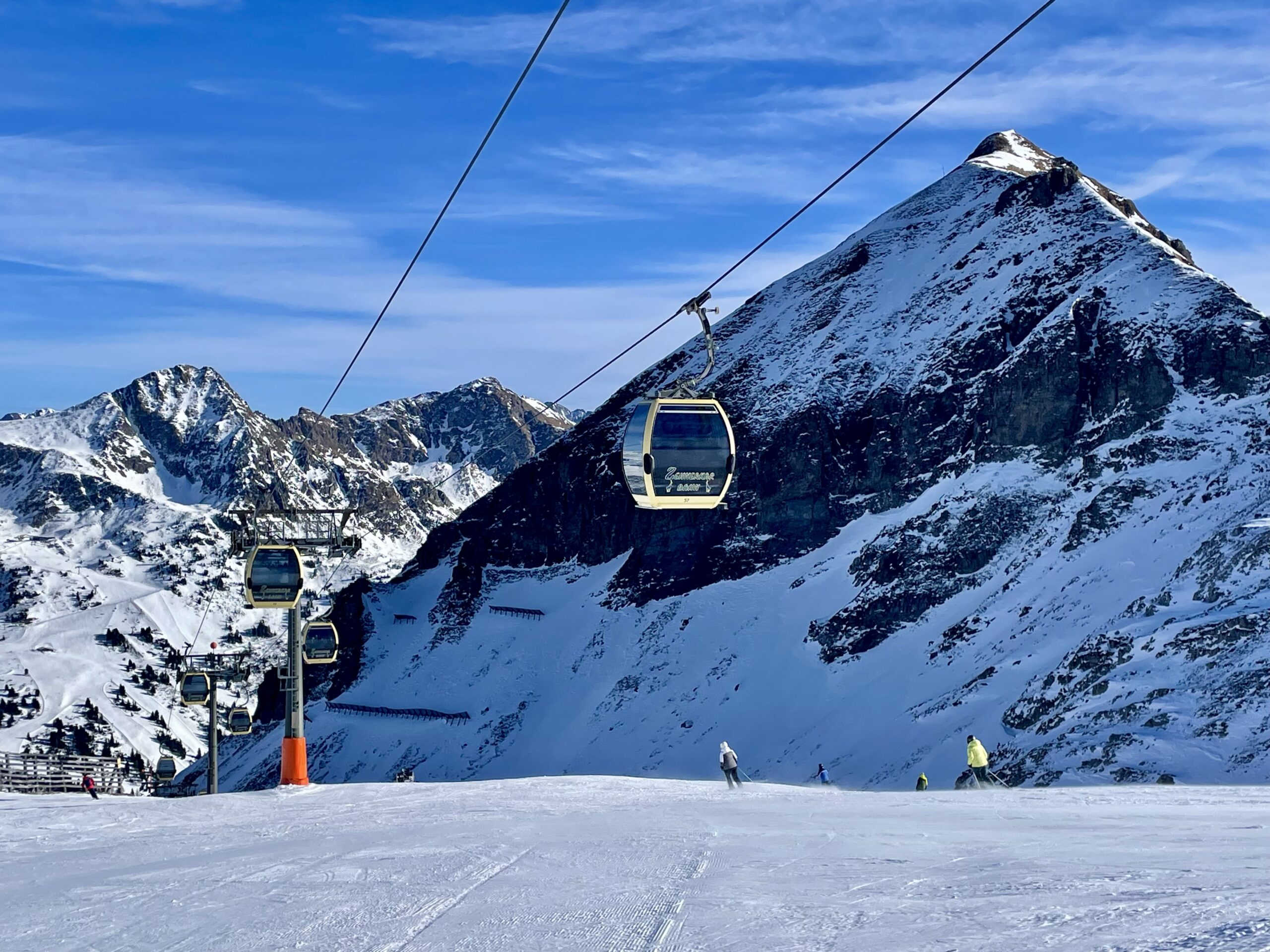
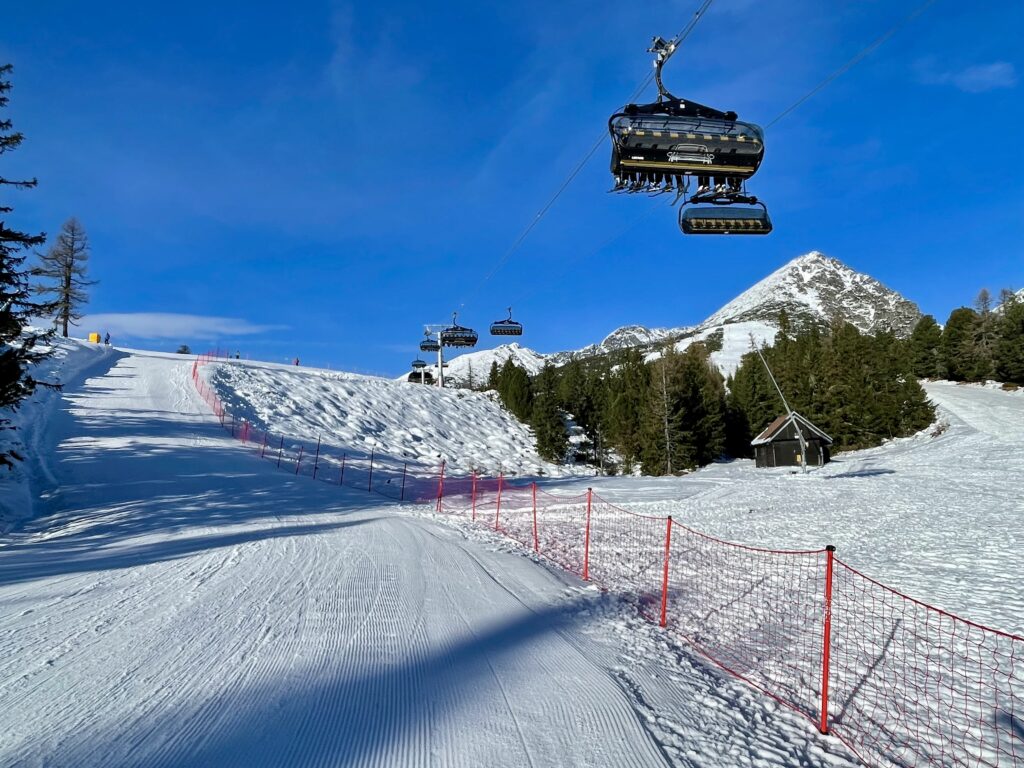
The pistes here lie at an altitude of 1740-2526 m above sea level and comprise 61 km of easy (blue) runs, 35 km of intermediate (red) runs and 4 km of difficult (black) runs. As many as 11 lifts have their base stations right in the village.
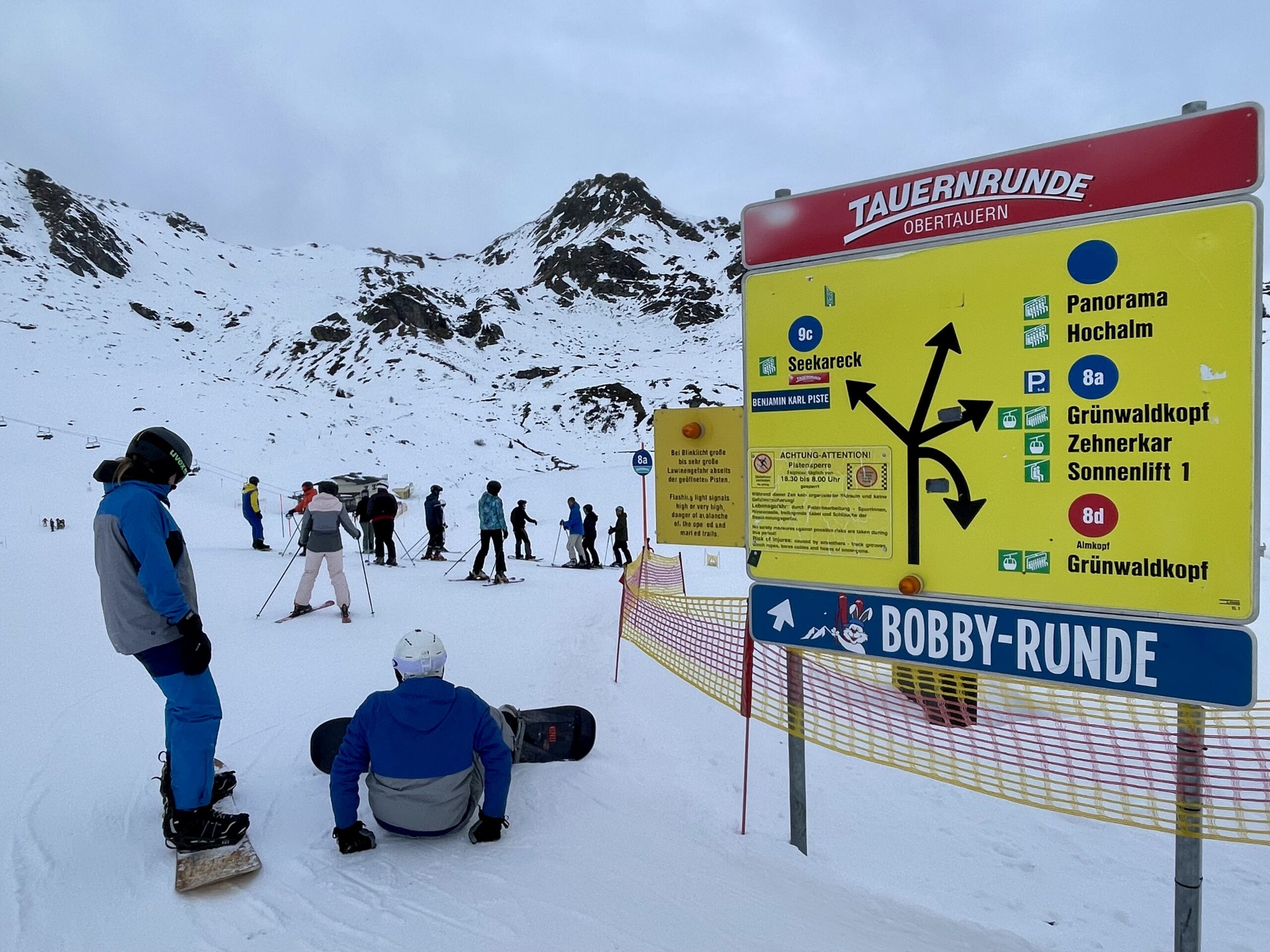
An interesting feature of Obertauern is the chance to experience a variety of slopes by following two circuits. You can choose the more difficult (red) runs, which are linked in a clockwise direction. Or you can opt for the easier variant, made up of blue runs, which goes anticlockwise. Both variants are well signposted: the “red” circuit uses 9 lifts, while 7 are enough to complete the “blue” one.
The run starts at the top station of the Gamsleitenbahn 2 lift at an altitude of about 2313 m above sea level, making it one of the highest skiing points in Obertauern. The descent is about 1.3 km long with a vertical drop of about 362 m, taking you down to around 1950 m above sea level. This is a black, extreme run intended only for very experienced skiers whose skills and technique allow them to tackle steep slopes. Even those who feel confident on very steep and difficult runs, have mastered skiing on their edges and can control their speed treat it with great respect.
To sum up, Obertauern has come a long way from an ordinary Alpine pass to a world-class winter resort. It can be the perfect choice for skiers who want to ski a lot and have quick, easy access to the slopes. It is a compact resort, great for short, intensive breaks. It is also one of the highest resorts in Austria, where the season often lasts from November to May and the pistes stay in very good condition even in a weaker winter. Only ski areas located directly on glaciers can match it.