









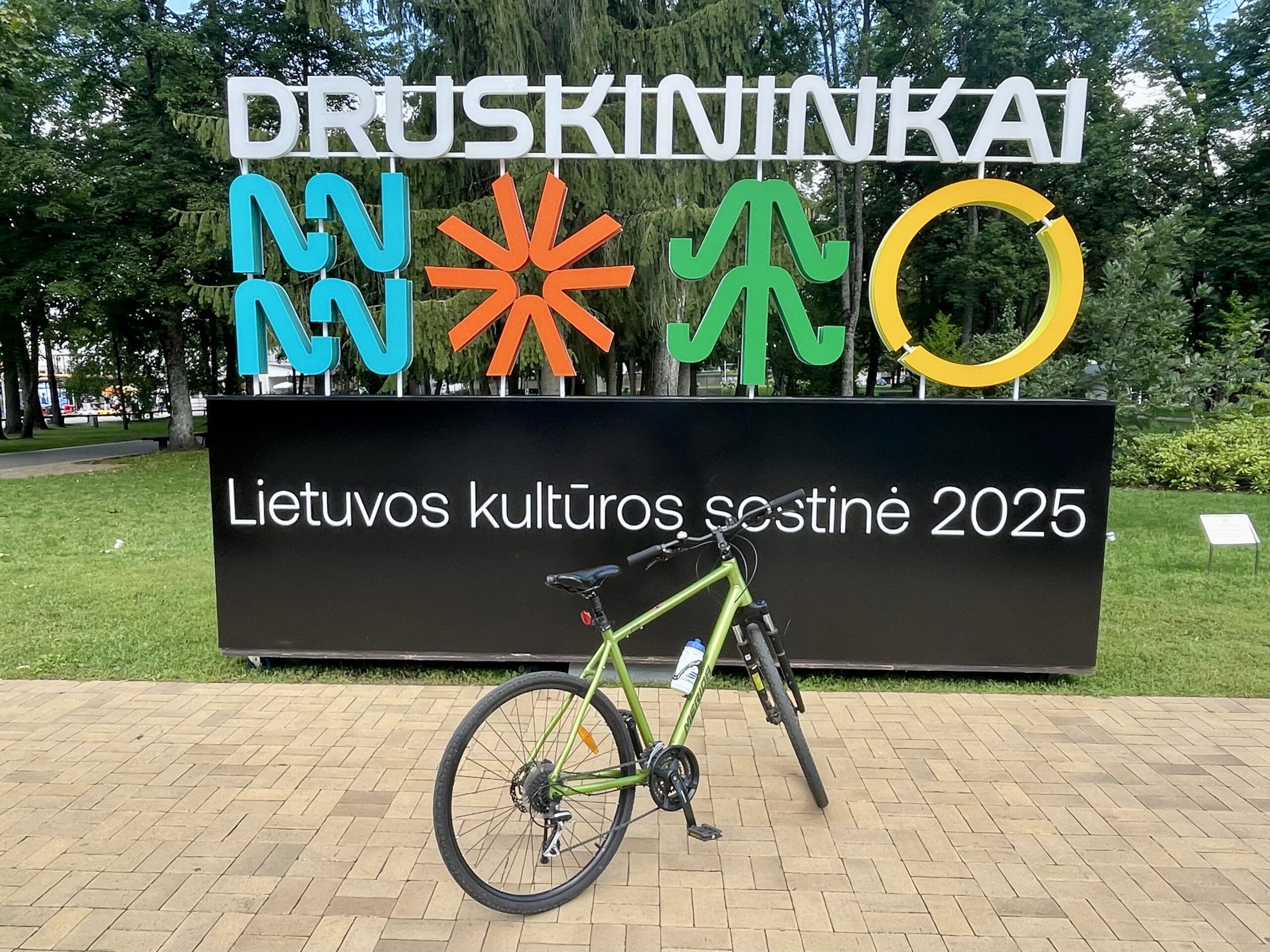
Druskininkai, close to the heart - a spa town near Poland
Druskininkai is not only a spa town with a long tradition, but also a place that can surprise you at every turn. Here history meets modernity: tourists in cycling helmets now sit on the bench where Piłsudski liked to sit, and right next to the sanatorium's peat mud treatment rooms is the largest indoor ski hall. Add to that mineral waters with remarkable properties, scenic cycle trails winding along the Neman and a cuisine that serves cepelinai in more than a dozen variations. Druskininkai is a resort that can draw you in for longer than you planned, whether you are looking for relaxation, activity or new flavours.
Druskininkai as a spa town
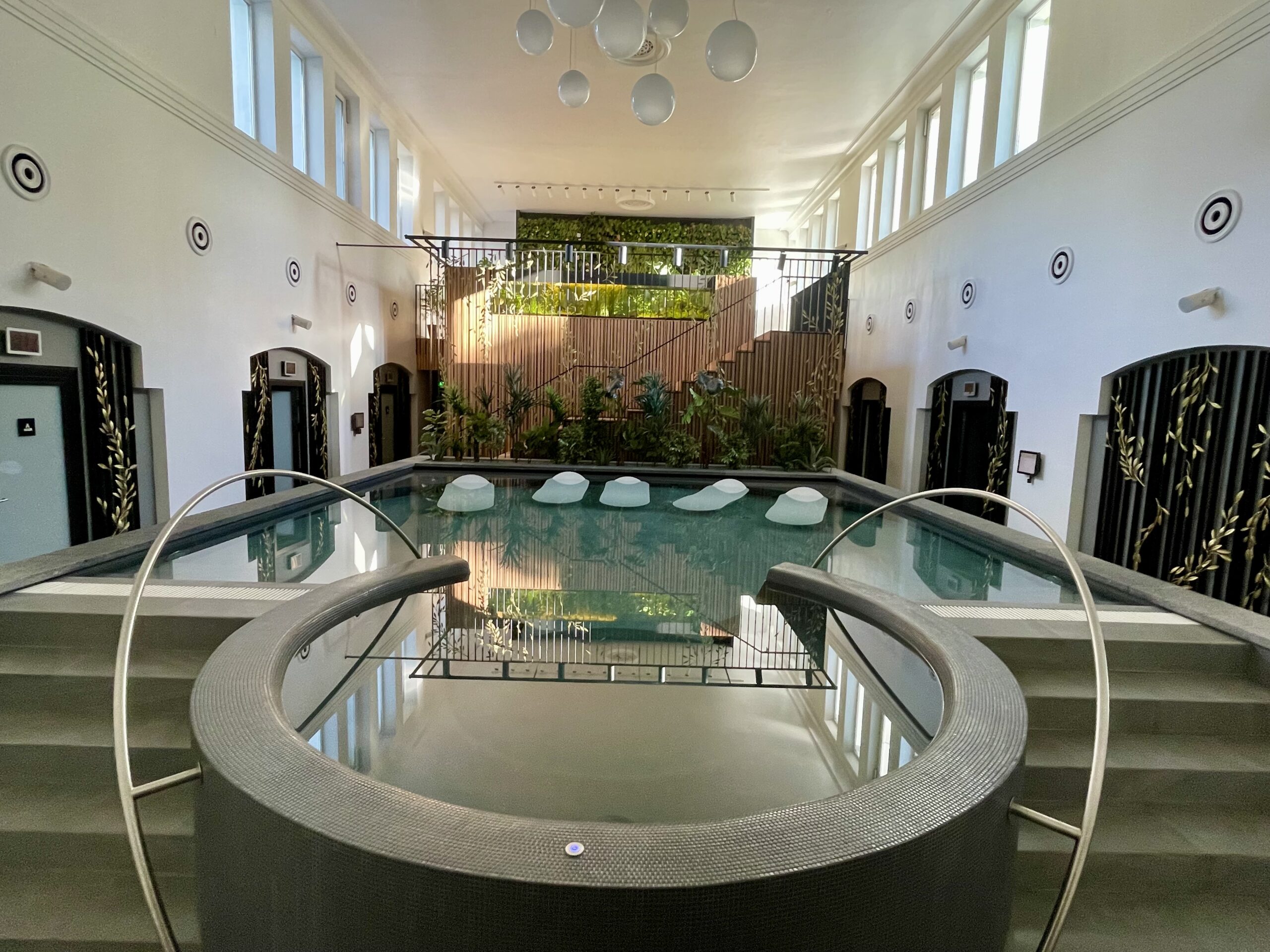
The sanatoriums and spa centres in Druskininkai offer a wide range of services, from traditional treatment and rehabilitation to modern wellness, weight-loss, anti-stress and relaxation programmes. The resort's official websites state that there are 12 sanatoriums in the town, offering everything from short, one-day relaxation packages to intensive wellness courses. Recently, traditional 21-day stays have been coming back into favour, and these can be part-funded by Poland's National Health Fund (NFZ).
Poles have a particular fondness for this Lithuanian spa town. The figure of Marshal Józef Piłsudski, who liked to stay here, still crops up in popular culture. To this day, places connected with his visits are marked in the town, such as the bench by the Neman where he used to sit and gaze thoughtfully into the distance. A small house built especially for the Marshal once stood nearby. Julian Tuwim described those times in his poem “Druskiennickie drzewa” (The Trees of Druskininkai).
The healing and regenerative properties of Druskininkai's mineral waters have been known and valued for decades. Every year, as much as 32.8 million litres of mineral water are used in Druskininkai. Mineral water from the deepest boreholes is used for health and cosmetic treatments in all the resort's main spa centres. It is also used for drinking, including as part of prescribed crenotherapy. The “Spring of Beauty” in the centre of the resort is the saltiest mineral water, drawn from a borehole more than 300 metres deep.
Polish-language leaflets at the reception of the “Gydykla” Healing Centre list 18 basic treatments and 25 additional ones, and most prices fall within the 5-15 EUR range.
Peat mud treatments are among the most popular in Druskininkai. Balneologists believe that peat mud treatments heal, relax, boost the metabolism, strengthen the immune system, reduce allergies and improve mood. The peat mud used in Druskininkai is additionally enriched with minerals and trace elements.
Druskininkai has always been close to Polish hearts, and today it is close geographically as well. It is just an hour's drive from the Polish border, and the journey from Warsaw takes 4 hours. Another argument for visiting Druskininkai is how easy it is to communicate in Polish there. It is worth knowing that it has become possible to get a refund for a sanatorium stay.
Active on two wheels
Lithuania's Druskininkai has recently invested heavily in infrastructure for cycling enthusiasts. The cycle paths have a total length of 60 km, and the town authorities have designated and signposted 5 themed routes, all of them asphalted. It is easy to find information, including brochures and maps in Polish, to help you plan a trip.
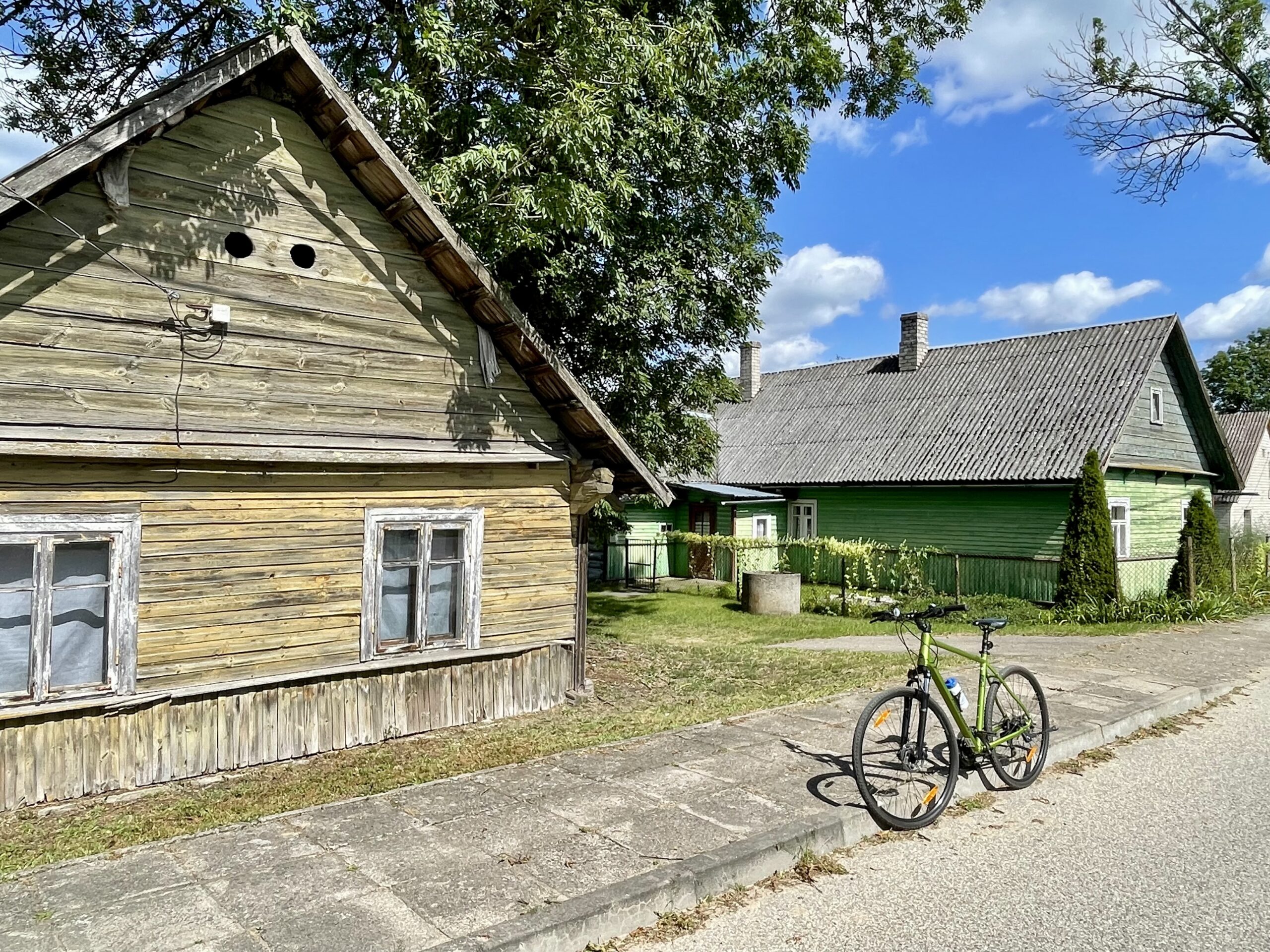
The routes around this renowned Lithuanian spa town run along the banks of the Neman and the edges of fields, wind through forests and follow the shores of lakes. Along the asphalt paths you will come across examples of inanimate nature and evidence of human creativity, and here wooden architecture deserves the most attention.
If you are thinking of a trip of a few hours, it is worth combining two routes: the Neman Trail and the Star Orbit Trail. Our journey begins by the Neman, where in 2014 an asphalt path was laid in place of a well-trodden forest track. We ride along the river, on its higher bank, and the route keeps opening up new perspectives. At one point we catch sight of the outline of the Island of Love. The island's name comes from a legend about two lovers who drowned in the river. The name took on a new meaning in the interwar period, when the Neman was a border river. The Island of Love then became a place for romantic meetings between young people from both countries.
After a few kilometres, the Neman Trail meets the Star Orbit Trail, which takes us on to the village of Švendubrė (Szandubra in Polish), where traditional wooden houses have survived. Just before the village there is a huge glacial erratic: before touching the rock, make a wish, which it is said to help come true. This great rock (22 metres in circumference) has exceptional bioenergetic properties, as it lies at the intersection of different tectonic layers. When you reach the village, you can turn off the cycle route and ride between the houses: you will find beautiful examples of Lithuanian wooden architecture there, and the pastel colours of the houses may remind you of Scandinavia. The village lies right by the Raigardas Valley, which opens up in a wide arc, letting you admire a chequerboard of fields and a wall of forest in the distance. If you followed the valley further, after a few kilometres you would reach the border with Belarus.
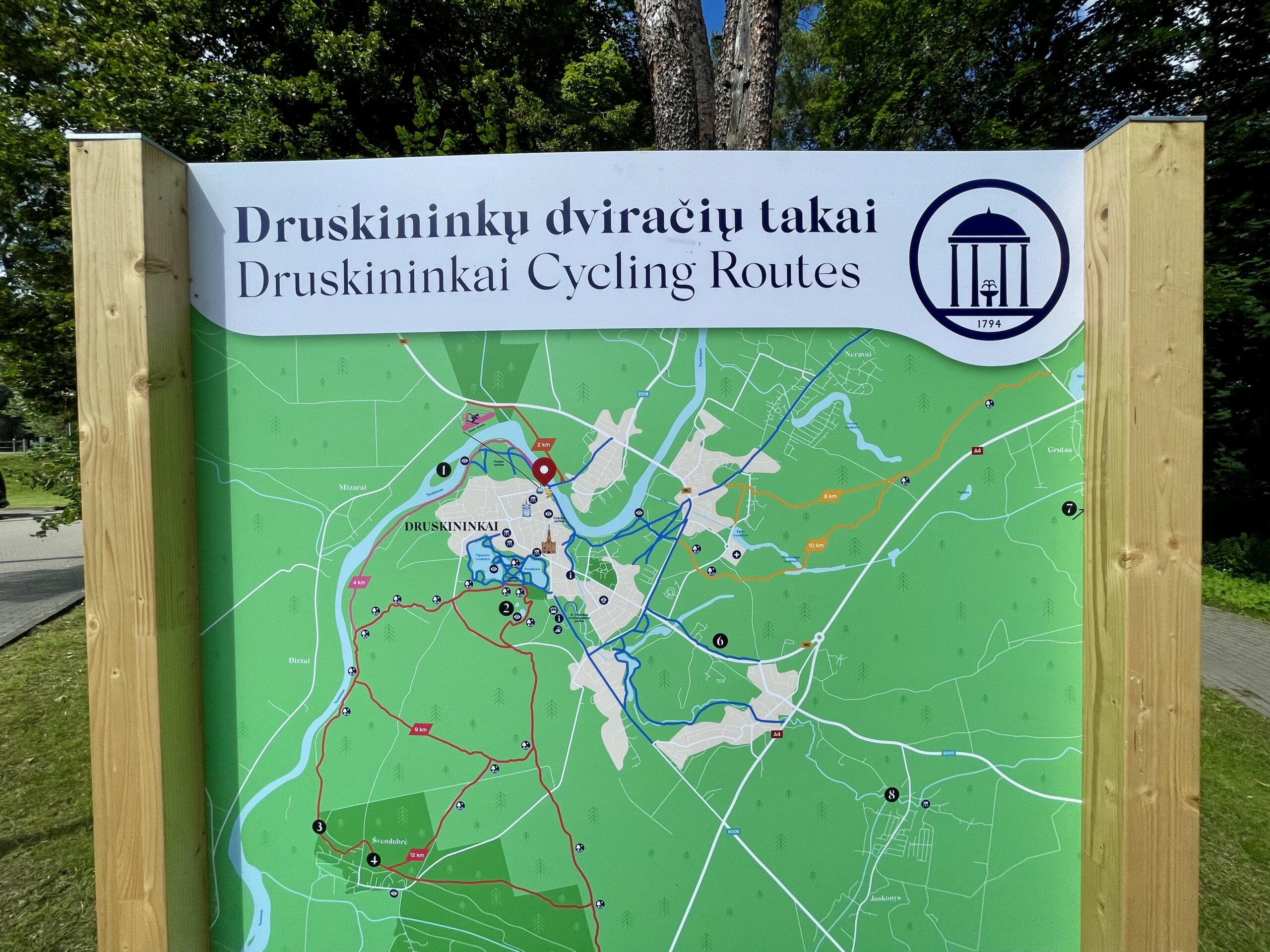
The route described is about 24 km long, but it can be lengthened or shortened depending on whether you take detours or use the available shortcuts.
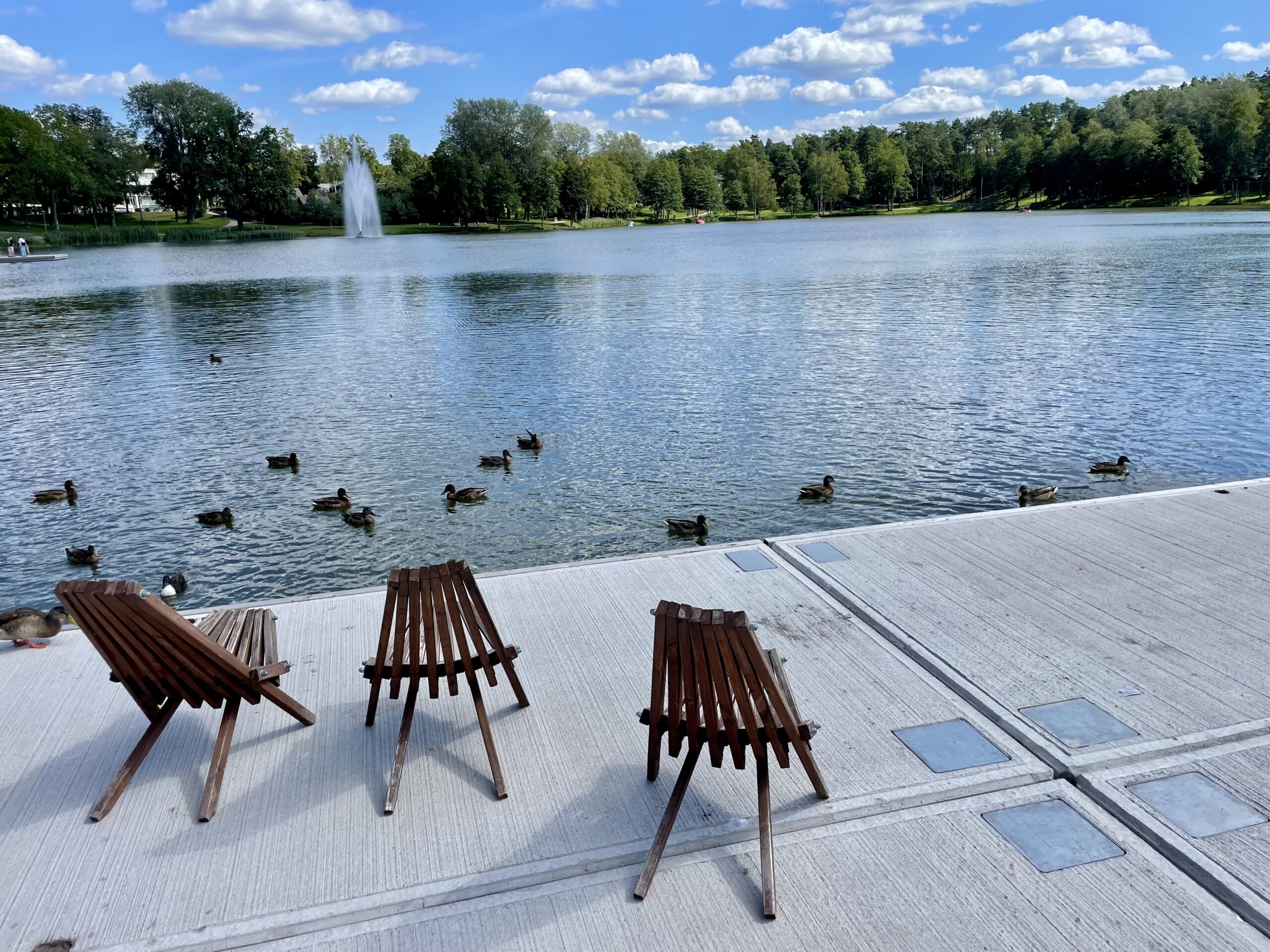
Another trail, although considerably shorter (6-10 km), also deserves attention for its historical value. This is the Žilvinas Trail, named after the serpent god, ruler of the waters and lakes, known from Lithuanian legends. The path winds like a real snake through the pine forests in the east of Druskininkai. You can start in the oldest part of town, at the white arched footbridge where the Neman and Ratnyčėlė rivers meet. This is the spot Józef Piłsudski was so fond of, where he used to sit on a bench and gaze thoughtfully into the distance. A small house built especially for the Marshal once stood nearby. Julian Tuwim described those times in his poem “Druskiennickie drzewa”. Further on, the route heads towards Lake Grūtas, home to Grūtas Park. Open since 2001, it is a private open-air collection of Soviet and socialist realist monuments that takes you back to the days of the Lithuanian Soviet Socialist Republic.
Official brochures state that there are 6 bike rental shops in Druskininkai; an hour's ride costs 5 EUR, and hiring a bike for the whole day costs 12 EUR.
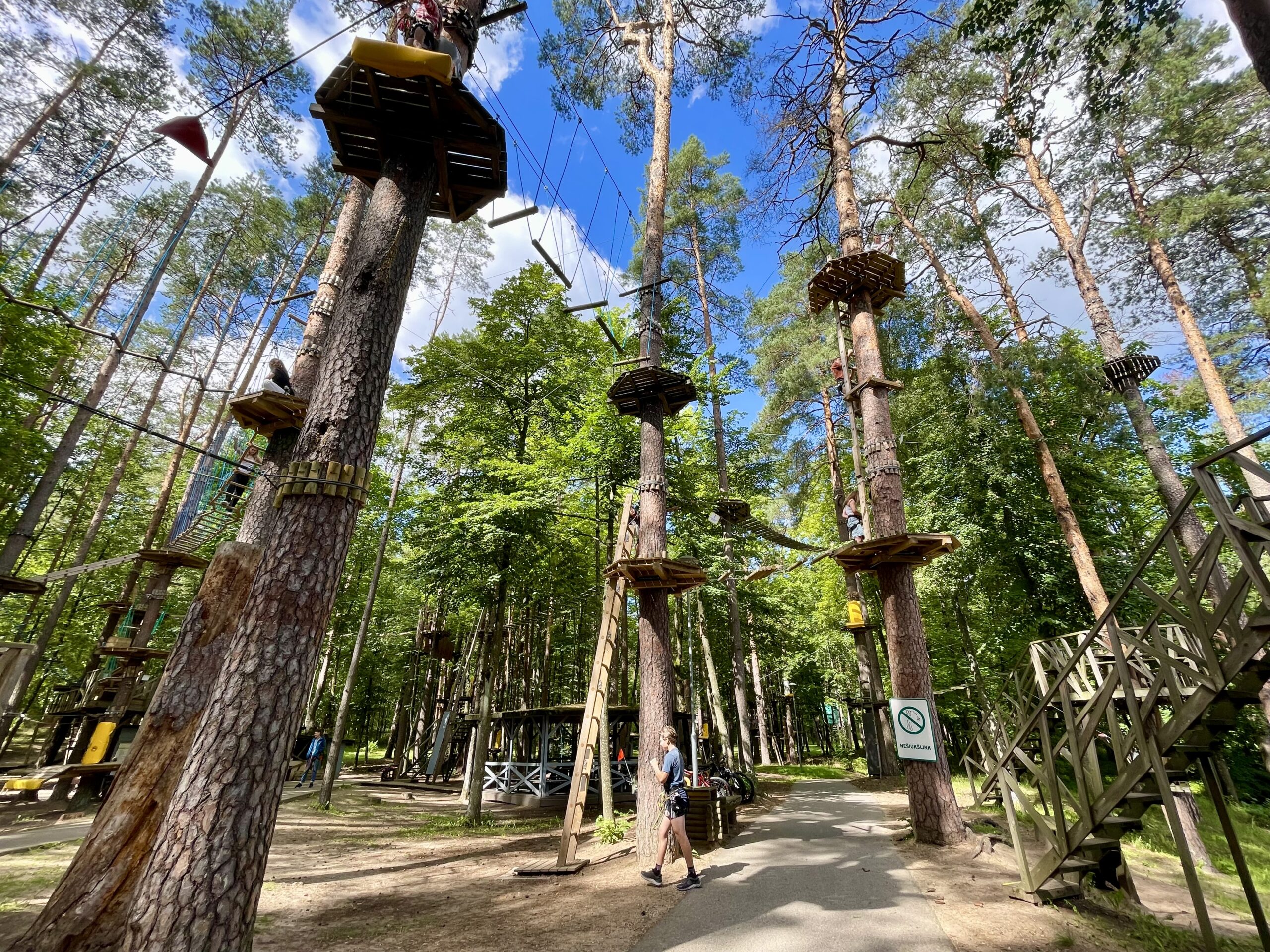
Practically all the cycle routes around Lithuania's Druskininkai are suitable for children, as they run over terrain with little elevation gain and have a paved surface. The number of rest stops with bike racks and information boards, which make it easy to work out where you are and what your options are for continuing, is surprising. These stopping points are also good places for an outdoor picnic.
Skiing all year round in Druskininkai
The “Snow Arena” in Druskininkai, Lithuania, is a modern, year-round winter sports complex. It is less than an hour's drive from the Polish border, and the journey from Warsaw takes 4 hours. There are 2 slopes open all year round and a third one open in winter.
Lithuania's Druskininkai, known for decades as a spa centre, is home to an indoor ski facility. It was built on the north bank of the Neman, opposite the town of Druskininkai. You can drive there (free parking) or take the cable car from the town centre (7.5 euros return)
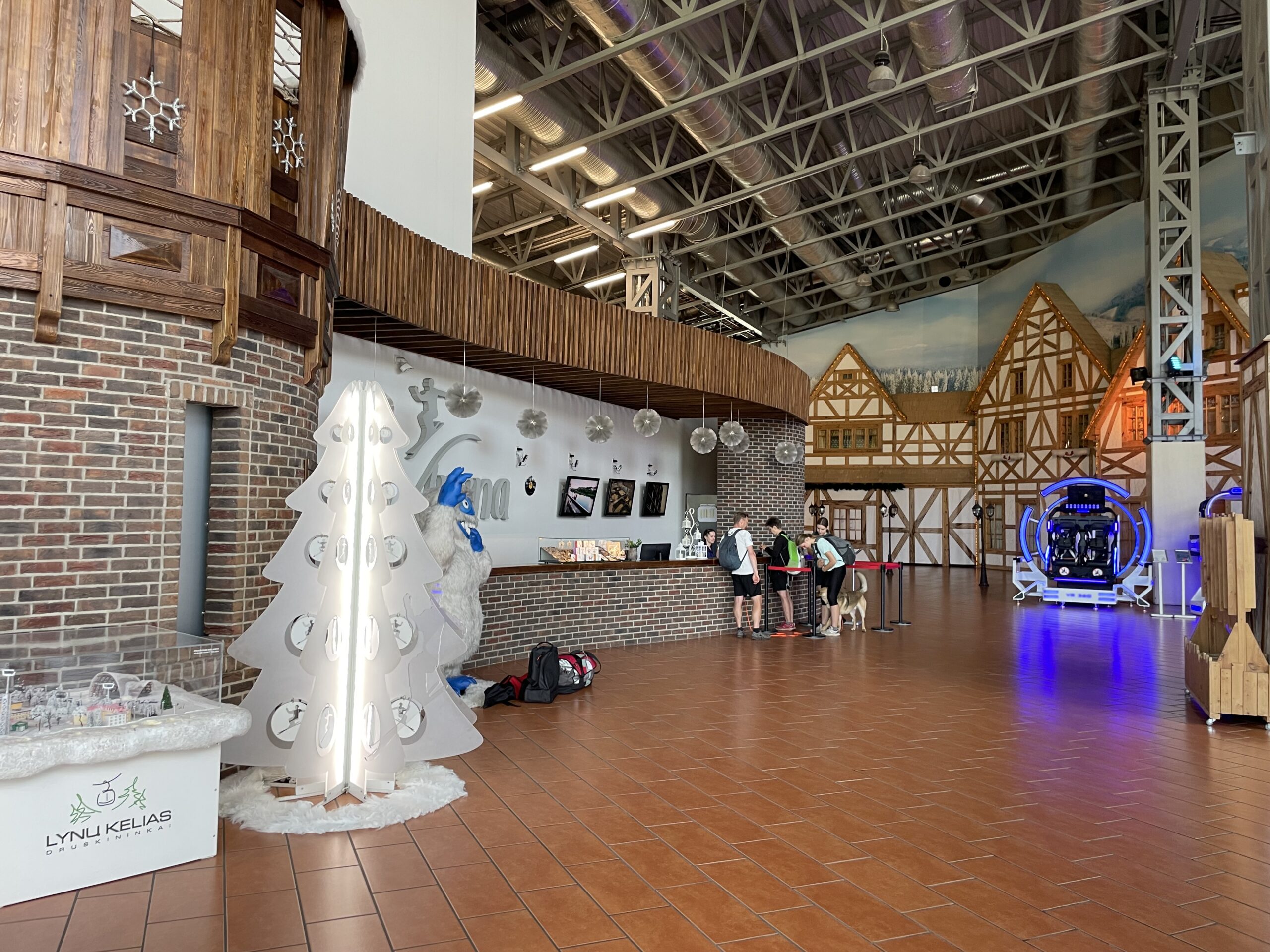
The facility, the only one of its kind open all year round in the Baltic states and one of the few in Europe, covers more than 8 ha and offers three ski runs: two indoor and one outdoor (640 m). The latter only operates in winter, when the air temperature drops to minus 5 degrees.
The main indoor slope is 460 metres long and 50 metres wide. There is also a smaller beginners' slope, 150 metres long and 40 metres wide. Lithuania's “Snow Arena” is a complete concept: besides the slopes, there are equipment rental shops, stores, a ski service, equipment storage, changing rooms, showers and restaurants. At the time of writing, the “Aero Gallery” restaurant at the top of the building, with panoramic views of the area, was closed. Customers mostly used the self-service restaurant on the ground floor, where wood-fired pizzas at 8-12 euros were particularly popular.
The “Snow Arena” is where ski clubs from all over Europe train. As a result, half of the slope is often reserved for fast slalom on icy snow, between gates. The other half of the slope is more than enough for everyone else. The temperature inside is kept constantly at -2/-4 degrees, and the lack of sunlight ensures consistent, very high-quality artificial snow. The run is gently undulating and graded “blue”. Both groups use a 4-seater chairlift. Helmets are compulsory on the slopes.
Two hours of skiing costs 17 euros, and a full-day pass 23 euros. Prices rise at weekends and on public holidays, when an hour costs 25 euros and a day's skiing 31 euros (discounts apply for children and young people up to the age of 17).
The “Snow Arena” is ideal both for families with children and for advanced skiers and snowboarders. With runs totalling more than 1200 m, it is one of the largest facilities of its kind in Europe. The spa town of Druskininkai offers plenty of opportunities to recover after intensive training, with its infrastructure, waters, massages and peat mud. Its location close to the Polish border and the ease of communicating in Polish in the town are additional advantages. Plans for the coming months include the opening of a hotel and an “artificial sea” where you can learn to surf.
Lithuanian cuisine
At first glance, Lithuanian cuisine seems similar to Polish cuisine, but dishes familiar to Poles are often served in surprising combinations, and dishes that are niche in Poland turn out to be hugely popular in Lithuania.
Cepelinai, known in Poland as kartacze, are Lithuania's flagship dish. They are large, spindle-shaped potato dumplings (hence the name: they resemble a Zeppelin airship), made from grated potato and usually filled with minced meat, but sometimes with curd cheese or mushrooms. Once boiled, they are topped with pork crackling and sour cream. One of the twelve “Etno Dvaras” restaurants is in Druskininkai and serves cepelinai prepared in as many as 14 ways. The Lithuanian Culinary Heritage Fund has recognised its cepelinai as “the best and most in keeping with the culinary tradition” of the country.
Lithuania is a country of forests, lakes and wild nature. Small wonder, then, that mushrooms are hugely popular there. In Lithuania, chanterelles can be a main course rather than a side dish. A large portion of chanterelles in cream with boiled potatoes and a lightly salted dill pickle can be an excellent choice.
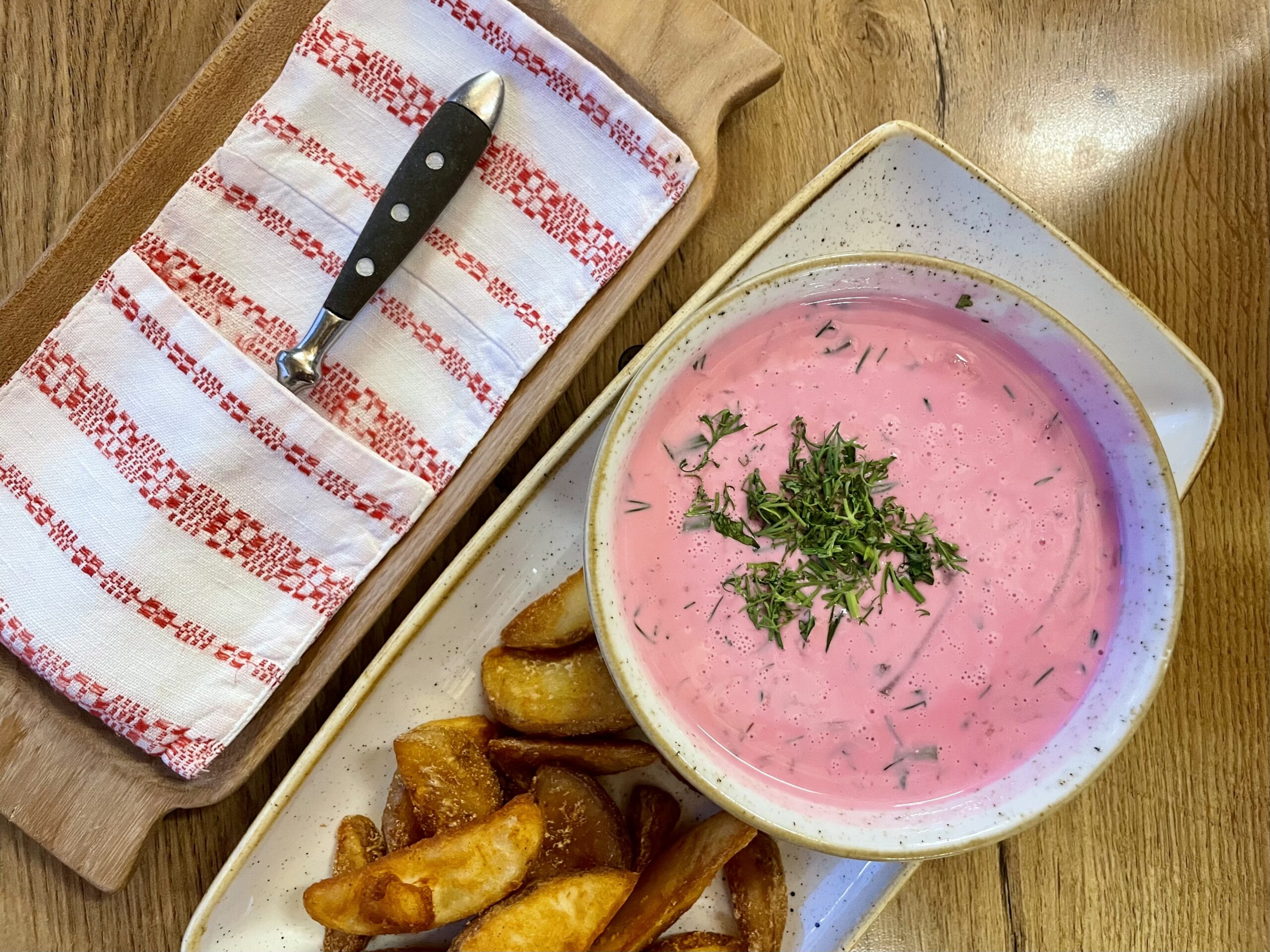
Lithuanian cold beetroot soup (šaltibarščiai) is one of the most recognisable dishes of Lithuanian cuisine, especially in summer. It is based on kefir and beetroot and served cold. What is surprising is that it often comes with hot potatoes boiled in their skins. If you want to try a modern take on it, head to the “Velvetti” restaurant on the main promenade in Druskininkai (it has twice been listed among the 30 best restaurants in the country).
Lithuanians are fond of herring, especially as a starter. And here too there is a surprise: chilled herring is served with hot roast potatoes. Buckwheat has been a staple of the Lithuanian diet for centuries. Do not be surprised to find buckwheat on the hotel breakfast menu. To drink, try a beer from a local brewery or kvass, whose taste lies somewhere between beer and... cola.
Lithuanian cuisine combines Baltic, Slavic and Jewish traditions and is based on simple, filling dishes suited to the cool climate. Its staples are potatoes, meat, fish, cabbage, beetroot and dairy products. Flour and potato dishes are typical. Lithuanian cuisine is aromatic but not very spicy, with frequent use of caraway, dill and garlic. It is home-style, hearty cooking that respects the seasons and relies on local ingredients.
It really is hard to get bored in Druskininkai. You can relax in a sanatorium, go on a cycling trip, have fun skiing even in the middle of summer, or simply sit down to a bowl of cold beetroot soup and hot cepelinai. All this just an hour from the Polish border: close, familiar and at the same time a little different. That is why Druskininkai has held a special place in Polish hearts for years, and there is no sign of that changing. It is a resort you want to come back to, for your health, for adventure and for the simple pleasure of being somewhere that can relax and inspire you at the same time.


