Mountain hospitality: Montenegro away from the coast
Montenegro is a small Balkan country that has won the hearts of Poles. Every year crowds of my compatriots head for the coast, the Bay of Kotor or other Adriatic beaches. Only a few of them choose to discover the areas further from the coast, and yet their potential is enormous.

Lipa Cave and the old capital of Cetinje
Take the caves, for a start - a visit will add a very interesting touch of variety to your holiday. Lipa Cave is a system of passages and underground chambers 2.5 km long. Tours are run in organised groups, which always set off from the modern, multi-purpose visitor centre. Inside the cave, nature has created unique and spectacular stalactites and stalagmites. The underground passages were opened to visitors relatively recently, only in 2015, but since then the cave has been at the top of the list of the country's greatest attractions. As it lies just 5 km from Montenegro's old capital, it is well worth combining a visit to the underground world with a stroll around Cetinje and an introduction to the Balkan country's past.

Montenegrins are very proud of their former capital, the town of Cetinje. It was in the 15th century that the Turkish conquests forced the Montenegrins to establish their capital here. The town became the centre of secular life (the palace) and spiritual life (the monastery). Another important date in its history is 1863, when the Montenegrin Prince Nikola ordered a new palace to be built. Compared with other European residences the palace is not especially impressive, but in contrast to its modest façade, the interior was fitted out with luxurious furniture, oriental carpets, paintings and sculptures, and many works of applied art. Since 1926 the building has been a history museum with rich collections of weapons, war trophies, medals, paintings and oriental carpets. Cetinje is where the history of printing in the southern Balkans began, when presses were brought from Venice in 1490 and the first five books in Cyrillic were printed, setting the pattern for those that followed.
The Tara canyon, Durmitor and skiing in Kolašin

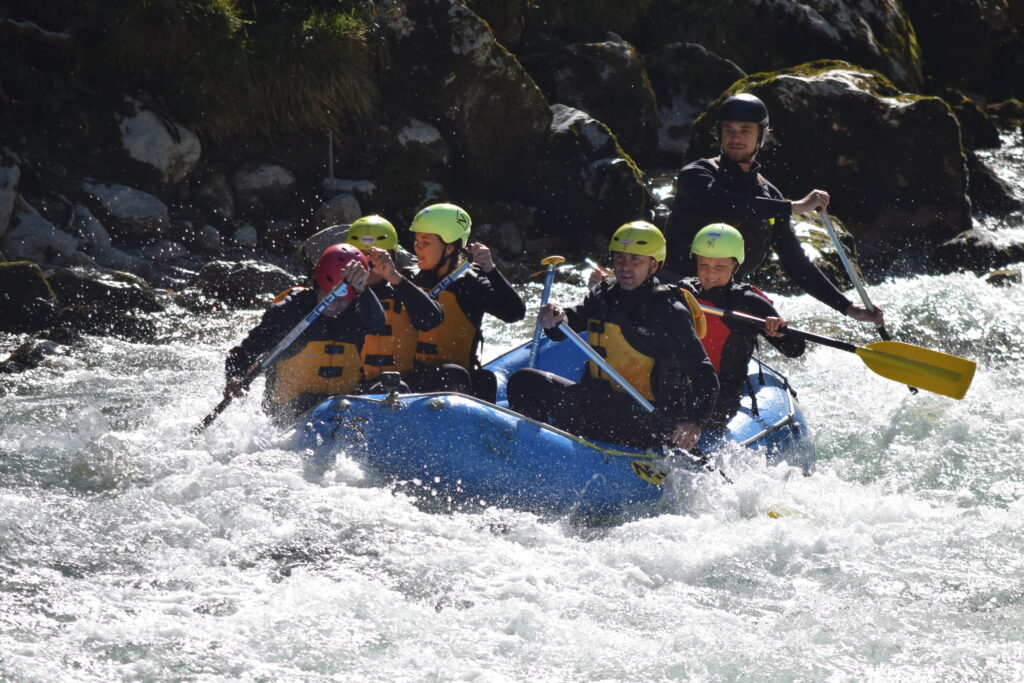
The bridge over the Tara is a must on any stay in mountainous Montenegro. It was built between 1938 and 1940, and here the Tara flows through a canyon 172 m below the bridge. Even those not-quite-200 metres are hugely impressive, and it has to be added that in some places the river flows more than 1,300 metres below the rim of the canyon. That makes the Tara canyon the second deepest in the world; only the Grand Canyon of the Colorado in the USA is deeper. Zip lines have been strung across the canyon, and in season rafting trips are organised on the river.
Eighteen glacial lakes, known as 'mountain eyes', are distinctive features of the landscape of Durmitor National Park. The largest and best known is the Black Lake. It lies on the outskirts of Žabljak, which in the days of the former Yugoslavia was the highest town in the whole country. In fact this body of water consists of the Small Lake and the Big Lake - a well-kept nature trail with rest areas runs along the entire shoreline of both.

Žabljak is also a ski resort, with slopes 6 km from the town centre. Several chairlifts and T-bars let you make the most of the winter. The lifts end near the surrounding peaks - 'Savin kuk I' takes you to a summit at 1,907 m, and 'Savin kuk II' up to 2,213 m above sea level.
A bigger ski resort than Žabljak is Kolašin, which has ambitions to compete with Europe's established ski destinations. With its two parts, separate until recently, now linked and investment going into hotels, Kolašin has a chance to make a real mark on the European winter sports map. 'Kolašin 1600' and 'Kolašin 1450' together offer 44 km of pistes of varying difficulty. From hotel level - another seven hotels are being opened - the lifts will carry you up to more than 2,000 metres.
Pljevlja - archaeological museum and mosque

The town of Pljevlja is well worth a visit. Time moves here at an entirely different pace from the bustling, cosmopolitan coast. At the local Archaeological Museum you can learn about the fascinating history of an ancient Roman town. Despite ongoing excavations and the discovery of many priceless treasures, this important site of the former province of Dalmatia still holds many secrets. Suffice it to say that no one yet knows what this town on the fringes of the Roman Empire was called. Another place worth visiting is the 16th-century mosque. Not only is it architecturally interesting and beautifully decorated inside, it is also one of the largest in the Balkans (the minaret is 42 metres high). Inside, the eye is drawn to the colourful vault, painted with a blue of an unusual shade that was extremely expensive at the time.
Farm stays in the Montenegrin mountains

Travelling around mountainous Montenegro also gives you the chance to experience the exceptional hospitality of the people who live there. There are fewer tourists, and every visitor is welcomed with open arms. It is worth staying at a farm guesthouse, and I can recommend several. 'Tara Resort - Camp Rabrenovic' offers rooms in the main building, bungalows, an intriguing underground "Hobbit house" and a "treehouse". There is also a meadow set aside for parking campervans. Meals can be provided on site, as well as expert advice on how to spend your free time, with mountain hikes especially recommended. 'Etno Vodenica Ćirović' is a one-of-a-kind place on the map of Montenegro. On a working farm there stood an old mill, built in 1914. After renovation and conversion it became guest accommodation, with the "miller's room" up in the attic. 'Gazdinstvo Batrićević' is a self-sufficient farm in the mountains. The owner is engaged in farming, fruit growing, beekeeping and making traditional spirits, while his wife produces salads, pickles and jams.

On site you can taste (and buy) liqueurs, honey and rakija brandy. The hosts specialise in laying on refreshments and dinners at which they serve local specialities. 'Oblun Eco Resort' will be fully ready in spring 2024, and the scale on which it is being built commands respect. It comprises seven development areas on a vast site, each of which will offer a slightly different idea for rest and quiet in mountainous Montenegro. Some guests will stay glamping-style, others in cabins.
Breakfast in the mountains: rakija, priganice and peppers
A journey into the Montenegrin interior takes us from the Adriatic beaches, where seafood may rule the table, to a land of mutton, cheese and freshwater fish. But let's start at the beginning: how does a culinary day in the mountains of Montenegro begin, and how might it unfold?
The oldest Montenegrins still remember that the day used to begin with 'washing the eyes'. The term should not be taken literally - the idea was to sprinkle your hands with home-made rakija and, while pretending to rub your eyes, breathe in the fruity, alcoholic aroma. Today we know that such inhalations may have had a beneficial effect, clearing and disinfecting the upper airways. Nor did people shy away from downing a glass of the spirit while they were at it. Don't be surprised if your host starts the day by offering you a strong home-made brandy from the pantry. Then it's time to sit down to breakfast. The table will probably feature priganice, small doughnuts that you can eat with cheese, honey or fruit butter.

There will also be peppers on the table, an extremely popular vegetable in the Balkans. They are often served with a cheese called pavlaci. The sharp taste of the cheese goes beautifully with the vegetable, especially if you use the somborka variety of pepper. You can even buy this combination ready-made in shops under the name 'Paprika u pavlaci'.
Crnogorski pjat, kačamak and sač
Lunch might be a platter of snacks called crnogorski pjat. Some call this combination of ingredients 'Montenegrin mezze', and the bolder ones are not afraid to call it Montenegrin... sushi. Although there is no rice, fish or seaweed in it, the arrangement of so many products on a wooden board really can look like the Japanese classic.

And what about dinner? An exclusive starter is smoked dried carp, an endemic species found in Lake Skadar. You can try thinly sliced leg of mutton, which will surprise you with its distinctive, robust flavour and aroma. The main course might be kačamak. This is a very simple dish made from potatoes, maize and wheat flour, cheese and cream.
Flour is added to the boiled potatoes and stirred in while they continue to heat. The mixture then has to be pounded with a wooden masher. The almost finished dish, often shaped into balls, is topped with a cheesy cream called kajmak.
If you end up at a village farm far from the main routes, your host may serve you a meat stew with vegetables and potatoes. It's worth keeping him company while he prepares it - all the ingredients go into a large metal dish with a lid known as a sač, set over the fire and covered with embers.

To drink, order a cornelian cherry kompot, a traditional fruit drink. The small red cornelian cherries are rarely eaten raw, but juice is often made from them in Montenegro. It gives a kompot with a tart, slightly sour taste that is reputed to be extremely healthy. Hence the Polish saying 'as healthy as a cornel'.
The cuisine of Montenegro's mountain areas is based on simple ingredients that are readily available on one's own farm or obtained from friendly neighbours. It relies on home-made, wholesome ways of producing food that have been tried and tested over centuries. Besides the delights for the palate, you can be sure that the local highlanders will 'season' their dishes with genuine warmth and hospitality, and the feasts you share will stay in your memory for a long time.

It is worth mentioning that the Montenegrin interior is becoming ever easier to reach. A recently opened 43 km section of motorway takes you from the capital deep into the country. Once two more sections are completed, you will be able to drive quickly and safely from the coastal town of Bar all the way to the Serbian border. A stay in the mountains of Montenegro is certainly an attractive option for both a summer and a winter break. The wealth of tourist attractions, combined with the atmosphere of the southern Balkans and the hospitality of the locals, is a recipe for a successful stay.