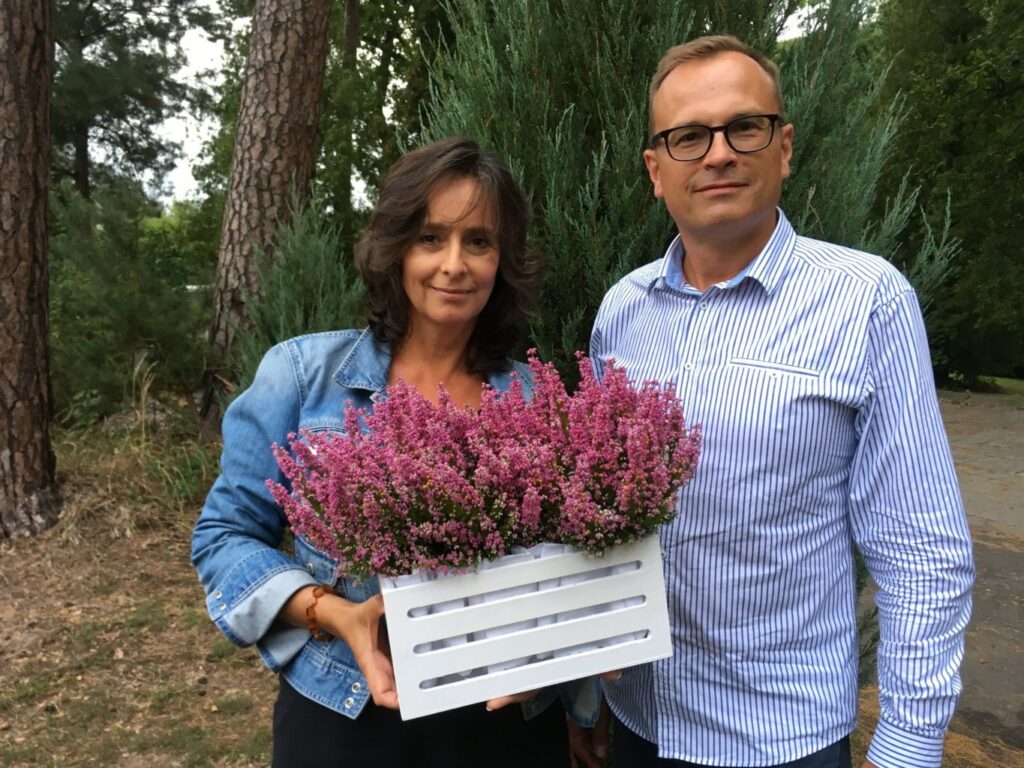
Paweł Deląg - a leading man on the road
I managed to meet Paweł Deląg in Warsaw's Wilanów district, although it was not easy. His work as an actor means a great deal of travel. Suffice it to say that the list of countries he has visited for work includes Tunisia, Morocco, Egypt, Russia, France, Austria, the Czech Republic, Slovakia, Hungary, Bulgaria, Romania, Colombia, Ecuador, Belarus, Ukraine, Thailand, Vietnam, South Korea and, of course, Russia. On his travels he observes cultural differences, tries to find the vanished world of the places he visits, to understand their history and compare it with the present. He notices the degradation of the planet and values time spent in nature, which, in his view, has the gift of healing people. He believes, however, that travelling is not always about enriching oneself, and is sometimes nothing more than a sign of widespread consumerism.
justKowalski: Paweł, are you a traveller or a tourist?
Paweł Deląg: Hmmm, good question. I think I am somewhere in between those two worlds and belong to neither. Neither "all inclusive" nor "last minute" is for me. On the other hand, I cannot see myself hacking my way through a jungle somewhere in Brazil with a rucksack. When I have time off I often end up in rented houses; it might be Spain, Italy or Greece. Then activities matter to me: horse riding, windsurfing, motorsport, sailing. That is how I really rest.

justKowalski: Do you like Italy?
Paweł Deląg: I adore Italy, I love its nature, its food and its architecture. Right now I am thinking about getting "from Polish soil to Italian" as soon as possible (a reversal of a line from the Polish national anthem), because I like it everywhere in Italy; after all, every region has its own character, its own dialect, its own cuisine. It is, in the end, a patchwork of once independent little states that Giuseppe Garibaldi united only in the second half of the 19th century. (justKowalski: if you would like to read about Naples and its surroundings, you will find my piece here). Wherever I am, I always want to understand the historical roots of the places I visit. It is important to me not to limit myself to the "here and now", but to get to know what used to be.
justKowalski: Are there places in the world where you would like to live?
Paweł Deląg: Yes, there are places in the world where I would like to live and be part of the local culture; in some way they stimulate me intellectually. Paris is one such place, and so are New York and London. Seeing good theatre, taking part in the richness of their art, painting, exhibitions, going to concerts. I would like to travel more, to bring back something that will enrich me inwardly, something that will make me a better artist. I mentioned New York, although it is an exception, because the United States in general put me off; everything there revolves around the dollar, everything has its price, everything can be bought and everything has to be paid for. You are worth as many dollars as you have in your pocket. They do not treat you as an individual. There is no spirituality there. It is similar in Australia, where I also miss spirituality. In Russia, by contrast, people see you as a human being. I have the feeling that the "human being" matters in South America and in Africa too.
justKowalski: When you travel, do you notice the degradation of our planet?
Paweł Deląg: Yes, I am increasingly aware that the world is in danger, that it is polluted and dirty. I remember the sight of oil palm plantations stretching to the horizon, and I immediately think that this is a product that sells even though it is not good for our health. David Attenborough said that "man is the greatest pest"; we have the strength and the power to transform the planet, but we can also destroy it. We are the fruit of evolution, but now we are escaping evolution and creating a new being: a human combined with artificial intelligence. And this new creation is very irresponsible towards the ecosystem. For those who travel because they are looking for harmony, love life and have a deep love of nature, this situation is especially hard to accept, because they see the changes taking place, particularly if you have a perspective of 15 to 20 years. And nature is a gift to us, a miracle, it has the power to heal people. Contact with nature is the best thing that can happen to us on a journey. After all, the world is becoming ever more crowded and formulaic. Let us not kid ourselves: travel is also bound up with consumerism. A Brit says he finally has to go to Krakow, because everyone says you have to go there, because the beer is cheap, you have to go to Santorini too, and someone absolutely must see Prague as well....

justKowalski: When I ask you about the countries you have visited, which one comes to mind first?
Paweł Deląg: Vietnam came to mind straight away. I was shooting a film there and one thing stuck firmly in my memory. The Vietnamese treat white people in a particular way. I had the impression that they still remember the war with the United States, which they won. They approach white people with a certain toughness and pride, and I sensed a good deal of reserve towards our race, although it was not contempt. Another surprise was that I had not expected so many really good resorts. I contrast these impressions with what I saw in Thailand; Bangkok in particular made an unfavourable impression on me.
justKowalski: Many people see Africa as a unique part of our globe. What memories do you have of the Dark Continent?
Paweł Deląg: I remember my trip to South Africa, Mozambique and Zimbabwe and the two faces of those countries: one created by white people, the other the world of the black population. I remember Johannesburg and its city centre, made up of tall skyscrapers. White people moved out of there and black people took over the centre. Now it all looks like a slum.
justKowalski: You had the chance to see two South American countries while filming "Ameryka Express"...
Paweł Deląg: I visited Guatemala and Colombia, but I cannot say that I explored that part of the world freely. It was a show, a programme, the camera was around us all the time, and as contestants we played certain roles, aware that we were being filmed. That does not change the fact that I made some observations. In old Cartagena I was shocked by the amount of juvenile prostitution. Lots of beautiful, well-dressed girls and boys. What I liked about Latin American culture from the start was their readiness to smile, their great spontaneity. The "fiesta", the fun, the joyful way of living life suited me very well; it was very natural, despite great poverty. On the other hand, I had the impression that the state is poorly organised there. I remember the day when the owner of a restaurant invited me to dinner in Bogotá and told me his story involving the drug cartels. It is his family's story, although his family is no exception, because every family in Colombia suffered during the cartel war. The mafia kidnapped his father, they negotiated the terms of his release, they did not know whether he would ever come back. They have a tragic past and a bad image, but they care very much that Colombia should not be seen as a country of cocaine production and smuggling and of the mafia. I was enchanted by the architecture of those countries, although I also felt a kind of objection, knowing that the white man came in, wiped out the natives, carried out massacres and built what we now admire. I would like to go back there one day, taste the local cigars and drink a glass of Zacapa rum.
justKowalski: And India? You have been there twice. How do you see it?
Paweł Deląg: There are people who fall in love with India and people who hate India. I did not fall in love with India, but it made a big impression on me. I have a problem with dirt and with crowds, but nothing I had experienced in those respects before came anywhere close to what I saw in India. That was when I realised that space is a luxury, that you do not normally feel 10 people constantly at your back. It was striking, something that hit me hard. While I was there I quite unintentionally became part of a kind of pilgrimage to the tomb of a Sufi saint. Strange things were happening around me, but they were explained in terms of energy being released; many events seemed to have a greater meaning and to carry a certain significance and spirituality.

justKowalski: Finally, tell me about Russia, where you feel like a fish in water. You have acted in Russian in several films and you have star status in that country.
Paweł Deląg: When I think about Russia, and more broadly about Eastern Europe, it strikes me that the history of the 19th and 20th centuries was particularly cruel here. Revolutions and the First and Second World Wars meant the ruin of the economy and of culture. The British or the French came out of the wars with their cultural fabric intact. When I think of Russia, I appreciate its strong spirituality despite many years of communism. You should start exploring it with its great European cities: cosmopolitan Moscow and St Petersburg. Both have wonderful history and architecture. Some say that Moscow is like Warsaw and St Petersburg is like Krakow, but in my view that is a very inappropriate comparison (justKowalski: I have been to St Petersburg and wrote about it here). Moscow is a beautiful, modern metropolis built to a clear architectural plan, whereas Warsaw is a strange patchwork of a destroyed city. Moscow means great squares, streets, modern buildings and a proper centre. Culture is very much present there. I do feel, though, that St Petersburg is Moscow's intellectual hinterland. Films are made in both St Petersburg and Moscow anyway. A year ago I had 200 shooting days in the Russian capital. Around Moscow you have to see the "Zolotoye Koltso", the Golden Ring of ancient towns that surround it. Suzdal, for example, which resembles Poland's Kazimierz Dolny, is a town of 300 Orthodox churches and is especially charming in winter. I will tell you, I am a fan of the Russian banya. Every good banya must have a "banshchik", who makes sure we regenerate to the full. He does not beat us with birch twigs, he only fans us, and it is this movement of air that regenerates you. The procedure takes about 45 minutes. A good "banshchik" is the foundation of a good Russian banya, and the sauna is its poor relation.