Muniek Staszczyk: "I've been to 55 countries, I watch the world"
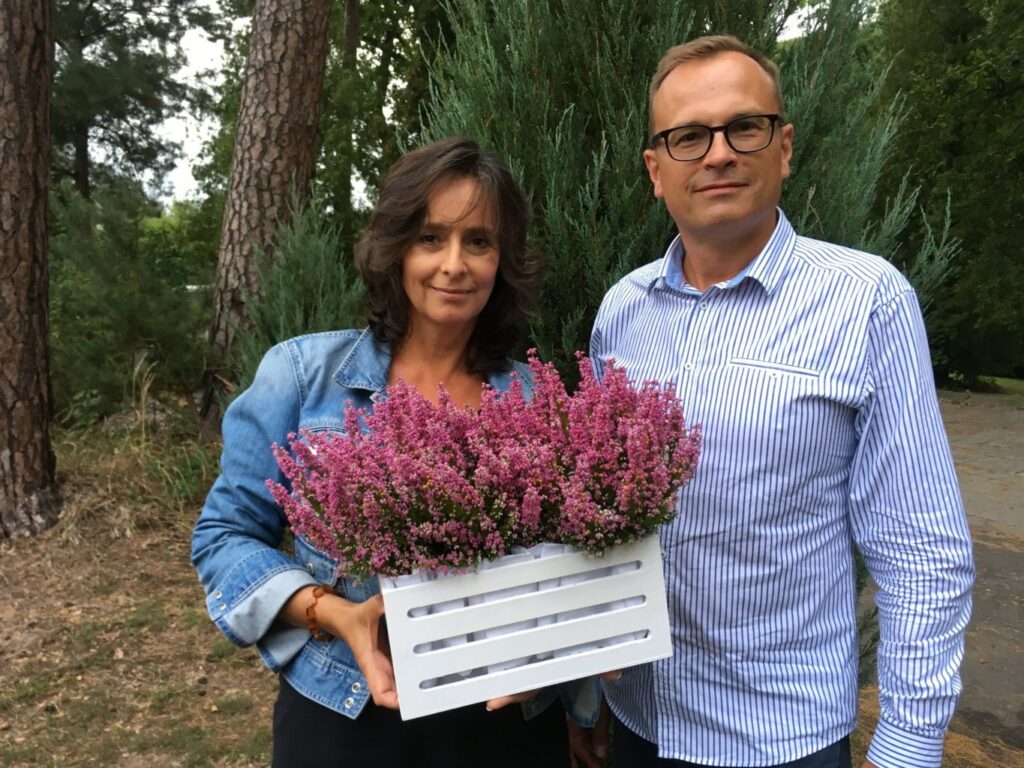
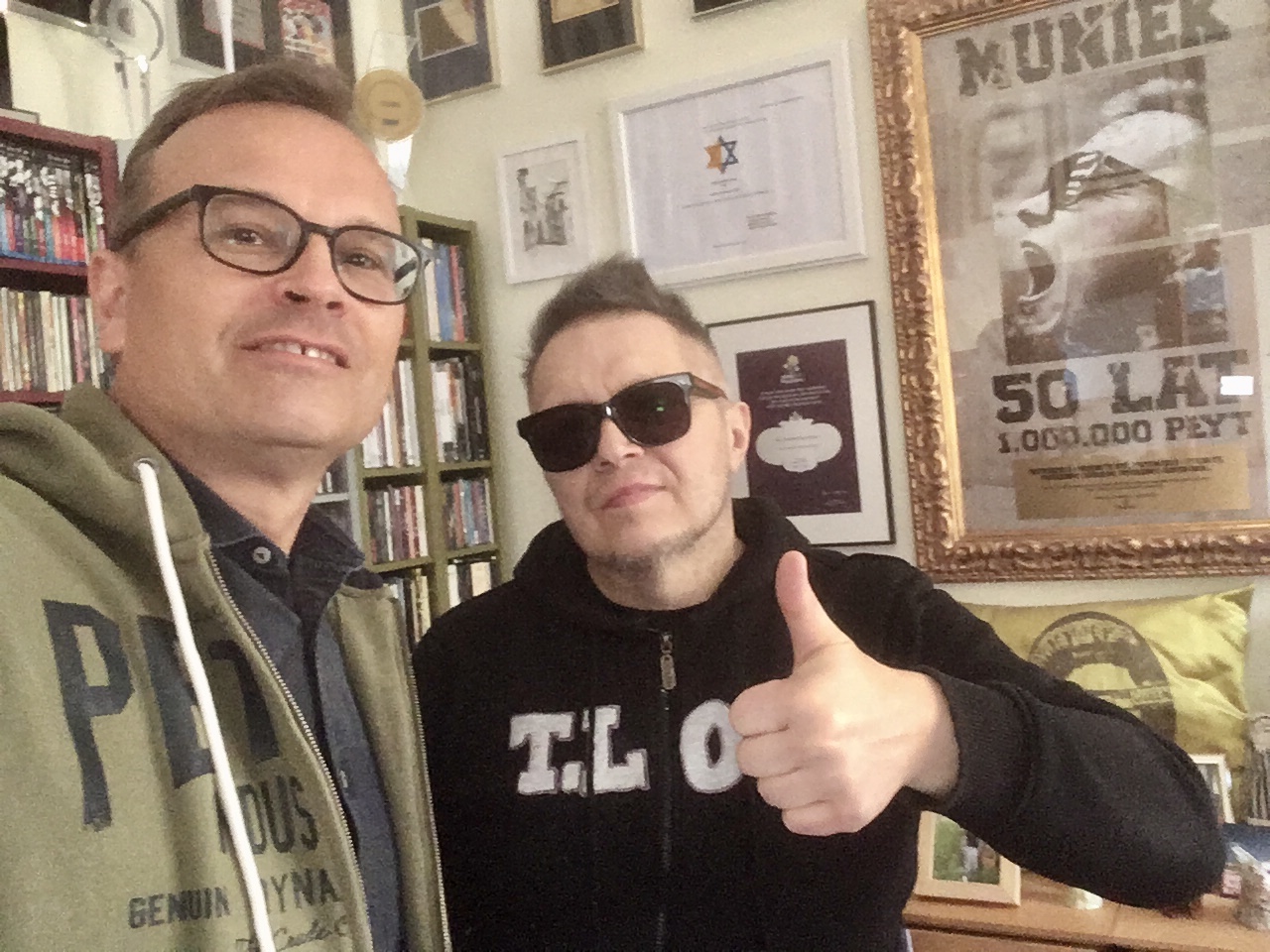
Muniek Staszczyk, founder and frontman of the band T.LOVE, met me at his home in Warsaw. He talked at length about his travels, the places he has been and the places he would still like to go. A humanist by vocation and education, he turned out to be a very perceptive observer of people and nature, someone who brings back from his trips impressions that prompt deeper reflection.
justKowalski: Your first trip abroad.... Do you remember it?
Muniek Staszczyk: It was 1987. A trip to Rome with Marta, my girlfriend then and my wife now. We went with rucksacks and met Poles there, in camps near the Italian capital, in Ostia. It was a good time, because everyone treated Poland with respect, Germans gave us lifts when we hitchhiked, Italians understood the "Solidarity" movement. You could say we had very good PR. People helped us. I met fellow Poles there who were waiting to emigrate to Canada or Australia. I remember there was a thriving trade among them in cigarettes or anything at all. I had brought some powdered soups and tinned luncheon meat. When we were going back I left it all there. And I remember them tapping their heads: "why are you going back?" they asked. Nobody knew me then, but I told them I was going back because "I've got a band in Poland". They replied "this is where life is!", standing there at the car wash. Finally they asked "how much do you want for the soups?". "Nothing, I don't need them". They said I was some "different kind of Pole". Funnily enough, I can bring this full circle. It is 2017 and we are playing concerts in Toronto. After the gig we are sitting in a club and our manager says some guy is desperate to see me, that he wants to tell me something important and that we know each other from the 1980s. In comes a guy I do not recognise, lays out Canadian presents and says with a strong English accent: "Listen, I met you in Ostia near Rome, I was one of the ones you gave those soups to"....
justKowalski: And after that? What were your next trips like?
Muniek Staszczyk: At first I felt a huge difference between the way we lived, as if in some closed barracks, like in a camp, and the West. I went to West Berlin once and you did not know how to behave. In theory I was an educated guy, I was studying Polish literature at the University of Warsaw, I knew English, I knew Russian, but I felt like a savage. Around Zoo Station, where there was nobody but junkies and down-and-outs, I felt it was wonderful, because this was the West. I remember going into a toilet nearby and being amazed that the water flushed by itself. I started looking around to work out what was going on, but it was awkward. I remember feeling so humiliated by communism.

justKowalski: You are fascinated by cities, but only those in a particular position...
Muniek Staszczyk: Yes, that is true. Berlin, Paris, London, Rome or Barcelona are such "obvious" places, cities with a permanent position in Europe. I am more interested in those that lie on the border of something. Istanbul and St Petersburg are cities like that. The latter, because of its location, has always been the most open to the West of anywhere in the country. I call St Petersburg "the New York of Russia", in the sense that mentally it reminds me of that American city because of its artistic flair (author: I described St Petersburg here). I have been there twice, in 1989 and most recently in 2018. Istanbul, in turn, while being the gateway to Asia, is still part of Europe.
justKowalski: But you also see something special about islands.
Muniek Staszczyk: Yes, both small ones like Malta and big ones like Iceland, Sardinia, Sicily, Corsica and Crete stand apart in atmosphere from the countries they belong to. They always have their own character. Corsica is different from France, Sicily and Sardinia are different from Italy. Crete also seems different from the rest of Greece. But even Great Britain is different from the rest of Europe; it has its own mental autonomy.
justKowalski: And your travels in the 1990s? T.LOVE was already well known by then.
Muniek Staszczyk: Yes, in the 1990s, when T.LOVE started bringing in some income because it was already a popular band, my wife and I began to travel more; the children were small, but we could already take them with us. I wanted to show the kids a bit of the world, and we started with the warmer countries. I remember 1997, the success of the album "Chłopaki nie płaczą" ("Boys Don't Cry") and our trip to Croatia. People were afraid to go there, because the war in the Balkans was still smouldering. I remember the Istria peninsula and the beautiful Croatian islands (author: I described the attractions of the Istria peninsula here ). Now Croatia is a run-of-the-mill destination, but back then many people thought we were mad to go there. Every German and Englishman we met there was quite a freak. We stayed in a tent. That was the beginning of our family travels.... today my daughter is 26 and my son 30, and for some time now they have not travelled with us. The last trip with the kids was in 2009. We went to Romania, to Transylvania. My wife does not need to travel compulsively, like "I must, I must".... She likes going to Italy, which my daughter is connected with. We know the country inside out, but every part of it is different; after all, it is a patchwork of states that were independent until not so long ago.

And your most recent trips?
Muniek Staszczyk: The last trip was to London, where illness struck me, but the one before is more interesting. Look at this photo of a polar bear. That was in May 2019, on Spitsbergen. It was an expensive trip, 2 weeks on a ship. First a flight to Oslo, then another flight, about 3 hours further north. I went with a mate, a Himalayan climber, and he advised me what to buy and what clothes are essential there. We saw bear tracks many times, but we never saw one up close when we went ashore. This photo, which my mate took, now stands near my desk. A few minutes later the bear caught a seal. You know, the blood on the snow, like on the Discovery Channel. Cruel, but it had to eat something. The theatre of nature. There were shore landings, the guide was from Guatemala, and whenever we went ashore he always had a loaded gun to hand. The guy had come across a polar bear 4 times before, but he knew how to get away without provoking it. Once he was in a dinghy and a bear, a strong swimmer!, started chasing him, but he managed to get away then too. You know, I compare Spitsbergen with Iceland.... Iceland is more varied, while here it is poetry of a different kind, a certain permanence, the constancy of nature. In Iceland there are geysers, volcanic phenomena, hot springs and steam. (author: you will find my impressions of Iceland here )
justKowalski: Many people are fascinated by Africa as the cradle of humanity. What is your opinion of the continent?
Muniek Staszczyk: I have been to Kenya, Tanzania and South Africa, and I think Africa is very interesting. I remember the beauty of Cape Town. The people in black Africa are wonderful. There is poverty there, but people have different expectations. You talk to your safari guide in Kenya and he says: "It's not bad, we have healthcare, we have a relatively democratic government, there are no big epidemics, there is enough to eat". They cooked simple food for us, and I talked to them a lot. I made friends with one of the cooks, and we chatted about music, reggae, Marley. In terms of its people, Africa is wonderful.
justKowalski: And other parts of the world?
Muniek Staszczyk: I do not know Asia, because you cannot really call Turkey or Israel Asia. I have been to China, but when I looked at the map it turned out I had seen only a tiny part of the country, and that was 6 cities. I travelled by train with Chinese people. I remember the night-time quiet hours from 22.00, which everyone dutifully respected. I have travelled all over the States, from New York to New Orleans by car.
justKowalski: How do you behave on your trips? Do you keep your distance or try to get close to the locals?
Muniek Staszczyk: I have always been like the hero of Woody Allen's film "Zelig", who had the ability to resemble the people he was with. When he was with a Black man he became Black, next to an Indian he became Indian. The film was, of course, total surrealism, a grotesque. It is not so much that I "become" another person, rather that I want to get to know the culture of a country, for example by eating what they eat. I remember going to Albania in 2008. The Greeks advised us against it. Now Albania is kind of trendy, but it was not back then. We were in Sarandë, a resort, then we went further, there were no roads, but we visited several towns. Everywhere I want to get to know the local vibe, eat local food and get a sense of the culture a country lives by, whether they are Catholics, Protestants or Muslims.
justKowalski: And where would you still like to go?
Muniek Staszczyk: I would really like to go to Japan, an extremely interesting country, and it is an island too. I also want to see Mongolia, Siberia, Lake Baikal. The fashionable destinations like Thailand or Vietnam do not excite me as much. I have no ambition to see the whole world. I do not know South America either; I have been to Cuba, yes, but I would like to see more: Brazil, Argentina, Peru, Mexico. For now I have to take my doctors' opinions into account, and they will not let me fly too far. I have an offer of a trip to Australia, but I have to monitor my health. If I go, I would like to see New Zealand as well as Australia.

justKowalski: And your famous stay in London? What memories did you bring back from there?
Muniek Staszczyk: 1989 was not an easy time. For people my age London was the natural destination, to work in restaurants or on building sites. In Poland there was nothing but vinegar on the shop shelves. I left in July '89; before that I had got an invitation and gone through a detailed interview at the British Embassy. I had money for a week, maybe two. I met a guy who spotted me at Piccadilly Circus. Somehow he recognised me from gigs, still underground ones back then, at the Warsaw clubs Hybrydy or Remont. He recommended me to a pizzeria in Soho. Then the restaurants changed, and the highest I rose was waiting tables. I lived in north London, near Finsbury Park station, but later in various places. Did I see the sights of London? When I had a "day off" I would buy a four-pack of beer, get on a double-decker and ride to different parts of the city. In those days nobody minded you riding the buses with a beer.
I also worked near the Arsenal stadium; fans used to come in, and my boss was Mark. He also waited tables, just like me. The customers were not easy, the girls had a hard time there, but I could give as good as I got; they called me "Zigi" and I think they liked me. In November '89 I was hit by a kind of pre-Christmas nostalgia. And the words of a song came into my head, about a winter's day dawning outside the window and me looking out as another day of my life began, and I thought "damn, that's good! I can't lose it, where do I write it down?". I told Mark it was my stomach, probably diarrhoea, I had to get to the loo fast, and I wrote those lines down on toilet paper and went back to work, and the lyrics kept coming together on their own, so I said I needed the loo again. That is how "Warszawa" was born.
I will tell you, London is the city closest to my heart. We have played there many times, and I know it well, although it keeps changing. Those restaurants are gone now.
justKowalski: What puts you off travelling, what scares you away? What do you think about the current threat from the virus?
Muniek Staszczyk: You have to be careful, but stories like this will crop up more and more often. Viruses die down in spring and then come back. Perhaps more people die of ordinary flu, but I am not playing down the new coronavirus either. I am not indifferent to it, but I am not paranoid either. My current health problems, a stroke, have given me a lot to think about. I never looked after myself, never had check-ups, and now I have learned my lesson: 3 months in hospitals, in England and in Warsaw. With T.LOVE we were racing along at 250 km/h, and that was how we lived. Now my travels are largely decided by doctors. I have slowed down; maybe in summer I will fly somewhere not too far away. A trip to Porto is on the cards. In Portugal I have been to Lisbon and Fátima, and now Porto has come up.
justKowalski: I wish you a quick and full recovery and the chance to make your travel plans come true!