Carinthia - Austria's southern region
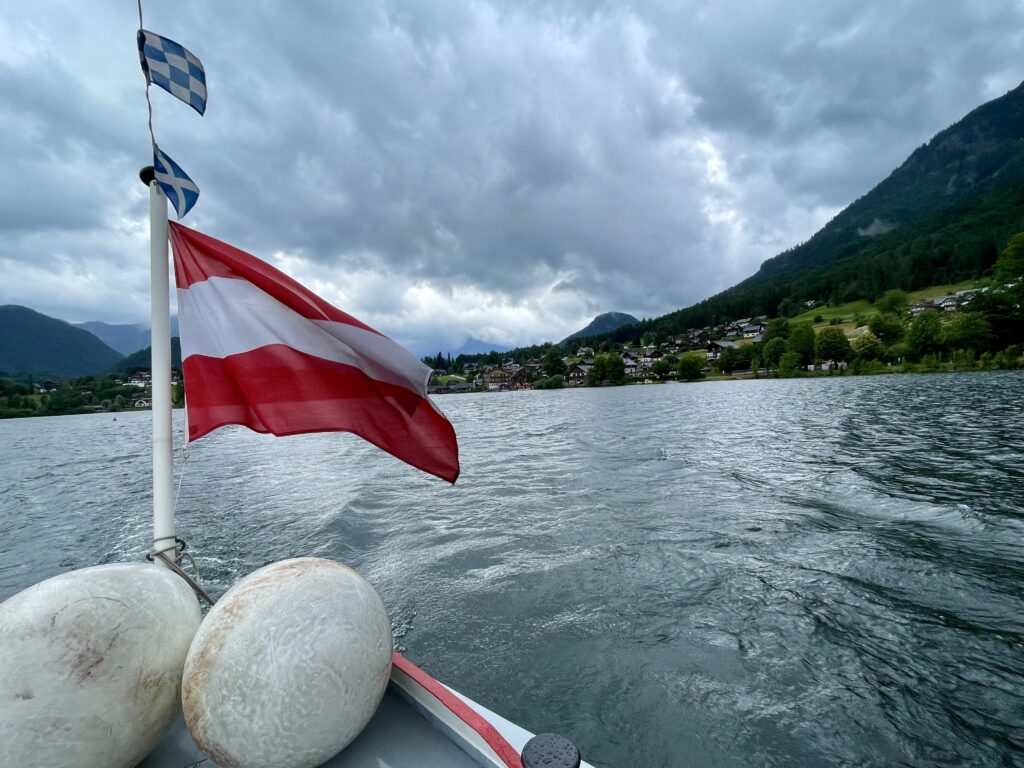
Carinthia is Austria's southernmost region. It borders Italy and Slovenia, and the locals stress that they feel emotionally close to their neighbours. With its well-developed infrastructure, clean lakes and mountains, the region makes an attractive holiday destination. In summer the lakes are very warm, ideal for sunbathing and water sports, and cycle routes have been laid out around them.

Scenic roads: Grossglockner and Nockalmstrasse
Some of the most beautiful mountain scenic roads are in Carinthia, and the Grossglockner road is one of the most fascinating on the Old Continent. The route is 48 km long and, with two starting points, forms the shape of the letter T. Wherever you start, your goal will be the Kaiser-Franz-Josefs-Höhe, from where you can see the Grossglockner (3798 m), another 30 three-thousanders and the Pasterze glacier. It is worth devoting a whole day to the drive and breaking it up with hikes - seven walking trails branch off from it. Along the way you will also find 14 mountain restaurants and 4 children's playgrounds.
A good base for the Grossglocknerstrasse is Heiligenblut, a beautifully situated Alpine village. In its centre is the valley station of a gondola lift that goes up to the summit of the Schareck (2604 m). Several trails start there, and the simplest idea is to walk down to the middle station or even all the way back to the village. The path offers lovely mountain views as it zigzags lower and lower.

The Nockalmstrasse is another of Carinthia's scenic roads. It is 34 kilometres of road that winds along the slopes, crosses mountain pastures, takes in one viewpoint after another and has several interesting stops. Educational trails lead off it, and you can stop to watch a 3D film about the region, look at fossils found here or learn about old mining techniques. There are also places to eat and rest.
Medieval Gmünd and the Porsche Museum
Gmünd is a town that has kept its medieval character. It was once key to maintaining the trade route between Nuremberg and Venice. Today it is a quiet little town that has won the hearts of many artists, who have opened studios and galleries here. Many people come to Gmünd to visit its Porsche Museum. After all, Ferdinand Porsche worked here from 1944 to 1950. Thanks to the efforts of a private collector, cars, engines, drawings and other exhibits treasured by motoring fans are displayed on two floors of a converted old building.

Klagenfurt on Lake Wörthersee
When in Carinthia, you must not miss the regional capital, Klagenfurt. The city lies on the Wörthersee, Austria's warmest lake, a favourite of the many celebrities who flock here. Klagenfurt is charming, and a short stroll will reveal many squares, large and small, which cafés have often made their own. The old part of town stands out for its chequerboard layout, with arcaded courtyards hidden behind the street façades. Italian architects were responsible for these buildings.

Lakes, rivers and cycle routes
Carinthia boasts several clean lakes whose water reaches as much as 28 degrees in summer. Around the lakes there are guesthouses, hotels, superbly equipped campsites and holiday resorts. They usually come with places to hire boats and bikes. Cycle routes follow waymarked trails, mostly asphalt or otherwise surfaced. Some sections run along local or minor roads with little traffic. The routes along the shores of rivers and lakes are generally flat or gently rolling, with the occasional steep stretch.

Carinthia's cycle touring area covers the surroundings of the province's great lakes and of the Drava and Gail rivers, extending into the hilly southern border country. The most spectacular cycle route is the 'Great Carinthian Lakes Loop', which takes you past five Carinthian lakes and rivers - as much as 50% of the route runs along the water. This trail (340 km) is shaped like a figure of eight lying on its side, and it starts and finishes in Villach. Allow from four days to a week to complete it.
Carinthia's routes follow waymarked trails, mostly asphalt or otherwise surfaced. Some sections run along local or minor roads with little traffic. Routes along the shores of rivers and lakes are usually flat or gently rolling, with an occasional steep section.

Carinthia has an extensive tourist offer, so you can find all kinds of accommodation there. Those planning to cycle the route along the Drava (Drau-Radweg) are advised to visit www.drauradwegwirte.at. It is the website of an association set up by around 50 hosts who want to provide the best possible service to cyclists travelling this route.
Across Carinthia there are around 50 rental outlets where you can hire an e-bike. Very often a hired bike can be returned at any station. Information and online booking are available via www.kaernten-rent-ebike.at.
One example - and one of the shortest - is the route around the Faaker See. It is only 10 km long and ideal as a 'warm-up' or a family ride before you take on further cycling challenges. Short as it is, the route is surprisingly varied. You ride on asphalt, along forest paths or across meadows, now drawing closer to the lake, now moving away from it. Sometimes you come across wild beaches, at other times busy bathing spots with full facilities.

Carinthian food: Ritschert, Kärntner Nudel and liqueurs
Carinthia was once a poor region, and its dishes were simple, based on local ingredients. The infertile land did not yield good harvests. Its assets, however, were forests full of game and mushrooms, as well as freshwater lakes and rivers teeming with fish. A fondness for simple cooking has remained, but its flavour has been enriched by influences from the south and the use of herbs.
Carinthian cuisine caught the attention of the monk Paolo Santonino, who travelled to Carinthia three times in the 15th century on inspection visits ordered by his superiors in the Church hierarchy. He left notes praising the quality of the food he was served, especially the fish. Clean lakes and rivers are still one of Carinthia's assets today, and although supply now has to be supplemented by fish farms, the fish - especially trout - enjoy a well-deserved reputation.
Among the meat dishes, Ritschert deserves a mention. This one-pot dish of pearl barley, beans and smoked meat comes straight from traditional country cooking. Its ingredients must include onion, garlic, carrot and celery. Lovage gives it its characteristic aroma. In its taste you will find notes of the krupnik (barley soup) that Poles know well, but the Carinthian speciality is much thicker.

A particular delicacy of the region is Kärntner Nudel, which are filled dumplings. Carinthians will not take offence if you call them by the Italian name 'ravioli'. Some have a filling similar to that of Polish pierogi ruskie (potato and curd cheese), but don't be surprised if bread is used instead of potato. The filling is also often minced meat, or a vegetable mix with plenty of spinach. In fact, the fillings vary according to local traditions and the family traditions of whoever is making them. The same goes for their size. It is said that the further north in the region you go, the bigger the dumpling. The dumplings are drizzled with butter and served with a thick slice of hard cheese and bacon.
After a good lunch, home-made liqueurs are often served. They are made from the fruit of old apple varieties and from pine cones. The latter are gathered in the mountains, from the variety whose cones have a distinctly red centre when cut open. A note of resin is clearly detectable in both the aroma and the taste.

The Carinthian authorities expect interest in the region to keep growing. They hold strong cards, such as the mountains and lakes. They believe they will now be able to attract the tourists who are wary of the summer heatwaves that increasingly hit Europe. Lying higher up, yet still offering lakes for water sports, Carinthia may become an ever more popular choice for holidaymakers.