Volvo XC-90 Recharge T8 - 7 seats in luxury
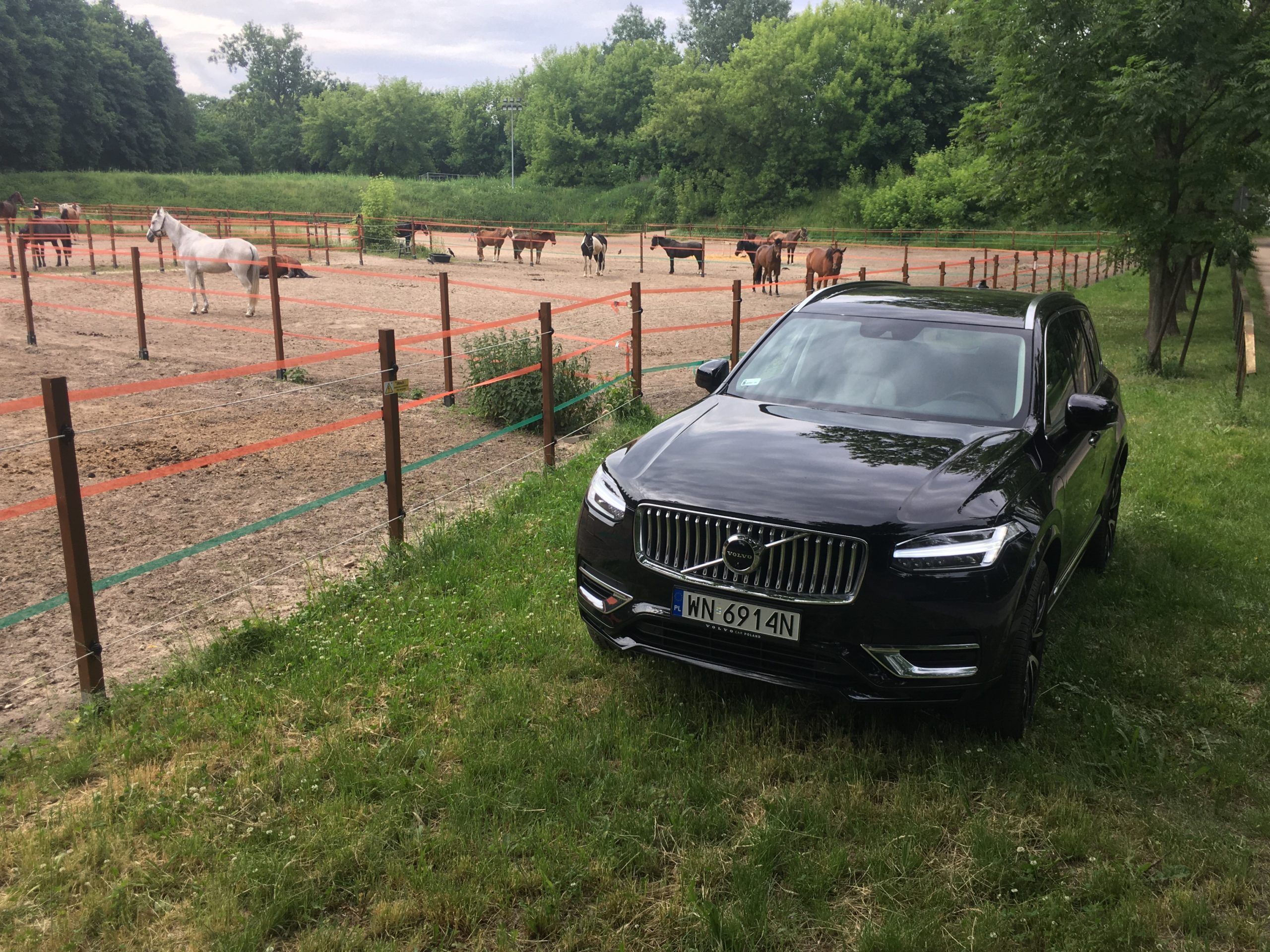
The Volvo XC-90 Recharge T8 is a mighty SUV with a Scandinavian pedigree. It can carry 7 people in a luxurious, pastel-coloured interior. The car commands respect with its sheer size, but it can also be silent and emission-free.

We have already grown used to the "boxy" shape of the latest Volvos. Even from a distance, the car looks very solid and inspires confidence. With the daytime running lights on, other road users can make out the distinctive shape of the illuminated front end: a letter "T" lying on its side. The car is huge, and it will be perfect both for life at a suburban residence and for weekend trips or holiday journeys. Unfortunately, you can feel its size and weight when braking and when cornering at speed.
A seven-seat interior in Scandinavian style

The interior lets you carry up to 7 people. What comes as a very pleasant surprise is that even with every seat in use, there is still quite a sizeable boot. Unfortunately, in that configuration you cannot fit the luggage cover; it looks as if you have to leave it at home when planning a trip like that.

The design of the cabin draws on a Scandinavian colour palette. The wood trim and the leather seats come in pastel shades. The choice of colours never tires the eye and gives a sense of comfort and calm. The seats are very comfortable and heated at three levels of intensity. The quality of the interior makes a very good impression. Even details such as the key or the gear selector are made with the utmost care. The designers have thought about ease of use inside the cabin - for the first time I came across a glovebox that is unlocked electrically with a button. Is that excessive luxury? No, it is convenient and improves safety; to open the glovebox the traditional way, you would have to lean right over and take your eyes off the road.

Most of the car's functions are adjusted via the touchscreen, a solution that will not suit everyone. Some people will fully accept it, while others would prefer some functions to be controlled the traditional way. It seems that it would have been better, for example, to keep a traditional air recirculation button, so that it is instantly available when you suddenly find yourself behind an ancient, smoke-belching lorry or are caught out on the road by a field where grass is being burnt. According to Volvo's designers, it was more important to have the front and rear window heating buttons close at hand. It seems that safety, which Volvo constantly strives to keep in mind, made itself felt here.
Range, drive modes and charging

Driving the Volvo is enjoyable in both combustion and electric mode. I was very pleased to find no compromise when it comes to the car's range. Adding the hybrid system and the battery has not drastically reduced the range on the combustion engine. Volvo has managed to avoid a shortcoming that often affects similar designs from its rivals.

When it comes to drive modes, the driver has several to choose from: "constant four-wheel drive", "economical driving, i.e. <pure>", "hybrid driving" (recommended by Volvo as ideal for everyday use), "power" and "off road". While driving you can activate the Brake mode, which increases the level of energy recovery; it is easily engaged by pulling back the selector on the centre tunnel. Charging is via a Type 2 connector, and once the car is plugged in and has measured the charging parameters, it shows the exact time when the batteries will be full. The car comes with a charging cable, and the charger unit on it does not have the common shape of a hefty "brick"; it is much smaller, lighter and handier, with a rounded shape.

Volvo's campaign: securing tablets in the car
My test of the Volvo XC-90 T8 coincided with the launch of the Swedish manufacturer's campaign on carrying "electronics" safely in cars. A survey commissioned by Volvo Car Warszawa shows that more than 70% of parents let their children play with a tablet during car journeys. Unfortunately, only 38% of them secure it properly. In its latest campaign, Volvo points out that children's safety while travelling depends to a large extent on properly securing the tablets the little ones use during the journey.

It turns out that more than half of those surveyed do not realise that in an accident a tablet can become dangerous to the occupants. Although the Polish Highway Code does not clearly require heavy or sharp objects inside a vehicle to be secured or fastened because of the risk of injury to the occupants, Volvo stressed that this is worth paying attention to. The Swedish company's survey showed that 10% of parents let their toddler use a tablet. Volvo offers a holder that allows a tablet to be mounted on the headrest of the seat in front of the child, so that the journey is safe for everyone on board.
You can find out more about this campaign here.