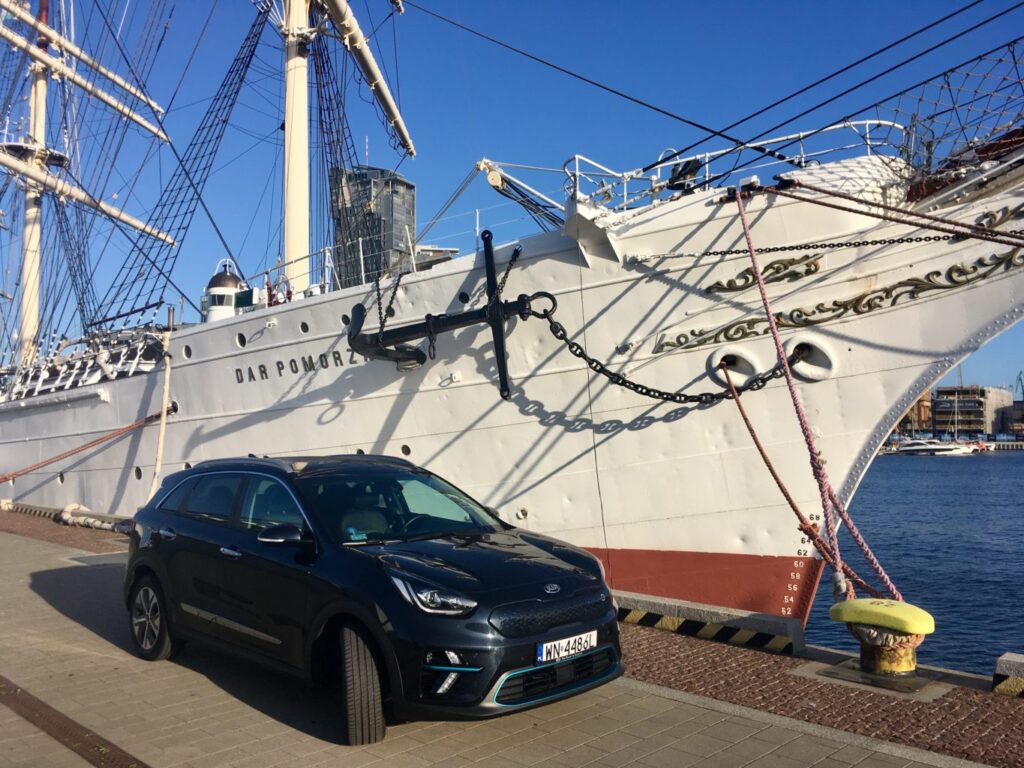
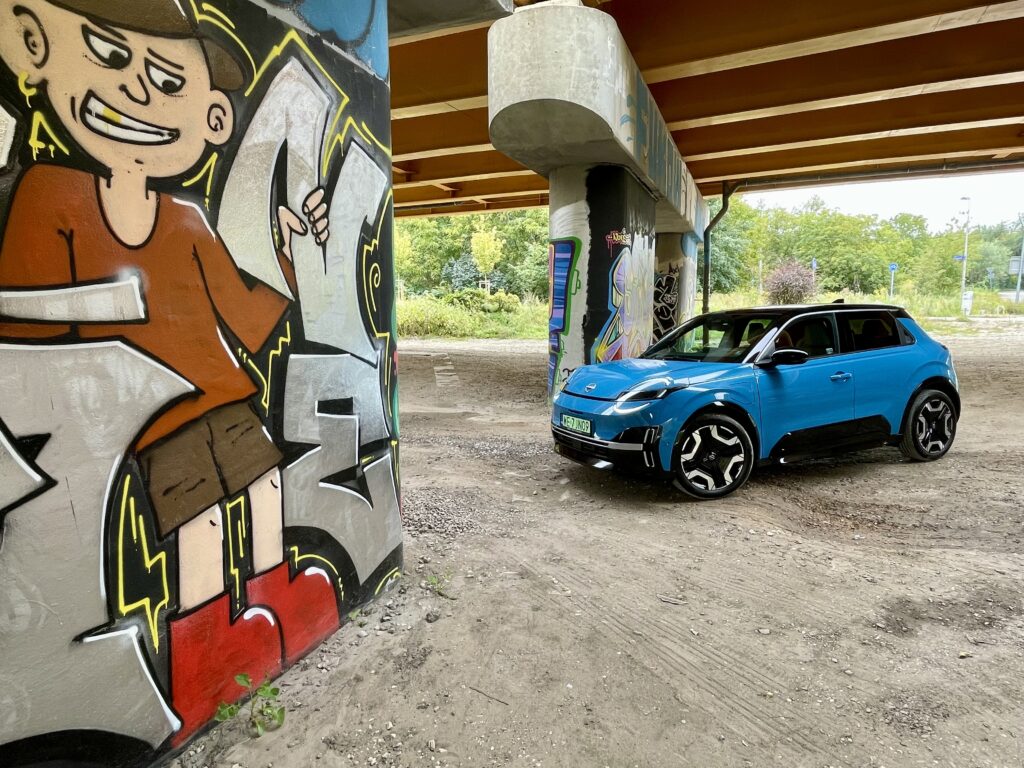
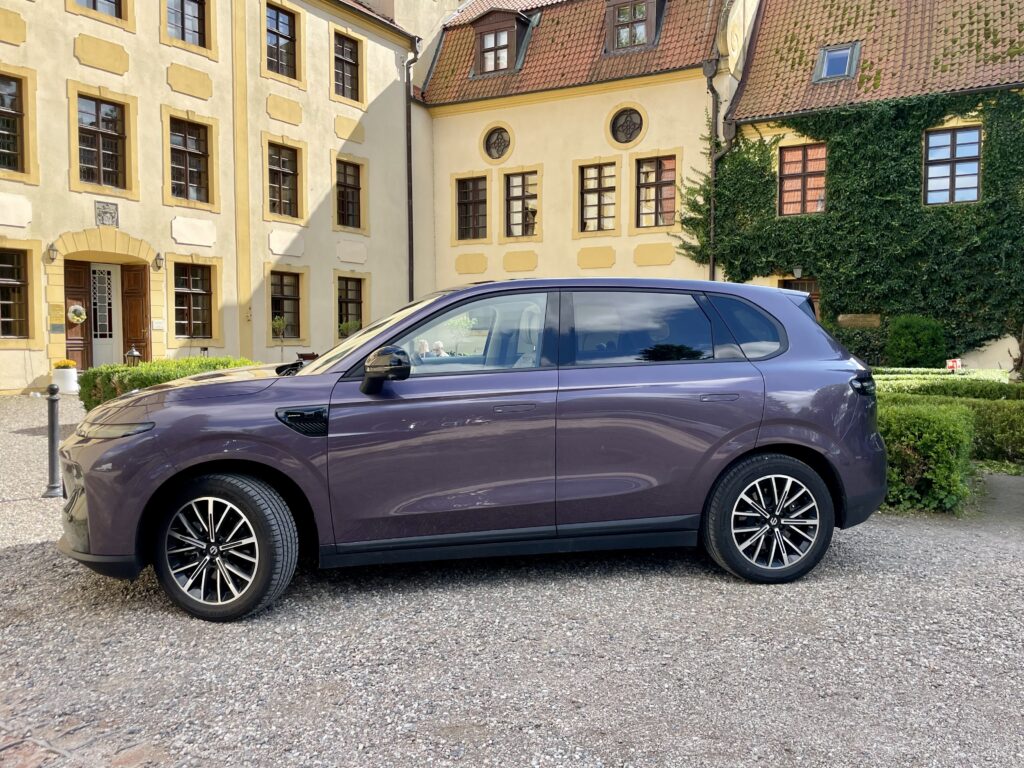
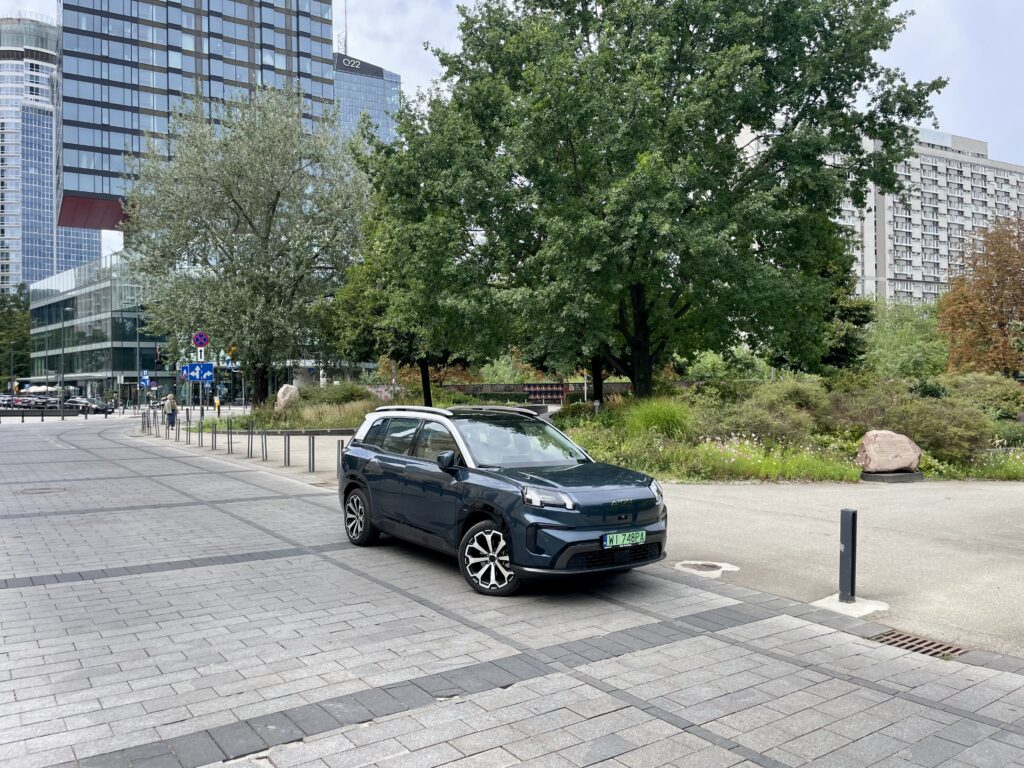
Peugeot e208 on Corsica
Zero-emission or combustion? Waiting for me at Bastia airport on Corsica was an electric Peugeot e208, in which I covered 865 km over the early-May holiday week - and those 7 days were full of surprises.
It has to be said that the small Peugeot's design remains fresh and attractive, and when the French brand created this car, it planned a zero-emission version from the outset. This means there are no compromises on the main practical parameters: the boot holds 311 litres, exactly the same as in the conventionally powered versions. Cabin-size suitcases fitted in with no problem.

Nevertheless, the raised floor hiding the batteries means that taller passengers will notice there is less headroom, which may affect their sense of comfort. The car has a flat-bottomed steering wheel. Peugeot uses this solution consistently in its cars with the lion on the bonnet, even though critics point out that the rim hides the instruments. I had my seat set so that I could see the instruments, displayed in the interesting i-Cockpit layout, without any obstruction. Somewhat irritating was having to change my grip on the wheel during frequent, quick turns on the island's winding roads - after all, seen head-on, the Peugeot's steering wheel is not a circle.
The car has three driving modes - eco, normal and sport. It is a pity there are no paddles for adjusting regeneration, and the single-level B mode is activated with a button on the centre console.

Mountain driving on Corsica and energy recovery
Will an electric drivetrain cope with mountain driving on Corsica? How much will each kilometre cost, and will charging be a problem?
Many people still believe that driving in the mountains is a huge challenge for an EV and that energy consumption will be sky-high. The same people think that motorway driving at a constant, even high, speed creates better operating conditions for a zero-emission powertrain. It may come as a surprise, but the situation is exactly the opposite. When driving fast on the motorway, the car is “fighting” air resistance, which causes huge energy losses. When driving more slowly in the mountains, although more energy is used on the climbs, the car can recover a large share of it on the way down. I remember a route from a high mountain pass down to the coastal town of Bastia, where on arrival the range turned out to have increased by 26 km. That is how much energy went back into the batteries while slowing down.
Charging on Corsica: e-motum, Monta and campsites

During the week of driving I had the chance to use every charging method: a DC rapid charger, an AC charger with a Type 2 connector and slow charging from a domestic socket. The density of charging points is sufficient. So what about the costs?
The fastest - and most expensive - way to charge an EV on Corsica is with a DC charger. The operator “e-motum” charges no handling fee but asks 0.75 EUR/kWh. You start charging with a credit card.

Charging from AC units with a Type 2 cable is slower but cheaper. Although there is an activation fee (1.5 EUR), 1 kWh costs 0.56 EUR. To start charging it was worth using the app of the operator “Monta”. Although the app chose... Danish as its language, navigating it was so intuitive that this was not much of a problem. A plus for “Monta” is that it reports on the charging process in great detail, both in terms of cost and of energy drawn. Remember that the Peugeot e208 shows you graphically on the instrument panel how long it will take to fill the batteries completely with electrons.

I spent four nights in rented bungalows at multi-purpose campsites. At the first, I paid a flat fee of 20 EUR for charging during a 2-day stay, while at the others charging from a socket cost me nothing.
The cost per 100 km and Hertz rental rules
So let us focus on the finances: 19 EUR paid at the e-motum rapid charger, 15 EUR paid to the AC operator Monta and a flat 20 EUR at the campsite. That adds up to 54 EUR for 865 km, or 6.24 EUR/100 km. Converted into fuel (a litre of petrol on Corsica costs 2 EUR), this is equivalent to a consumption of 3.1 l/100 km. The EV turned out to be decidedly cheaper to run than a combustion car. If we assume that a petrol rival would use 6.5 litres, the saving would be 59 EUR.

The Hertz rental office at Bastia airport applies special rules when renting out zero-emission cars. The iron rule of “return with a full tank” does not apply here. For an electric car, a 70% battery charge is enough. For drivers' convenience, there is a DC rapid charger in front of the main rental building.