




The Istrian peninsula is the northernmost part of Croatia, bordering Italy and Slovenia. It has far more to offer than just the Adriatic coast. I have visited the peninsula several times, so let me draw up a list of what I think are Istria's greatest attractions. Here is my subjective ranking:
Rovinj - the most beautiful skyline in Istria
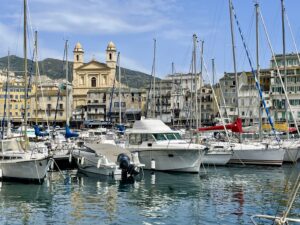
Rovinj has the most beautiful skyline of all the peninsula's coastal towns. Poreč looks interesting too, but nothing can match Rovinj's narrow streets, charming alleys and intimate little squares. In the old days it was an island, but in 1763 the narrow strait was filled in, and now you can walk past cafés and restaurants with dry feet to reach the historic heart of the town. In many places you will notice strong Italian influences, as Rovinj was under the sway of Venice for as long as 500 years. That is also why you often hear the language of the Italian minority here, for whom the town is called Rovigno. Rovinj is also a logistics hub: here, comparing the many offers, you can decide on a boat trip or an excursion inland.
the skyline of Rovinj The Kamenjak Peninsula and the amphitheatre in Pula
- The Kamenjak peninsula is the southernmost tip of the Istrian peninsula. It is a nature reserve with no paved roads, yet you have to pay to drive in between 7.00 and 21.00 (80 HRK). If you hire a bike from one of the rental shops in Premantura, the gateway to the reserve, you can roam its 404 hectares of wild land and enjoy gorgeous views of charming coves and steep cliffs without buying a ticket. You can spend the day on the beach on the peninsula, but you have to leave before dark. There are no permanent buildings, which doesn't stop every interesting cove from having its own beach bar. Don't miss the Safari Bar; it is special because it blends cleverly into the wild vegetation and sits where tall cliffs mark the very end of the peninsula. Millions of years ago this land was close to Africa and dinosaurs ruled it; today you can see their footprints pressed into the rock in several places... On the way to Kamenjak you will pass Pula, the largest city in the region. Its Roman amphitheatre is one of the three best preserved in the world. It is well worth seeing.

The Kamenjak Peninsula Hill towns: Motovun, Buzet and Hum
The charm of Istria is that its attractions don't end at the coast. If you head inland (the north-south motorway makes getting around easy), you will reach fortified little towns on the hilltops. Some of them have been inhabited since 1000 BC, and their walls were reinforced by the Romans and rebuilt by medieval rulers. Narrow streets, old stone houses and wonderful views of the surrounding countryside are worth the effort of the climb. You can choose from several places on this list: Oprtalj, Draguć, Buzet, Roč, Motovun, Boljun and Hum. The last of these prides itself on being the smallest town in the world; the records put its population at between 8 and 23...
the hill towns of Istria Caves: Postojna, Škocjan and Baredine
In my view you should pick one of three caves. A slight nuance of my recommendation is that two of them are in Slovenia, but whichever route you take from Poland to Istria, you will pass close by. A huge tourist complex has grown up around Postojna Cave, and that won't suit everyone. But the crowds of tourists who flock here from all over Europe confirm the appeal of the place. Most of the 1.5-hour underground tour is covered by train, and the most beautiful part, about 1 km, on foot. The rock formations and the chambers carved out in the mountain are hugely impressive. The Slovenian alternative to Postojna is Škocjan. It may be less crowded, but it is just as fascinating geologically. There is no underground train there, and the walking route leads, among other things, along a huge underground gorge. The Croatians envied the Slovenians the tourist success of Postojna and Škocjan, and since 1995 they have been inviting visitors to Baredine Cave. In it, 60 metres underground, you will explore 5 rock chambers, beautifully decorated by nature with stalagmites and stalactites. The argument for visiting the last of these is the cost. While an adult pays about 30 EUR to enter Postojna, Baredine costs only 10 EUR.
Few caves in the world are home to the olm. It is a very strange creature: it has no pigment and is the colour of pale human skin. It lives in complete darkness, and in folk belief it was thought to be a baby dragon; where there's a cave, there's a dragon, obviously. This 30 cm amphibian can live for up to 100 years and survive without food, in hibernation, for as long as 10 years... which is as if a person ate only 10 meals in their whole life. You will see it when visiting the caves above.
caves in the Balkans Opatija - the Nice of the Adriatic
Driving into Istria from Rijeka, you will pass Opatija. Known as the "Nice of the Adriatic", it retains much of the splendour of bygone days when, at the end of the 19th century, aristocratic families built their palaces there. Beautiful buildings and sometimes even more beautiful gardens give the town the unique character of an era that has passed. Around 1885 it became a summer resort prized by the Austro-Hungarian elite, and hotels, sanatoriums and villas began to be built here, with the architects playing freely with styles. Antiquity was mixed with the Renaissance, and a whole palette of pastel colours was used. Soak up the atmosphere of the days when kings, aristocrats and artists strolled beneath Opatija's cypresses.
Opatija has many beautiful villas and gardens Boat trip from Istria to Venice
Yes, that's not a mistake. Just 2 and a half hours away by boat, Venice is a popular excursion for people holidaying in Istria. I took one of these cruises during my first stay in Croatia (in 1994... oops!), and during this year's stay I noticed that it is still very popular. For 520 HRK you sail into the city, avoiding traffic jams, motorway tolls and expensive parking on the outskirts of Venice. The view that opens up as the boat sails into what is considered one of the most beautiful and romantic cities in the world is priceless in itself. The trip usually starts at around 7.30 in the morning, and on the way back the boat docks at around 20.00. You have about 6 hours in Venice. The cruise runs from Poreč, Umag, Rovinj and Pula. P.S. The collage below contains my photos taken in 1994 during the boat trip to Venice described above... 🙂
a boat trip from Istria to Venice
The Istrian peninsula is an interesting and varied destination in the Balkans. It has far more to offer than just lazing on the beach by the azure Adriatic. Beautiful coastal towns, fortified hill towns, wild nature and historic sites. Istria is also a great base for seeing some of Europe's most famous caves and for a trip to romantic Venice.


