Southern Italy - Apulia and Calabria in one trip
Southern Italy has a great deal to offer, yet it is often less appreciated than the "upper" of the Italian boot. In the south there are fewer tourists and more green spaces, and many areas are sparsely populated. That does not mean there are few historic sites or other places worth visiting. Quite the opposite. Add as many as three seas (the Tyrrhenian, the Ionian and the Adriatic) and a beautiful coastline with beaches, and the regions of Apulia, Calabria and Basilicata guarantee a full range of experiences and a very successful holiday.
The gateways to southern Italy are the airports in Bari and Naples, which have flights from Poland. Occasionally you may also find a connection to Lamezia Terme. I flew into Bari from Warsaw with Wizz Air, hired a car at the airport and set off on a week-long tour of three provinces. I drove 1000 km around Apulia, Basilicata and Calabria.

Alberobello
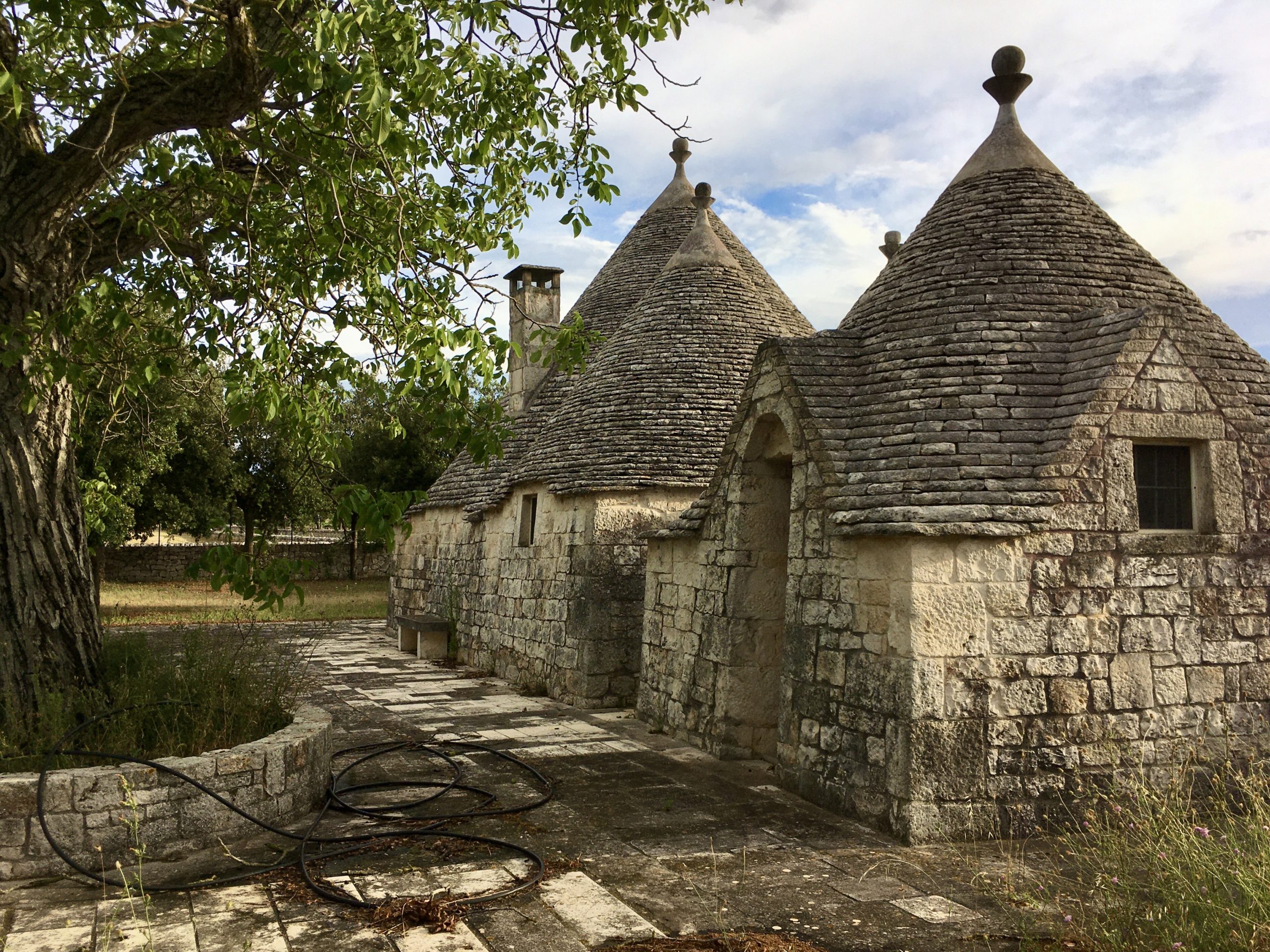
From Bari airport to Alberobello it is 70 km. This is the "capital" of the "trulli" region. They are curious buildings with conical roofs, built on a square or circular plan. They have whitewashed walls and greyish roof tiles of natural stone. Mysterious symbols are sometimes painted on the roofs. These markings have been traced to 3 sources: Christian, pagan and magical. Trulli were often built without mortar, as if they were meant to be easily put up and taken down. And indeed, one theory about these buildings says that the ability to transform them quickly from an inhabited house into a pile of stones may have been linked to.... tax matters. From time to time tax collectors from Naples toured the lands under their control and collected property tax. As soon as the local people learned of an imminent inspection, they dismantled their houses to avoid the levy.

The oldest date from the 16th century, and many have been abandoned: they serve no one, are overgrown with weeds and are merely architectural accents among the olive groves. Others are still in use today. Alberobello has a great many of these curious trulli; in fact the whole centre of the little town has been turned into a pedestrian zone, as as many as 1400 of these unusual buildings have been counted here. All have been restored, many house shops selling souvenirs or local food products, and some are small guesthouses. There is also a church and the only two-storey trullo, the Trullo Sovrano; it stands out not only for its two floors but also for the number of cones forming its roof, as many as 12.
Martina Franca
15 km south of Alberobello lies Martina Franca. Do not let the rather chaotically built, bustling modern part of town put you off reaching the beautiful old centre. On top of a small hill you can wander the narrow streets and get lost in the alleys, now and then emerging onto smaller or larger squares. The most prominent is Piazza Plebiscito, adorned with the white façade of a church, while the surrounding buildings display Baroque and Rococo styles.

Ostuni
Another 25 km further south and towards the coast lies Ostuni. The oldest part, which you reach by climbing a fairly steep street, is very charming. On one side the old town covers the slope of a hill, while on the other it hangs above a mighty cliff. Practically all the houses are white. Visitors make their way to the 15th-century cathedral with its beautiful, richly carved rose window on the façade. Opposite, two houses are joined by a charming little stone bridge. It is best to leave the car somewhere in the lower part of town and then go on foot, climbing ever higher. For those whose legs may give up on them, I recommend the three-wheeled rickshaws that will take you to the highest part of town, with the driver telling you about the sights along the way.

Lecce
Almost 80 km beyond Ostuni lies Lecce. It is almost 2 hours' drive from Bari airport, since by now you are on the heel of the Italian boot. This was the southernmost point of my itinerary in Apulia. Most people who come to Lecce are lured by its image as a city full of Baroque splendour. Barcelona has its Antoni Gaudí, Ljubljana its Jože Plečnik (read about Slovenia here), and Lecce has the Zimbalo brothers. Their talent, combined with a local variety of limestone that was easy to carve, created buildings in the 16th and 17th centuries that make Lecce famous to this day. The city is not as intimate as Ostuni or Alberobello; it has plenty of open spaces, large buildings and wide streets. It is best to park the car somewhere near the castle and walk towards the Bishop's Palace and the Basilica of Santa Croce. The latter is considered a masterpiece. The façade catches the eye: the lower part is Renaissance, while the upper part is exuberant Baroque with sculpted cherubs, little balconies and a rose window. Looking at the tonnes of carved stone, you have the impression that the front is as light as a delicate crocheted doily.

Matera
Matera, an hour's drive from Bari airport, lies inland in the little-known province of Basilicata. It is a large town, but tourists head only for its two districts known as the Sassi, Sasso Barisano and Sasso Caveoso. In the ""sassi" districts you can travel back to the days when people lived in dark, cool caves carved into the rock. That was how it had been since time immemorial until 1952, when the inhabitants were relocated. Living conditions were very hard and mortality exceptionally high, including among children. When you look at old Matera from a distance today, you see a remarkably uniform urban fabric. Seen from the hill where the cathedral stands, both parts of the town are monochrome, only in shades of grey. You will not find any other colours here. Today these two areas of the town have become a major tourist attraction, as well as the backdrop for several films. The most famous of them is Mel Gibson's moving "The Passion of the Christ". The director found in Matera the Jerusalem of 2000 years ago, deciding that this was the best place to convey the atmosphere of Christ's times. Apparently the locals have mixed memories of Mel Gibson's crew staying in the town. For several months they played extras in many scenes, but they still recall waiting hours for make-up, often in the heat. Gibson himself liked to get up at 4.30, and from 7.00 he was fully ready to meet his collaborators. The director made friends with Gigi Sanrocco, owner of the "Lucana" restaurant. They cooked a lot together, and after the Australian left, Gigi renamed his signature dish "Fettucine a la Mel".
 Watch on YouTube
After an eventful stay in Apulia and Matera it was time to move to the western side of the Italian "boot". My destination was Scalea in Calabria. From Naples airport it is a 2.5-hour drive, and you can break up the journey by visiting the Amalfi Coast, Pompeii and Vesuvius. I described that part of Italy here. If you wanted to reach Calabria after landing in Bari, you would need to prepare for a 3-hour car journey. From Matera my route took 2.5 hours.

Scalea
Scalea is one of the towns that make up the Riviera dei Cedri. This is 60 km of coastline and 22 towns and villages, 15 of them by the sea and the rest inland. The town consists of two parts: the old, neglected but still charming Scalea on the hill and the new part stretching along the coast. That is where you will find guesthouses, hotels, shops, cafés, restaurants and ice cream parlours. Scalea is an ideal place for a holiday by a warm sea, but sitting in one place for too long is not for me. Once you have got to know the town and its immediate surroundings, you can head for attractions a little further afield. You absolutely must take a boat to the island of Isola di Dino. The starting point is usually the lovely beach at San Nicola Arcella. The island is famous for its beautiful grottoes: Leone (the Lion) and Azzurra (the Blue). The boat comes within centimetres of the rock so that you can enjoy the sight of the azure water up close and peer deep into the cave. Another highlight of the cruise is the moment when the captain gives the signal to jump into the refreshing water of the Tyrrhenian Sea. Towards the end of the trip the boat passes, again within centimetres, huge boulders dangerously scattered around some of the islets. But the captain's skill does its job; the murmur of disbelief turns into a hum of delight.

In Scalea I stayed at the Santa Caterina Village. resort, which offers direct access to the sea with its own sunloungers and parasols, three swimming pools, several sports pitches and tennis courts. Every evening you can enjoy an entertainment programme in a purpose-built amphitheatre, and during the day animators, some of them from Poland, keep you and your family entertained. The whole resort is immersed in tropical greenery, and the culinary side is looked after by a carefully chosen team led by Chef Dino.

Orsomarso
Calabria is not just a beautiful coastline but also wild mountains. Clinging to the rocks, Orsomarso is the gateway to the Pollino National Park. I saw the beautiful, wild Ficara waterfall, virgin forests and mysterious frescoes in the town church, and I talked with Mayor Alberto and with Signora Teresa, who proudly showed off the paprika decorations on her house in the town square. The town and its surroundings are best admired from the castle ruins. At the end of my one-day stay, Grandpa Enzo treated me to his homemade liqueurs; the one made with bay leaves will stay in my memory for a long time.

Diamante
It is said that it was the mayor of Diamante who once came up with the idea of inviting artists and letting them create murals on the town's buildings, and this happened at the very beginning of the 1980s. Today the murals set the town apart. But it has to be said that even without them it would be very attractive, as it is beautifully set on a rocky outcrop right above the beach. The Milanese artist Nani Razzetti took up the idea of revitalising the historic centre. Many famous artists were invited, not only Italian but also foreign, and they began work in June 1981. Poets, writers, journalists and historians also joined in, leaving their signature, motto, aphorism or poem on the walls. Today little Diamante has around 150 murals and has thus become one of the largest open-air museums of its kind in the world.

Maratea
Maratea wants to rival Rio de Janeiro (I wrote about Rio here) or...... Świebodzin in western Poland. This is thanks to the huge statue of Jesus towering over the town from a hill. As in those other towns, Christ has outstretched arms and his silhouette dominates the surrounding area. The monument's full name is the Statua del Cristo Redentore di Maratea, and it was erected by Bruno Innocenti in 1965. The statue is one of the largest in the world and the third largest in Europe (after the statues in Świebodzin and Lisbon); its total height is over 21 metres and its arm span 19 metres. While in Maratea it is also worth visiting the old harbour. There are several cafés overlooking the marina. Some of the motor yachts moored there are marvels of engineering and design, and full of luxury too.
Time to head back towards Bari and the airport. I leave Calabria, cross Basilicata and drive into Apulia.

Castel del Monte
50 km from Bari Airport, beside one of the east-west roads, stands Castel del Monte. The castle sits on a small hill, entirely alone in the middle of nowhere. Its location is one of the mysteries of this building. Another is the castle's exceptional symmetry, which makes it one of the strangest secular buildings of the entire Middle Ages. From the outside this 13th-century castle is a perfect octagon, and inside there are also eight identical rooms on each of its two floors. The castle was built by Frederick II. To this day nobody knows why he was so fond of the number 8, but it certainly had some "magical" meaning. Frederick was partly a visionary and partly an eccentric. He is said to have conducted an experiment to get to the nature of human language. He gathered several children of different origins and cut them off from external stimuli and contact with other people, hoping to discover the phenomenon of their original speech. Interestingly, in recognition of the value of his work, an image of the castle appears on the 1 euro cent coin minted in Italy.

Combining Apulia, Basilicata and Calabria in one trip is a good idea. Admittedly you have to do quite a lot of driving, but you get to know this quieter part of Italy well. There are many attractions and places worth visiting, plus wild nature, a beautiful sea, beaches and resorts where you can have a great family holiday.
The trip was made possible thanks to cooperation with the Santa Caterina Village resort in Scalea, Calabria.
 Watch on YouTube