A far cry from the original - the practical Jeep Compass
The Jeep Compass first appeared on the market in 2006. At the time, the American manufacturer set itself the goal of creating an affordable SUV. Its third generation made its debut at the beginning of 2026. We tested the fully electric version.
A Jeep used to be a simple, indestructible, combustion-engined car. Times have changed, and today the Jeep Compass is the first model in the brand's line-up to be offered exclusively with electrified drivetrains: from a mild hybrid, through a plug-in hybrid, to a 100% electric version.
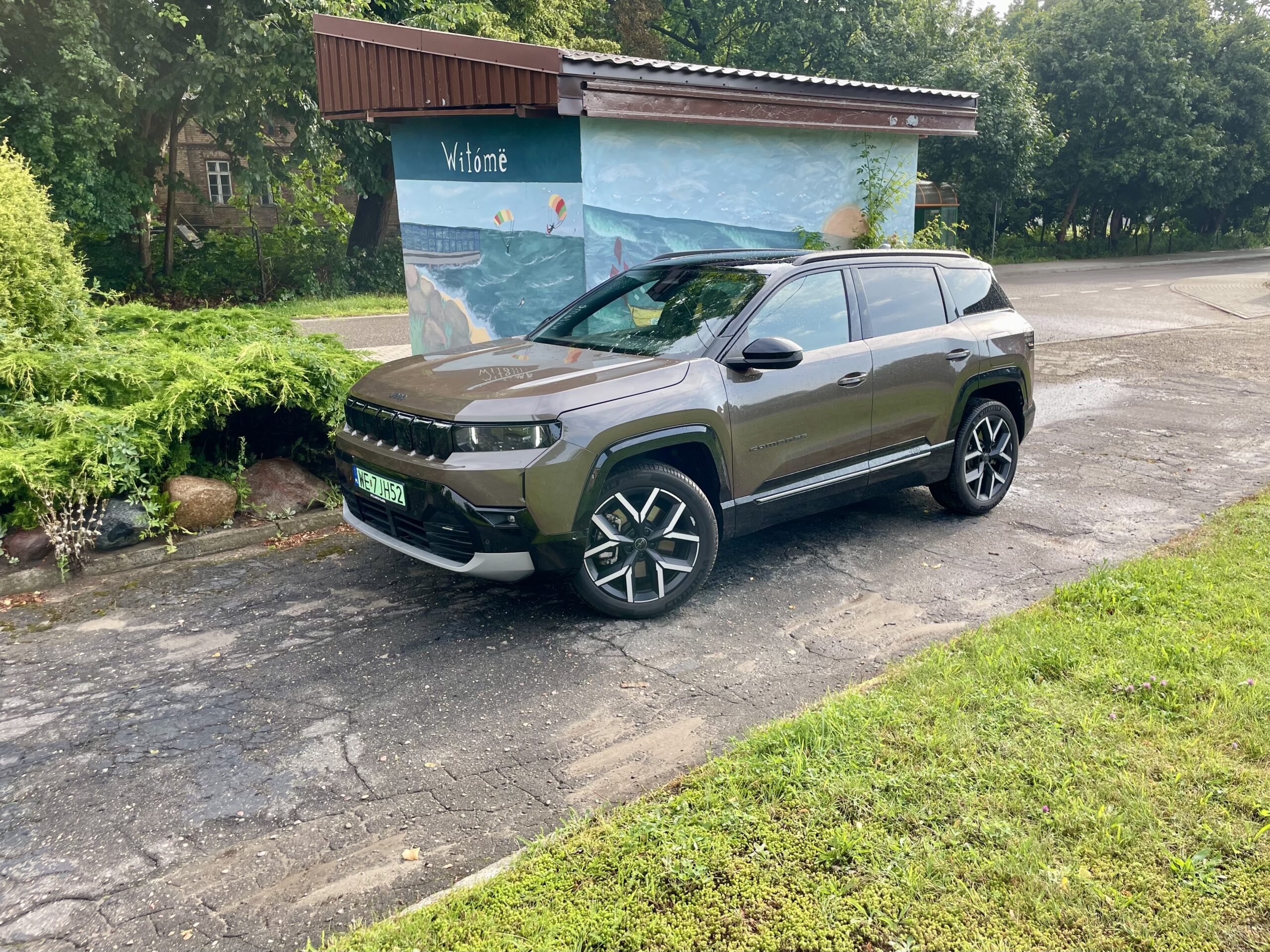
Today Jeep is part of the huge Stellantis family, made up of as many as 14 brands. It would be unwise not to draw on what others have already offered and proven. The most important part of a vehicle is its platform, and the American car shares it with the Peugeot 3008 and the Opel Grandland.
Design, interior and driving modes
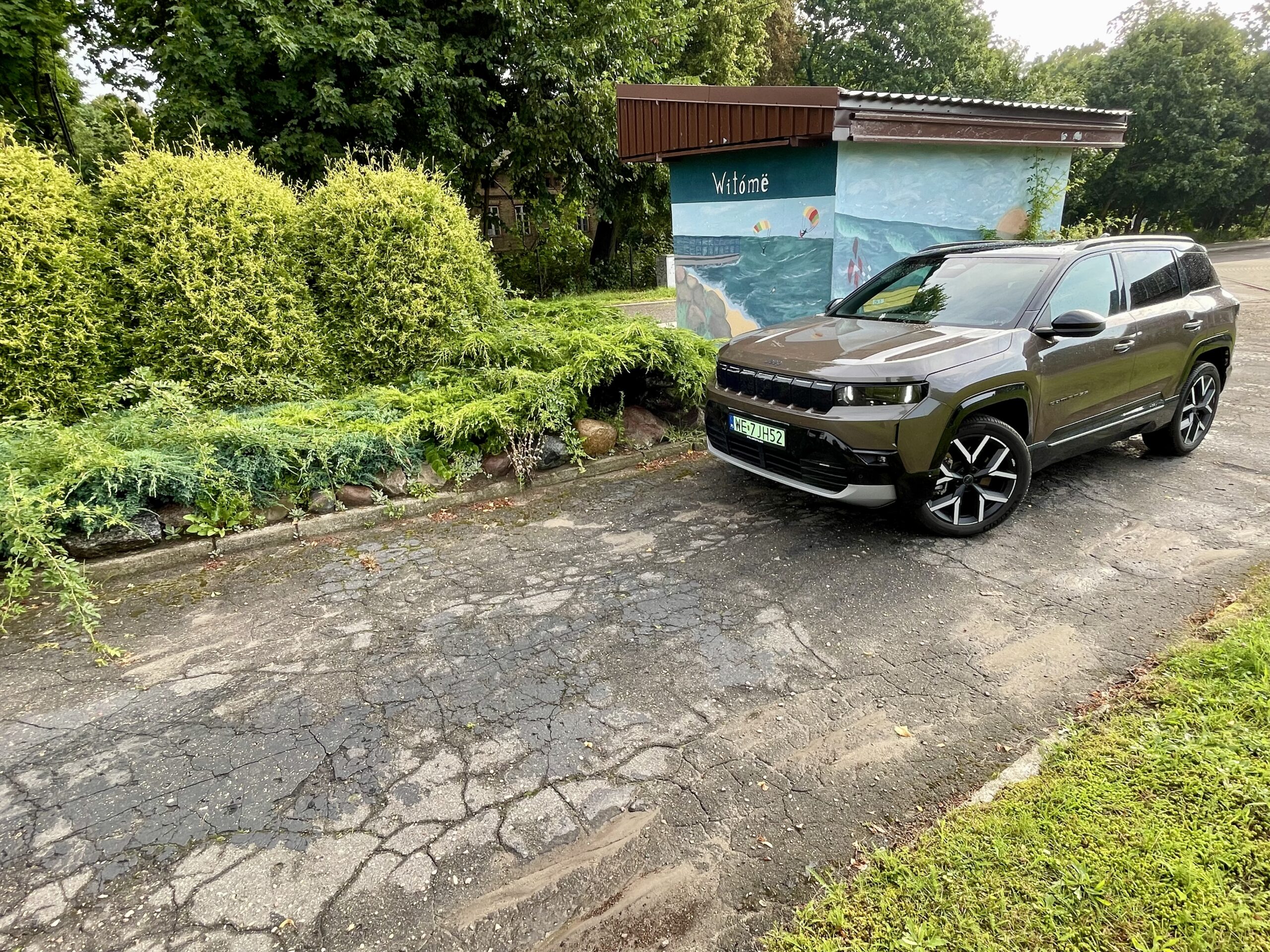
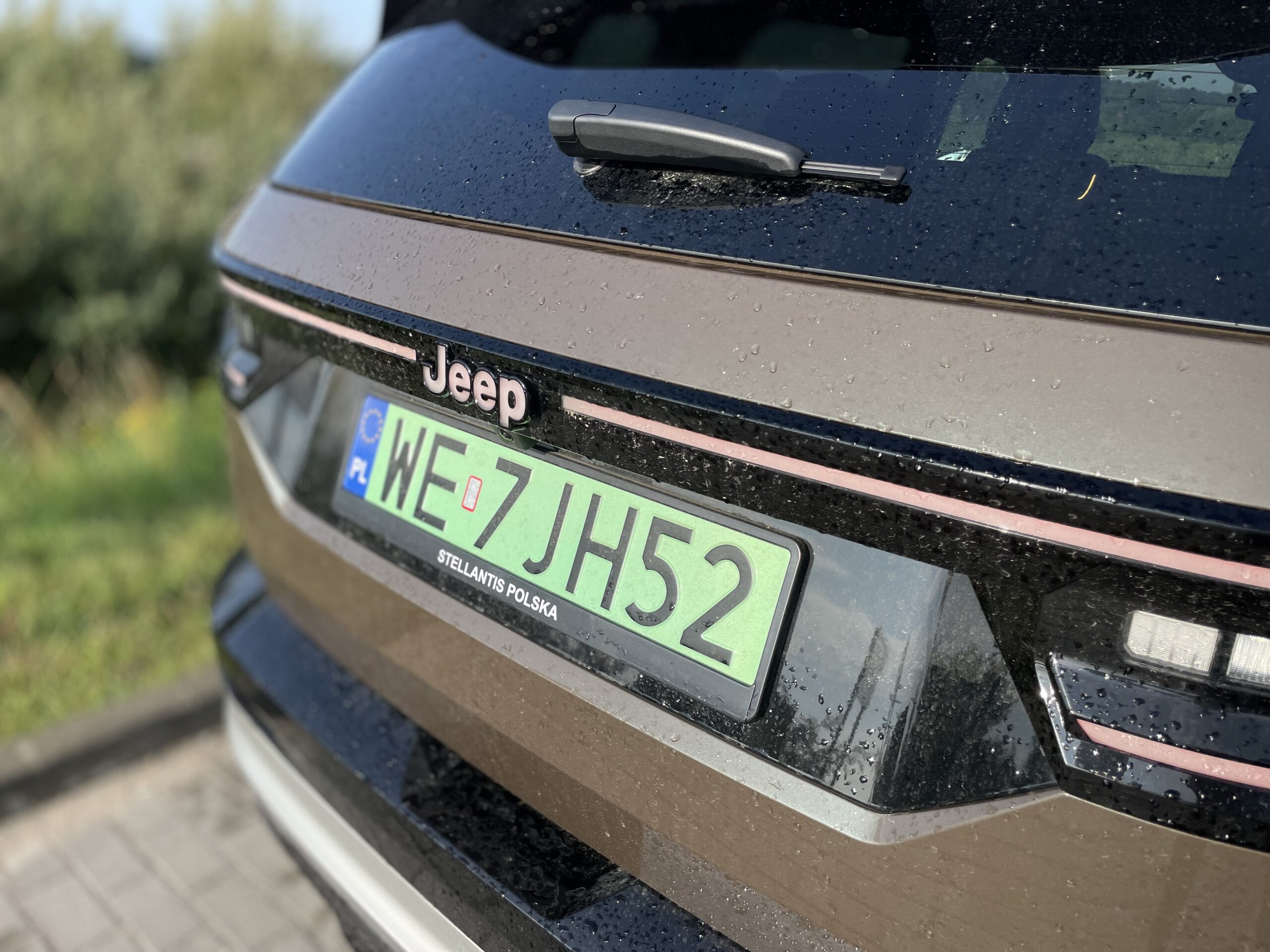
The Jeep's styling is easy to like. It is compact and angular, and the body is “decorated” with interestingly designed lights. The front end is dominated by seven black “teeth”, a modern interpretation of the classic Jeep grille. The camera in the middle could not be left out, but it has been placed higher than on rival models. Who knows, the owner might just fancy taking this EV off the beaten track. The rear lights use an “X” motif, and between them runs an illuminated strip bearing the brand's logo.
The boot holds 550 litres, 45 more than in the previous generation. There is no front boot, which you sometimes find in electric cars. Instead, there is a large space under the main boot floor: even with two charging cables stowed there, plenty of room is left. In addition, the front of the cabin offers handy storage compartments with a total capacity of 34 litres. This is a big plus for the Compass's practicality.
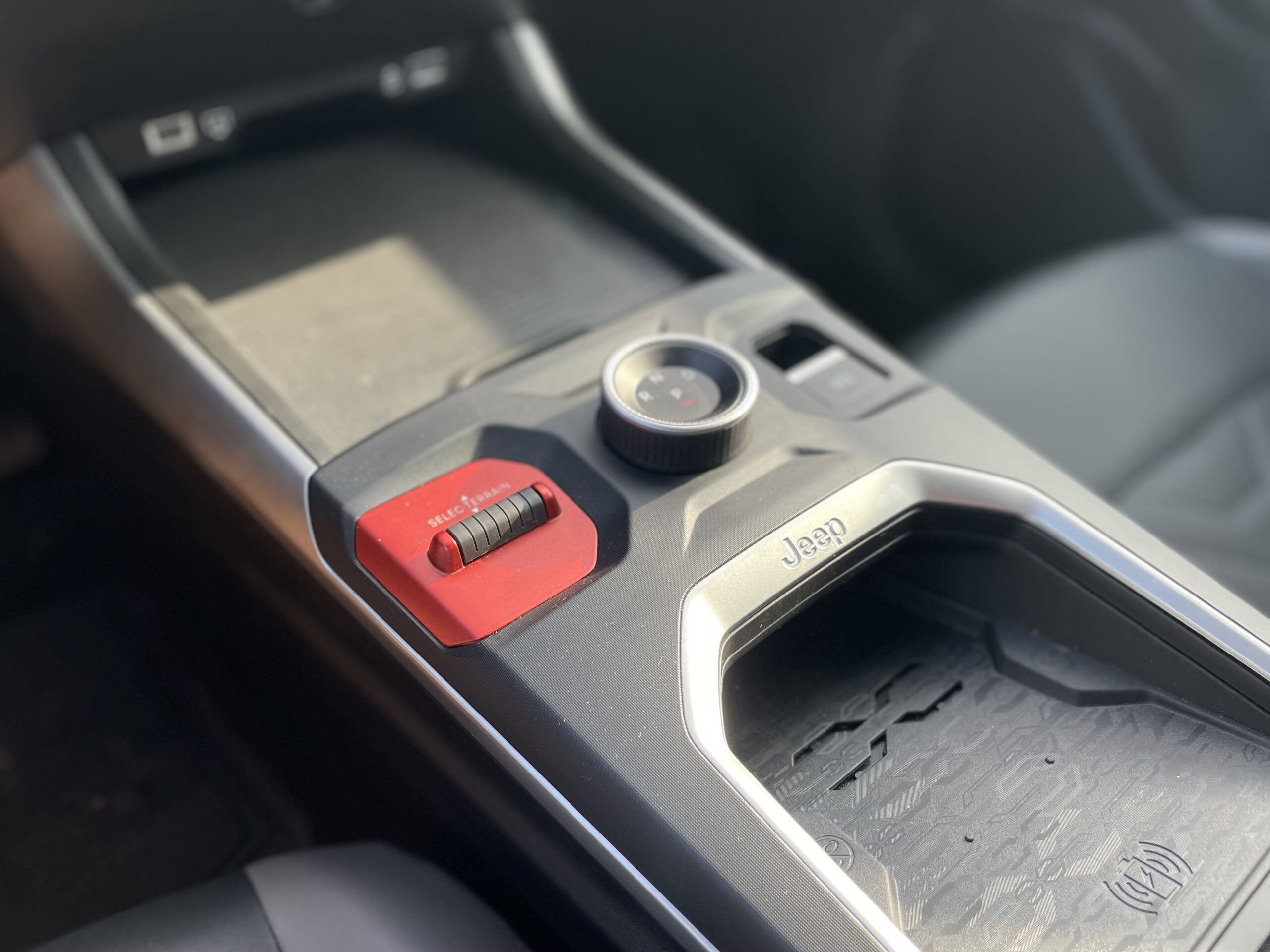
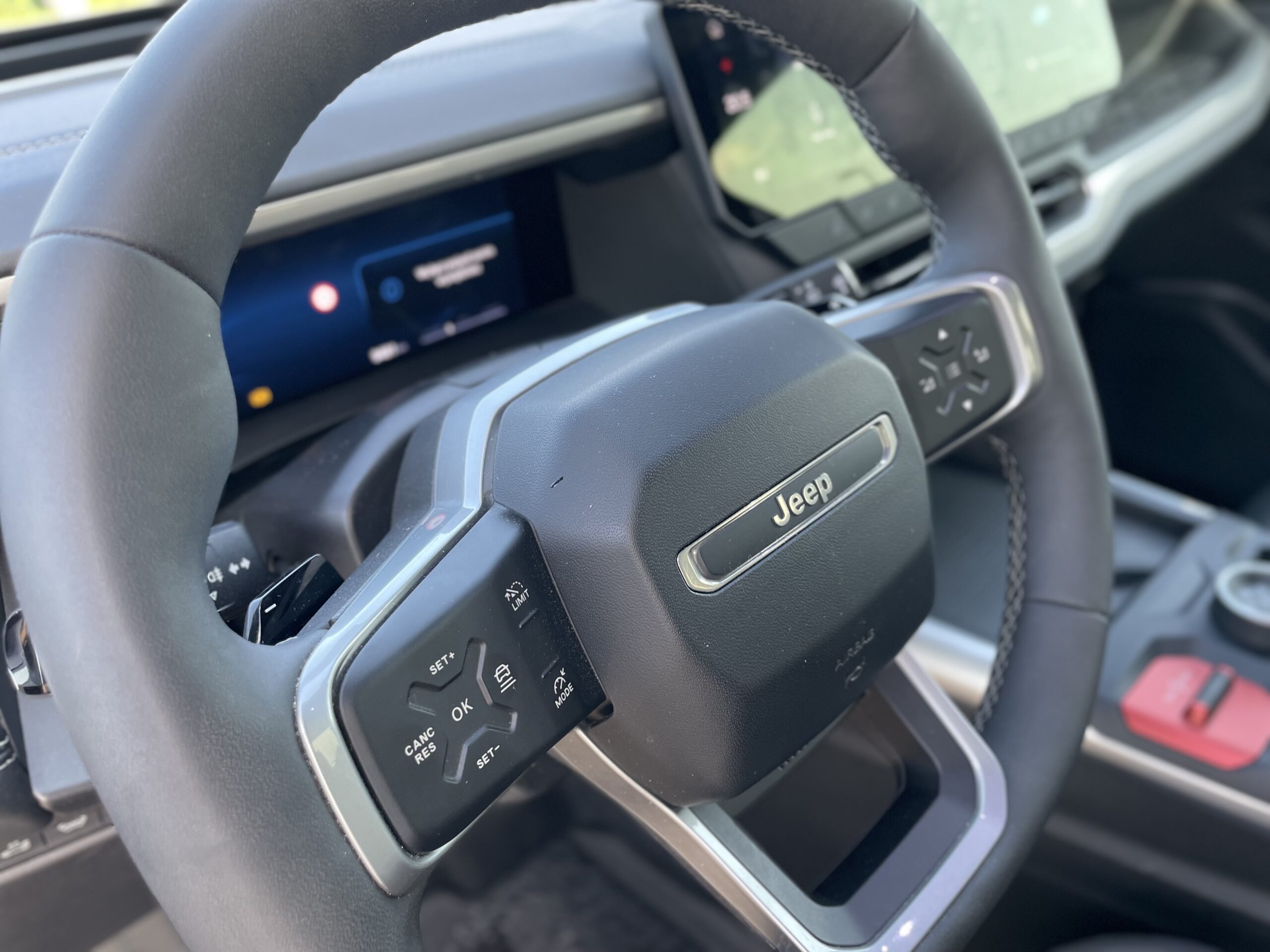
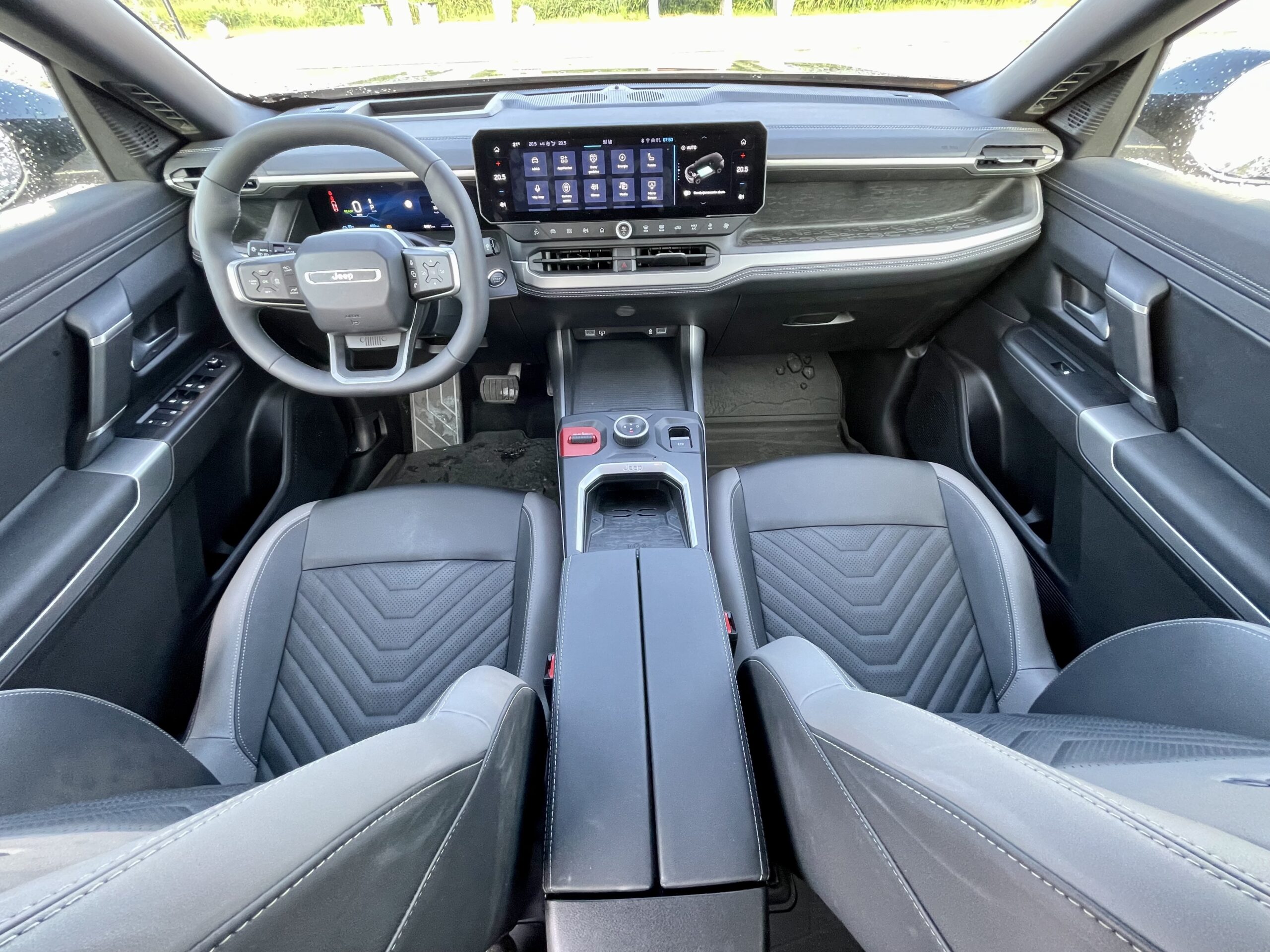
The centre tunnel houses two cupholders, a wireless charger and the drive mode selector. The choice of drive modes in this American EV looks unusual. There is no “eco” mode here; instead there is “Snow”, “Sand/Mud” for soft ground and mud, and “Sport”. The default mode is “Auto”. The paddles by the steering column activate three levels of regenerative braking. You can also switch on the “e-pedal” system, which makes the car brake firmly, all the way to a standstill, as soon as you ease off the accelerator. In practice, this means you do not need to use the brake pedal.
In front of the driver there is a 10.25-inch screen, while the main screen measures 16 inches. The latter brings together most of the car's functions. Nevertheless, below the screen there is a panel giving access to the most useful functions (11 buttons). They are split asymmetrically (5/6) by the radio volume knob. The door mirrors, too, are adjusted in the traditional way, unlike in some competitors' cars.
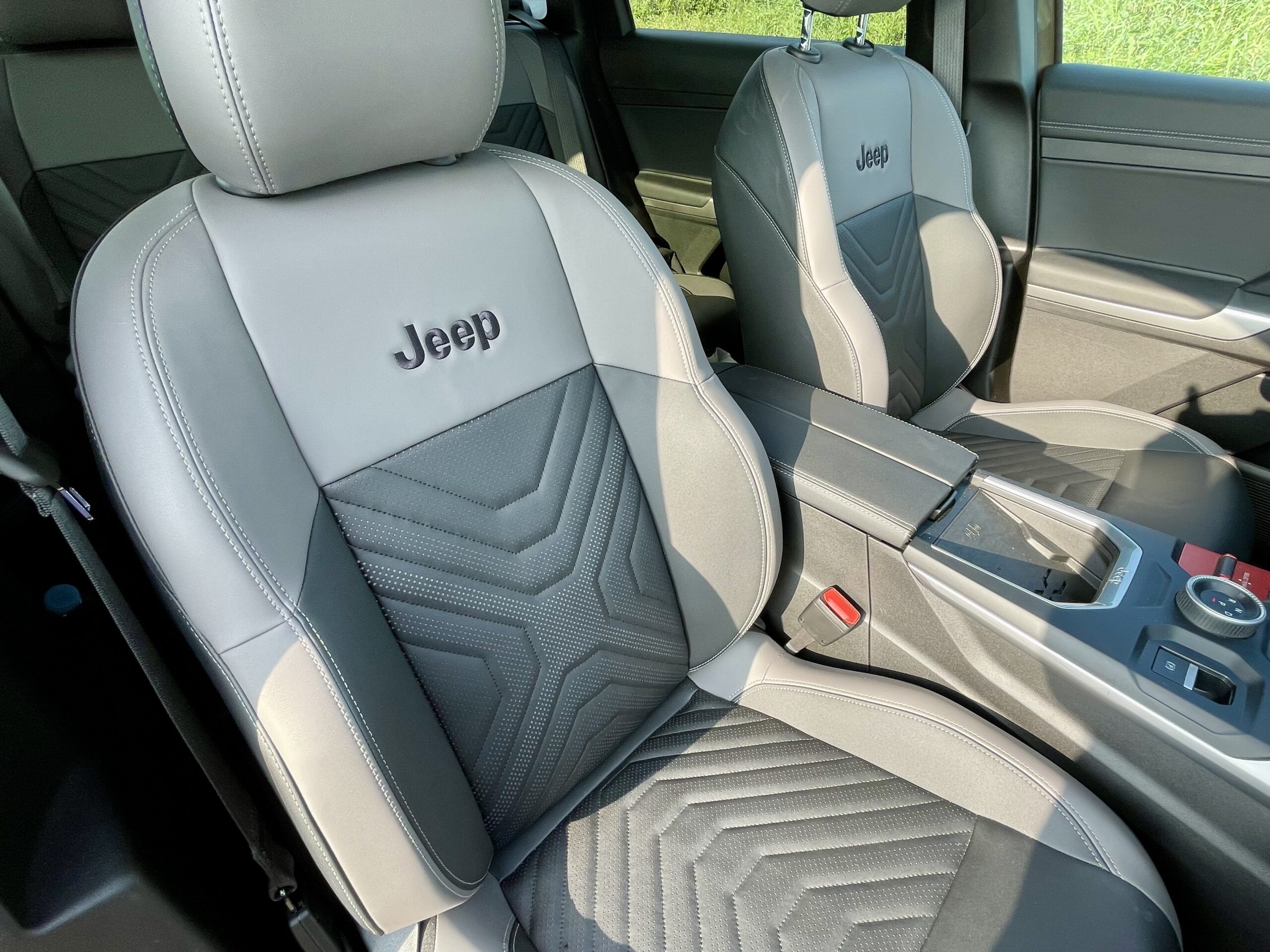
The front seats have built-in heating and ventilation (both with three levels) and a massage function, which also offers three intensity levels.
Handling, ground clearance and range
The car is very stable and responds well to steering inputs. The manufacturer says body roll in corners has been reduced by 20% in the latest generation. It feels very sure-footed both with just the driver on board and with a full complement of passengers and a loaded boot.
The chassis offers 20 centimetres of ground clearance, and the short front and rear overhangs allow an approach angle of 20 degrees and a departure angle of 26 degrees. The breakover angle is 15 degrees and the wading depth 47 centimetres.
The car is powered by an electric motor producing 213 hp and 345 Nm of torque, and there are two battery sizes to choose from. The “Long Range” version has a 96.3 kWh battery, which should allow you to cover more than 600 km on a single charge. The base EV with the standard 73.7 kWh battery has a range of up to 500 km. During the test, we found that the car easily charges at 150 kW, but one drawback is that the screen does not clearly show the remaining charging time.
Test summary
All in all, it has to be said that Jeep is finding its feet well in the new era. Although only the ground clearance and the off-road driving modes remind you that this is an “original” Jeep, the car scores plenty of points for its range, handling and practicality. The electric Compass is an interesting proposition among electric SUVs.