

Innsbruck and Salzburg - famous sights and tourist surprises
Innsbruck is without doubt Austria's winter capital, surrounded by beautiful mountains. In winter it deservedly becomes a mecca for skiers and fans of other winter sports. It surprises with the number of its universities and the colourful city life that comes with a lively student community. Innsbruck also means a historic old town, the story of Emperor Maximilian and the great contribution of a Polish noblewoman from Masovia to building Habsburg power. Salzburg is one of Austria's most beautiful cities, full of historical and cultural attractions that draw tourists from all over the world. It is rightly associated with Mozart, but there are many more reasons to visit Salzburg. Most surprising of all are the Alpine scenery surrounding the city and the locals' love of... beer.
Innsbruck - a historic city for active travellers
Innsbruck will be in the news more and more with every passing week. From the 2024/2025 winter season, regular flights will link Warsaw with the Tyrolean capital. Will only winter sports enthusiasts use them? It turns out that, besides being the “winter capital”, Innsbruck has other attractions to offer.

City officials stress that visitors can enjoy not only snow-covered pistes but also many cultural and tourist attractions. The Old Town is the heart of Innsbruck and has a unique atmosphere. While in most cities tax depended on the number of windows, in Innsbruck it was the width of the façade that counted. So the houses are narrow, but they charm with their windows, often set into specially designed oriels. On one of the buildings you will spot the so-called Golden Roof (Goldenes Dachl). It is probably the city's best-known symbol. It is a Renaissance balcony covered with 2,657 gilded tiles (the gold was brought from Africa), built by Emperor Maximilian I at the beginning of the 16th century. The emperor used the balcony to watch tournaments and other events in the square below. Perhaps this is where he devised his next reforms. He is credited with establishing the postal service and introducing a systematic monetary system, in which individual coins were assigned a specific value.

The Hofkirche (Court Church) houses the tomb of Maximilian I, surrounded by 28 monumental statues of his ancestors and national heroes. The city has no fewer than 35 churches, but this one seems the most important. Two people deserve special attention in the city's history: one is Maximilian I himself (1459-1519), emperor from 1508 until his death, and the other - close to Polish hearts - is Cymburgis of Masovia (1394-1429), a princess of the Masovian Piasts. With her nine children, she did much to strengthen the Habsburg dynasty in Europe and even earned the nickname “Mother of the Habsburgs”. Innsbruck's residents remember her well, pointing to the statue in the church labelled “Cymburgis of Masovia”.
An interesting place on the outskirts of the Tyrolean capital is its Alpine Zoo, easily reached by funicular. Here you can see that the Alps are not just rocky peaks but also valleys with varied landscapes, lakes, rivers, floodplains, heathland and diverse forests. Innsbruck's Zoo is home to 20 of the 80 Alpine mammal species, 60 of the roughly 200 Alpine bird species, 11 of the 15 Alpine reptile species, 6 of the 21 Alpine amphibian species and almost all the fish species found in the Alps.

When thinking of Innsbruck, you cannot ignore the Swarovski brand. Swarovski Kristallwelten (Crystal Worlds) is a popular tourist attraction in nearby Wattens. This combination of museum, art gallery, garden and amusement park opened to the public in 1995 to mark Swarovski's 100th anniversary. Inside the underground complex there are 18 different chambers. Most of them were designed by world-famous artists and designers. These rooms combine elements of art, technology and creativity, presenting crystals in diverse and innovative ways. Colours, reflections, mirror images and the play of crystal geometry delight the senses.

The city is firmly rooted in its history, but ready for the future. Of its 150,000 inhabitants, 35,000 are students. Rather than listing the subjects you can study here, it is easier to list those that are missing: just music and veterinary science. Many festivals and cultural events take place in the city. Those keen to discover Tyrol's artistic heritage will surely love the show called “Tiroler Abend”. During the evening you will hear a wide repertoire of Tyrolean songs and tunes. There is plenty of the characteristic yodelling, and the musicians and dancers perform in regional costume, such as men's leather lederhosen.
Salzburg - Mozart's legacy at the foot of the Alps
Salzburg is the birthplace of Wolfgang Amadeus Mozart, and the house where he was born (on 27 January 1756) is now a museum presenting the life and work of one of the greatest composers in history. After 17 years the Mozart family moved to a larger apartment, which is also now a city museum. But it is not only Mozart's music that resounds in Salzburg - in autumn the “Jazz & the City” festival takes place, and in October you can hear 70 concerts in 30 venues.

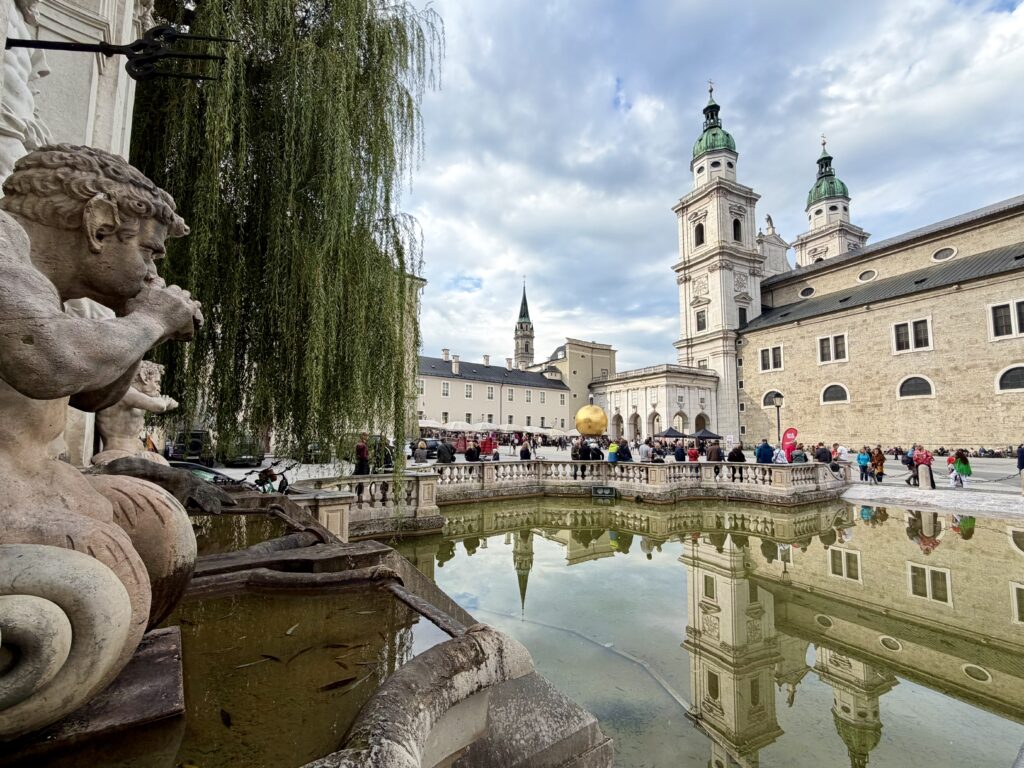
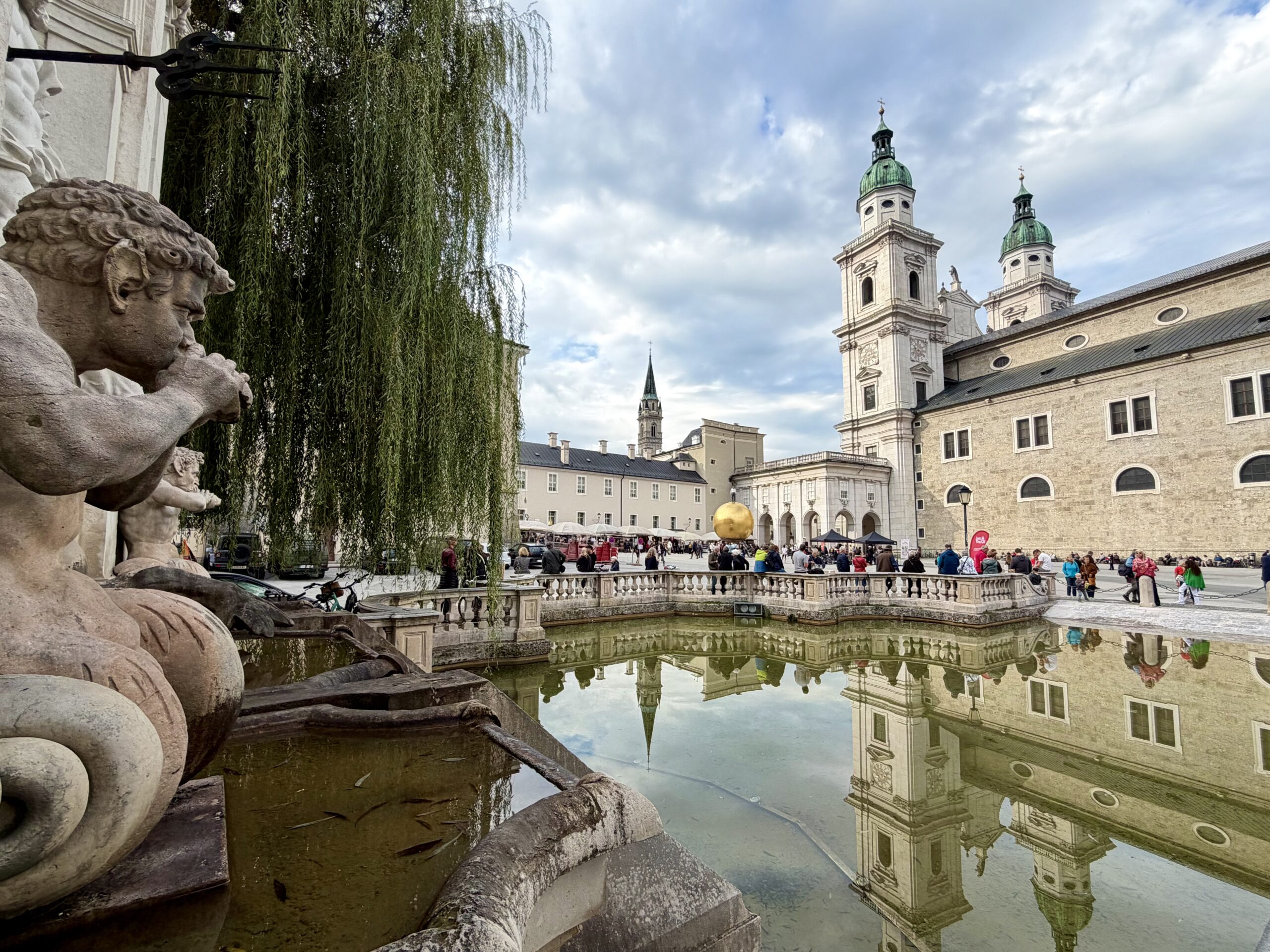
A walk around Salzburg's old quarter reveals the architectural face of a city that underwent a huge transformation in the 16th century. At that time 55 houses were demolished and 5 Italian-style squares were created. From then on Salzburg was called the “Rome of the North”, also because it was surrounded by hills, like the Italian capital. For centuries the city was ruled by its prince-archbishops, who made no secret of drawing their spiritual and material inspiration from the south. Enchanted by the lavish splendour of Rome, Salzburg's archbishops built their capital in its image, inviting the greatest Italian architects and artists.
When you tire of strolling the old town's streets, it is worth sitting down in one of its cafés. The natural choice is “Café Tomaselli”, considered the oldest in the country. Its sign proudly displays “1703” as the year it opened. Another good option is the “Fürst” café; after all, it was Paul Fürst who created the famous Salzburger Mozartkugel chocolate balls, which remain the city's signature sweet to this day. The original Mozartkugeln can be bought in Fürst's four shops in the city, run by the fourth generation of confectioners.

A boat trip on the Salzach river lets you see the city from a different perspective. On this relaxing cruise, a glass-roofed boat takes you upriver and then back to the landing stage near the old town. From the deck you can admire the city's sights, including Hohensalzburg Fortress, the hills and the cathedral.
On the outskirts stands Hellbrunn Palace with its intriguing garden of trick fountains. The water features were designed - in the Mannerist style that prevailed at the time - for Archbishop Markus Sittikus at the beginning of the 17th century as a way to amuse and surprise his guests. You could say that the whole park is a series of hidden jets designed to catch visitors out by spurting water in the least expected places and moments. One of the most astonishing features is a stone table surrounded by seats from which jets of water can suddenly shoot out, soaking the guests sitting at the table. The jets are arranged so that only one seat - the one where the archbishop sat - stays dry.

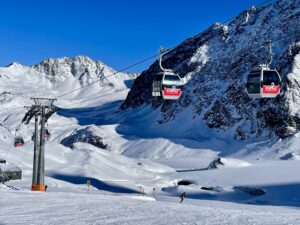
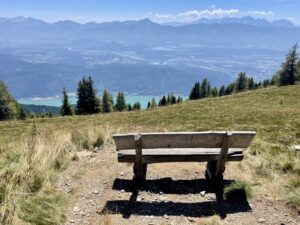
From Hellbrunn Palace it is easy to reach the Untersberg cable car by public transport. The cabin takes passengers up to 1,853 m above sea level, offering breathtaking views of the Alps, the city and the surrounding area. At the top there is a viewing terrace, and several hiking trails start from there, letting you explore the beauty of mountain nature. Another way to experience Alpine scenery is to cross into Germany (city bus “840” runs there) and head into the mountains in the area described here.

Innsbruck is undoubtedly a winter sports capital thanks to its setting among Alpine peaks and ski slopes - there is even a ski jump in the city itself. The Tyrolean capital is also a centre of cultural events, often set against the historic buildings of the Old Town. Close by you will find the showcase of the world-famous Swarovski crystals and a themed zoo. Salzburg is a city that combines a rich history, magnificent architecture and beautiful landscapes, offering a wide range of attractions. Salzburg, known as the country's beer capital, also has a rich culinary and artistic scene. Its location also makes it a very convenient base for trips into the nearby Alps.