Renault Captur - a bestseller enhanced with plug-in technology
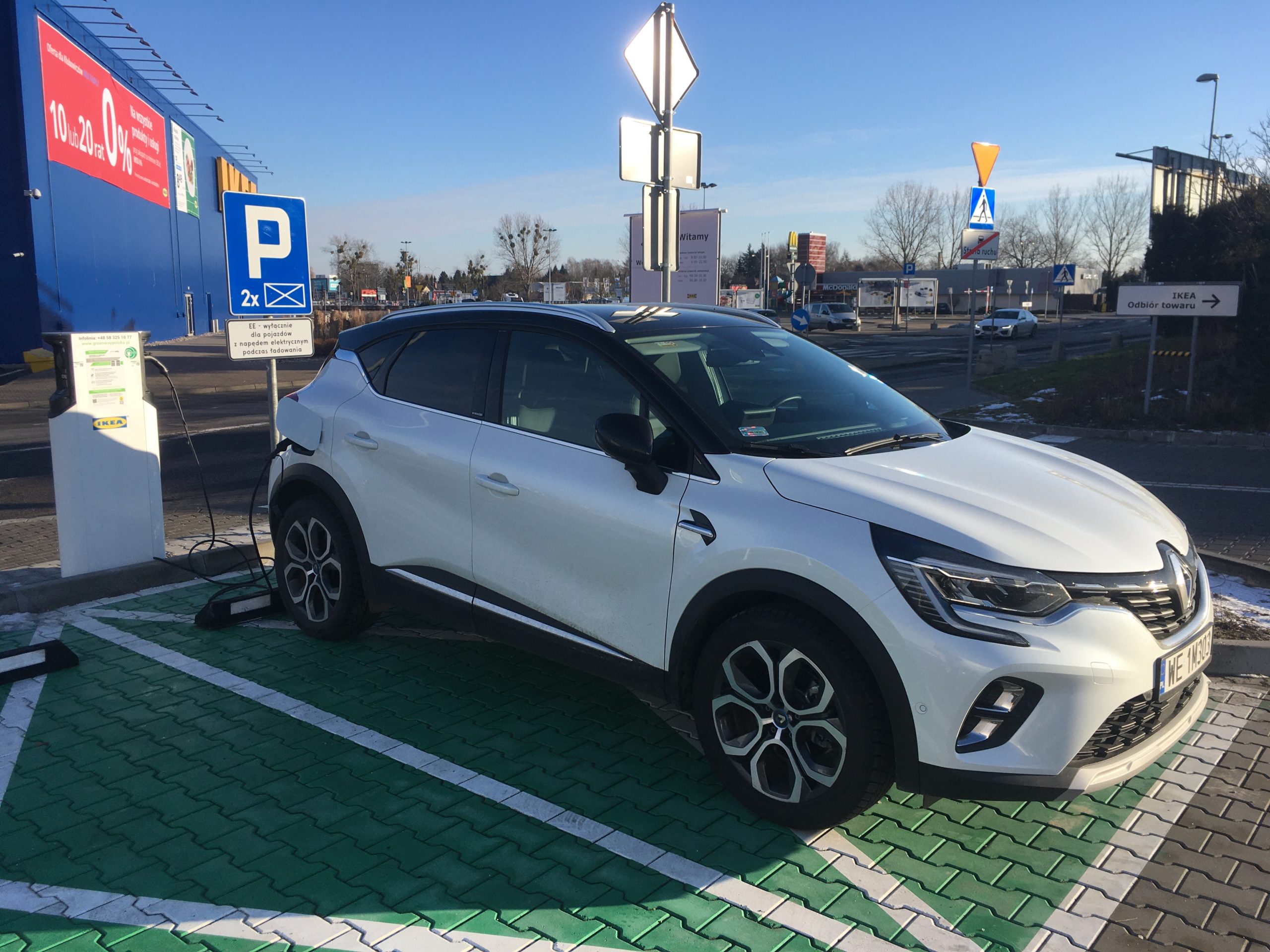
The Renault Captur is the French brand's big hit. It is sold on every continent, and in European countries it is always at the top of the sales charts. The recognisable new Captur has a strong case for holding on to its bestseller status, thanks to its more aggressive new styling and the latest technologies, such as the newly launched E-TECH Plug-in hybrid version.

In Renault's terminology, E-TECH Plug-in Hybrid simply denotes a plug-in hybrid. The powertrain delivers 160 hp and has a 9.8 kWh battery. It is worth stressing that the battery adds only 105 kg of extra weight. The manufacturer claims that the new Captur can cover 50 km in 100% electric mode, and that seems quite a realistic figure. During my test, with the battery fully charged, the display showed a range of 45km, and that was in unfavourable winter conditions.

Every version of the Captur has been highly versatile. The version presented here lets you drive your everyday routes for a week in 100% electric mode without using the combustion engine, and then go away for the weekend or a longer holiday without worrying about the battery's state of charge. Once the battery is depleted, the new Captur E-TECH Plug-in Hybrid works much like a standard E-TECH hybrid and comes close in its figures to the hybrid Clio, which I wrote about here . The battery is topped up every time you brake, and the stored energy is used when pulling away.

MULTI-SENSE modes: Pure, Sport and E-Save
To switch the Captur into zero-emission mode, you select the Pure option in the MULTI-SENSE system. In Sport mode, if the battery is sufficiently charged, flooring the accelerator makes the car use all the available power of both drive units, lighting up a red field marked Boost on the instrument panel.

An interesting function of the MULTI-SENSE system called "E-Save" maintains the battery's state of charge (min. 40%), keeping a reserve of electrical energy so that the driver can switch to electric drive at any moment, for example after entering a city centre.
The driver is kept well informed about the driving data thanks to animated diagrams shown on the digital instrument cluster and on the Renault EASY LINK multimedia screen. The dashboard can display the electric range, energy flows, the level of energy recovery, the time needed to charge and the battery's current state of charge.
Suspension, handling and boot
Despite the relatively small increase in the car's weight due to the batteries, Renault decided to change the rear suspension: the semi-rigid axle has been replaced by a multi-link system.
The Captur Plug-in is a versatile vehicle that feels equally at home in the city and on all kinds of out-of-town roads. It is agile and shows little body roll, even on winding roads. Many drivers will appreciate the raised driving position and the rear bench that slides over a range of 16 cm. Unfortunately, in the test car, the lower part of the boot, which until now was free for the driver to use as they wished, is taken up by the charging cables and the tyre repair kit.

The alternative drive concept of the new Renault stands out visually thanks to "E-TECH Plug-in Hybrid" badges on the tailgate and the B-pillars. The car has two flaps hiding the fuel filler and the charging socket: the fuel filler is on the left and the charging socket on the right. The electric gear selector, also bearing an "E-TECH" badge, has a "B-Mode" function to increase energy recovery when braking.

A sizeable shelf has been created beneath the gear selector.

The E-TECH family: Mégane, Clio and Captur
The three recently launched Renault models I have had the chance to test represent the brand's offensive in the alternative drive segment. The Mégane , the Clio and the Captur described here all belong to the "E-TECH" family, in one of its two variants: E-TECH Hybrid, using full hybrid technology (HEV), and E-TECH Plug-in Hybrid (PHEV). By 2022 the brand wants to have a range of eight fully electric and 12 electrified models.