Smart Four Two in the big city
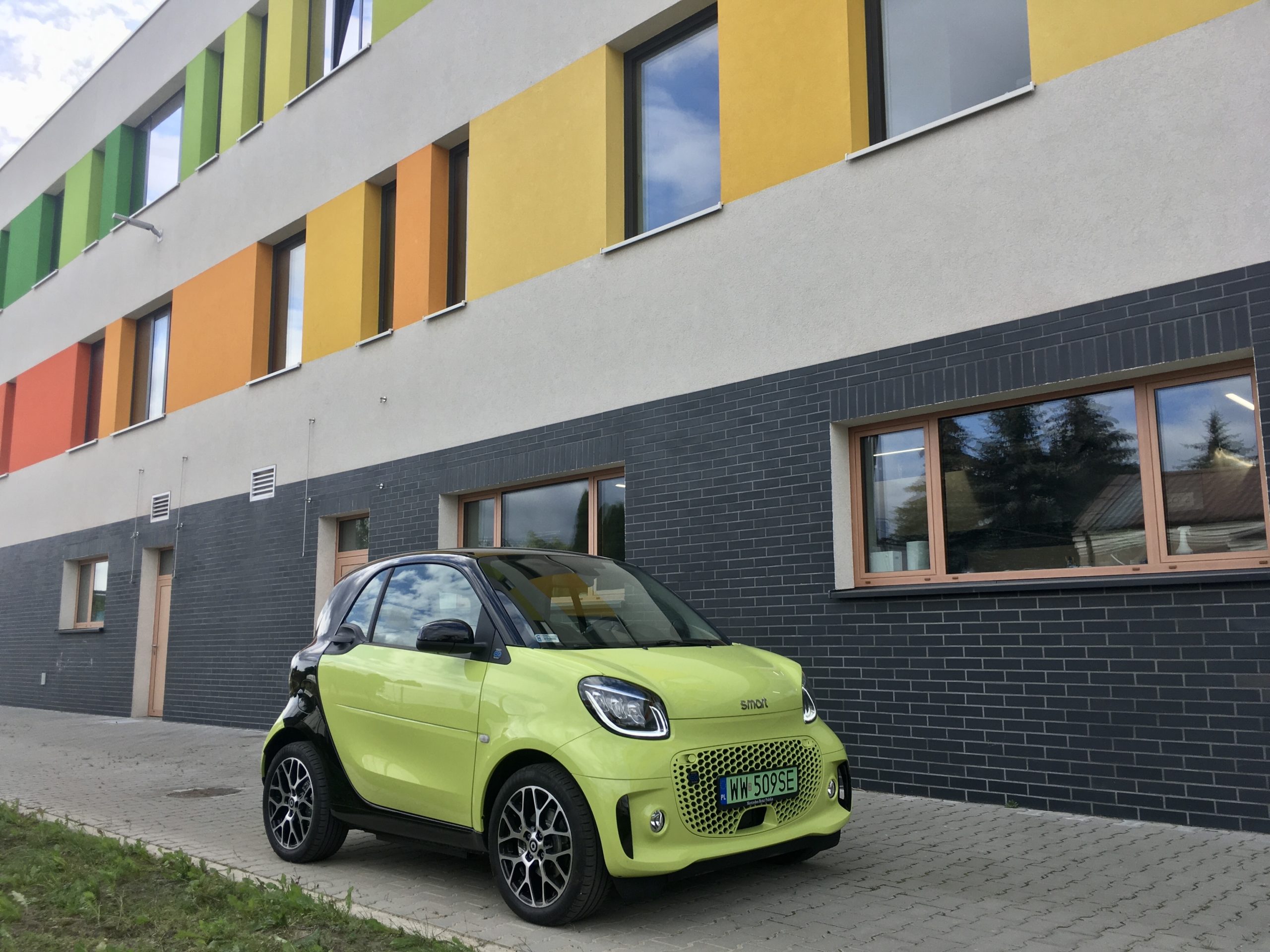
The Smart Four Two is a car made first and foremost for the city. Only 269 cm long, it seats two people and a little luggage, but it fits into spaces that even small A-segment cars can only dream of. Sometimes it can park nose-in where others park parallel. It can also turn "on the spot" and comes in lively body colours.

Small cars used to be not only small but also unsafe for their passengers. Once the Nissan Micra arrived, it turned out that small cars could use the same safety solutions as big ones. In 1993 Nissan won the "Car of the Year" title for the Micra and the solutions it introduced. The launch of the Smart in 1998 once again changed the philosophy of designing small vehicles. Engineers stopped shrinking every component in order to shrink the whole car. The latest-generation Smart has huge doors, is wide, has full-size seats and offers plenty of room for two.

Performance, AC charging and range
The Smart Four Two EQ has 82 hp and reaches 100 km/h in about 11 seconds. Acceleration is more than satisfactory, especially off the line, because after that it no longer pushes you back into your seat as hard. This is down to the electric motor's high torque, available from the very start. Top speed is electronically limited to 130 km/h, which is another argument for not taking this car out of town.

The car cannot be charged in DC mode, but charging the battery at the maximum AC power of 22 kW gets you to 80 per cent in 40 minutes. It owes such fast charging to its "mother", Renault. Its "father's" genes come from Mercedes. On a fully charged battery you can theoretically cover up to 159 kilometres. In practice it is less, and even with a full battery the range seems inadequate when you compare the car with its electric rivals. The Smart EQ For Two is priced at 96,900 zł in its basic version, in other words it tops the list of the cheapest EVs on the market.

As I mentioned, the Smart's range is too short, but credit is due for the software, which updates in real time the distance you can cover before the batteries run flat. It takes into account whether you are driving in Eco mode, which gives an extra 10% of range. Unfortunately, there is no way to adjust the level of regenerative braking.
The 17.6 kWh battery and plastic body panels

The electric motor is mounted at the rear, and the batteries sit under the seats. Their capacity has not changed compared with the first generation (17.6 kWh). The manufacturer guarantees that the batteries will retain optimal service life for at least 100,000 km or eight years, as that is what the warranty on these components covers. The current generation of the Smart uses 12.9 kWh/100 km compared with 15.1 kWh/100 km for the previous version, and the electric Smart is as much as 160 kg heavier than the combustion version. In any case, this comparison is only possible on paper, because Smart has no plans to offer versions with combustion engines. Speaking of the car's weight, it is worth mentioning that the bodywork is made of plastic panels. The bonnet is plastic too, and once you release the two catches built into the "grille", it hangs freely on woven straps when lifted off.
Interior and equipment

The car I tested had a glass roof and heated driver's and passenger's seats. The company could have followed through and added a heated steering wheel, which reduces energy consumption on cold days by offering good thermal comfort without having to heat the whole cabin. Several features inside hint at the car's French roots: the phone charging socket, the mirror adjustment switch and the interior lighting panel are borrowed from Renault models. It is a little surprising to find two glasses compartments, placed where you would expect a grab handle, above both the driver's and the passenger's door. There is, however, no cup holder; where is the urban yuppie supposed to put a freshly ground "Starbucks" coffee? The space behind the protruding infotainment screen is crying out to be adapted.

Test summary
The Smart Four Two has its drawbacks and its advantages. It can carry only two people, it has a small boot and a short range. On the other hand, those two people have plenty of room, travel in silence and can park where others would not even try, and on top of that their car can turn almost on the spot. It is a car for a specific clientele: people who live in big, congested cities with huge parking problems. Most likely singles working freelance...... who do not drink coffee.