Košice and Slovak Tokaj - the attractions of eastern Slovakia
Direct flights from Poland are opening up new prospects for Slovakia's second-largest city and for Slovak Tokaj. Košice and the vineyards of south-eastern Slovakia can make a very interesting city break.
When we think of Slovak cities, Bratislava always comes to mind first, followed by a few smaller towns near the ski resorts. But it is Košice, with 250,000 inhabitants, that is Slovakia's "number two". A city the size of Poland's Rzeszów - which is a 3-hour drive away - it has plenty to offer. There is an airport on the outskirts, served by LOT from Warsaw and Ryanair from Modlin (as of spring 2022). Tickets are often very cheap: a return ticket with small hand luggage can cost as little as 50 złoty. From Košice airport, bus no. 23 takes you to the historic centre in 20 minutes. Unfortunately it runs fairly infrequently, at weekends only every 2 hours. Uber does not operate in the city, but Bolt cars are available. The main transport hub is the square in front of the railway station, where city buses, trams and, of course, trains all converge.
Hlavná Street, St Elisabeth Cathedral and Kulturpark

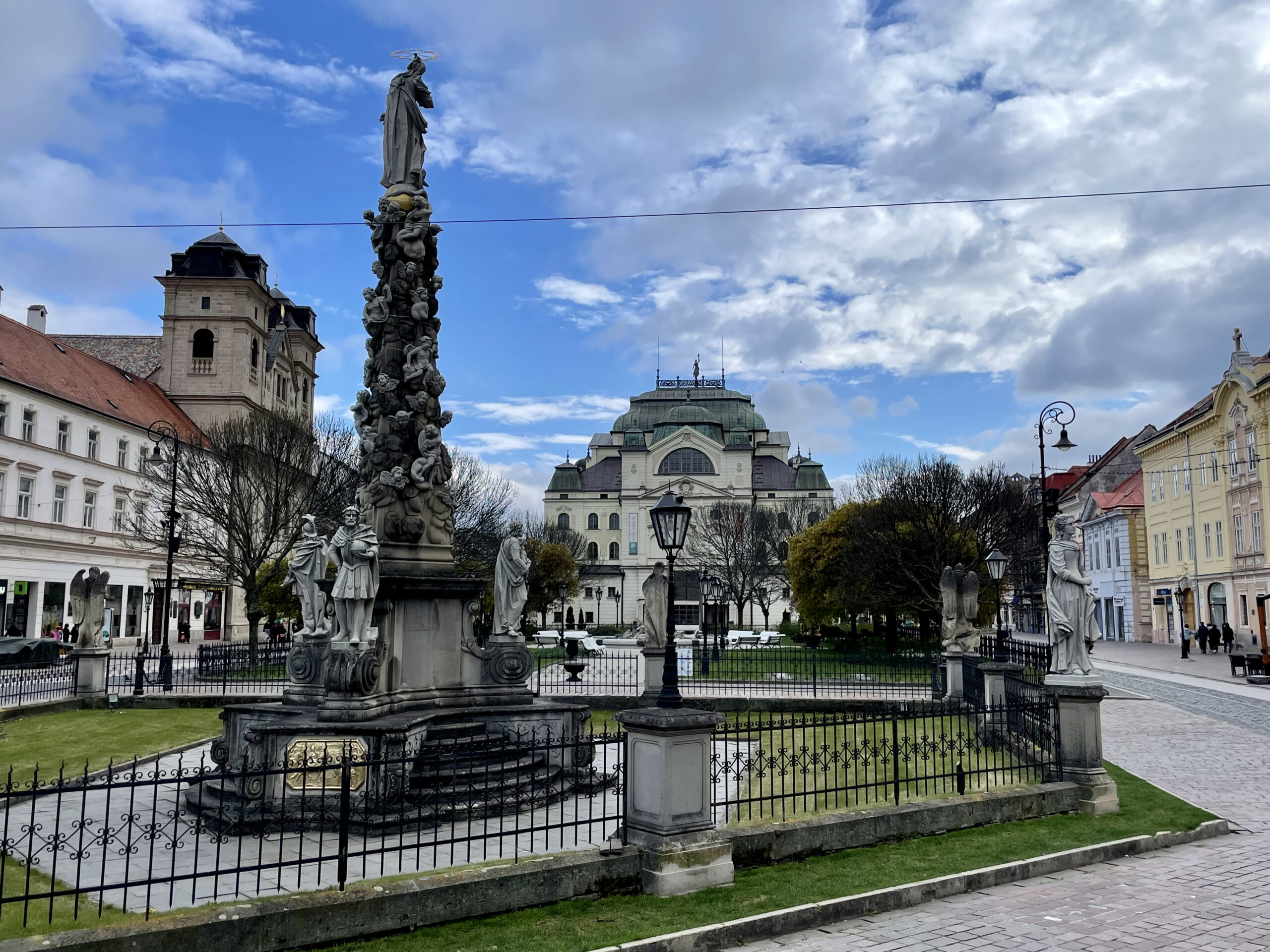
The most important street in Košice is Hlavná, meaning "main". It forms the longest pedestrian zone in the country, and the city's most valuable buildings line it. In its central section stands the easternmost Gothic cathedral in Europe, dedicated to St Elisabeth. This church, whose construction began around 1380, is also the largest church in Slovakia.

Hlavná is also lined with many beautiful, renovated town houses that are home to cafés and restaurants. The historic opera house stands by a square with a singing fountain. The long pedestrian street ends at Marathon Square. Why this rather odd name? Košice prides itself on hosting the oldest marathon in Europe and the second oldest in the world (since 1924). To celebrate this, a monument was erected, featuring a figure of a marathon runner and the names of all the winners. The massive building right next to it is the East Slovak Museum. It is here, among many other exhibits, that you will find the Košice Golden Treasure, discovered in 1935 - 11 kg of gold made up of 2,920 coins and priceless jewellery.

For many years Košice was known for its huge steelworks and heavy industry, but a lot has changed since 2013, which could be called the turning point in the city's history. That year Košice was named European Capital of Culture and began to make a strong mark on Europe's cultural map. The old barracks were restored to create the so-called Kulturpark. The former municipal swimming pool was turned into a multi-purpose arts centre, and the Tabačka cigarette factory is now a factory of... culture, often alternative culture.

Košice restaurants and eastern Slovak cuisine
A walk around the old town, the museums and the cultural centres are only part of what Košice has to offer. It is worth paying attention to what the city has to offer in terms of food. "Villa Regia" is both a guesthouse and a restaurant, set in a town house on Dominican Square. This charming little square is also home to the city's oldest church (1290), with valuable illusionistic ceiling paintings.

Another place worth visiting is "Hostinec", which announces right at the entrance that it is "the oldest restaurant in Slovakia". Beer is brewed on the premises, and the huge vats are part of the interior. Also on Hlavná is the "Med Malina" restaurant, which specialises in... Polish cuisine. If you find yourself missing home cooking, the menu features żurek, red borscht, bigos, pork schnitzel and cheesecake. A little way out of the city, in a forest reserve, is the Hotel Bankov. This historic hotel is proud of its restaurant, which ranks among the top ten hotel restaurants in the country.

Eastern Slovakia offers dishes typical of the region. "Mačanka" is a sour soup with a flavour reminiscent of Polish żurek. "Lokša" pancakes are made with potato flour, and there is plenty of freedom in choosing the filling, which can be savoury or sweet. Served plain, for example with duck, "lokša" takes the place of potatoes. "Holubce" are stuffed cabbage rolls that look just like the gołąbki known in Poland, but they are horn-shaped. Interestingly, they are eaten with bread or... cake. They are an obligatory dish at every wedding in eastern Slovakia. And of course, you cannot leave without trying one of the superb wines from the Slovak Tokaj region. The best place to do so is at one of the local wineries.
Slovak Tokaj and the Ostrožovič winery

The Tokaj region, established in the days of the Austro-Hungarian Monarchy, is now divided by a state border. 90% of Tokaj's vineyards are in Hungary and the remaining 10% in Slovakia. In other words, there are only 7 villages in Slovakia whose wine can bear the proud name of Tokaj, which makes its 908 hectares one of the smallest wine regions in the world. The vineyards lie about 60 km south-east of Košice. They are easy to reach by car, but there is also a convenient train that takes an hour.

The Ostrožovič winery is one of the largest in Slovak Tokaj and has been making wine since 1990. It farms 58 hectares, runs tastings and offers accommodation for 52 people as well as meals. On site you can rent bikes, and in summer cool off in the pool or relax with a massage in the jacuzzi. Slovak Tokaj is a very charming area: narrow, quiet roads, fields, vineyards, wayside shrines, the Bodrog river and small villages. It is a dream area for cycling. On the last weekend of September a wine festival is held. A special train runs from Košice, and then it is time for tastings and fun.

Košice and the Tokaj wine region are waiting for Polish visitors. They are easy to reach from southern Poland, and from central Poland you can fly there cheaply. Once there, Slovak hospitality awaits (with practically no language barrier), along with an interesting city and wonderful wines at wineries offering agritourism stays.