Nissan Leaf e+ - the original EV is as popular as ever
The world's best-selling electric car has gained a bigger battery with a capacity of as much as 62 kWh, offering a quarter more capacity than the standard version of the model. It is a response to customer expectations and to the bar being set ever higher by rivals, as the battery in the previously available model had a capacity of 40 kWh. As a result the LEAF e+ offers 40% more range, which translates into more than 100 km of extra driving without having to recharge. Add the intelligent driving systems, e-Pedal and ProPILOT, and you get an almost complete zero-emission vehicle.

It was 2008 when the Nissan LEAF made its debut. Many doubted whether there would ever be another mass-produced electric compact car at an affordable price. Although in Europe Nissan trails the Renault Zoe in zero-emission car sales rankings, which I wrote about here it remains number one when you look at sales across the globe. In Poland the BMW i3 often joins the top three best-selling EVs - I drove that car around Scotland.

The competition, however, is not sleeping. In 2019, after years of preparation, Volkswagen unveiled its long-announced ID3. Tesla brought the Model 3 to Europe, the Zoe is offered in yet another improved version, and Peugeot and Opel are launching the twin e-208 and Corsa-e. The Koreans have their cars too; I tested the Kia E-Niro , which I was very happy with.
Powertrain, interior and the CHAdeMO connector

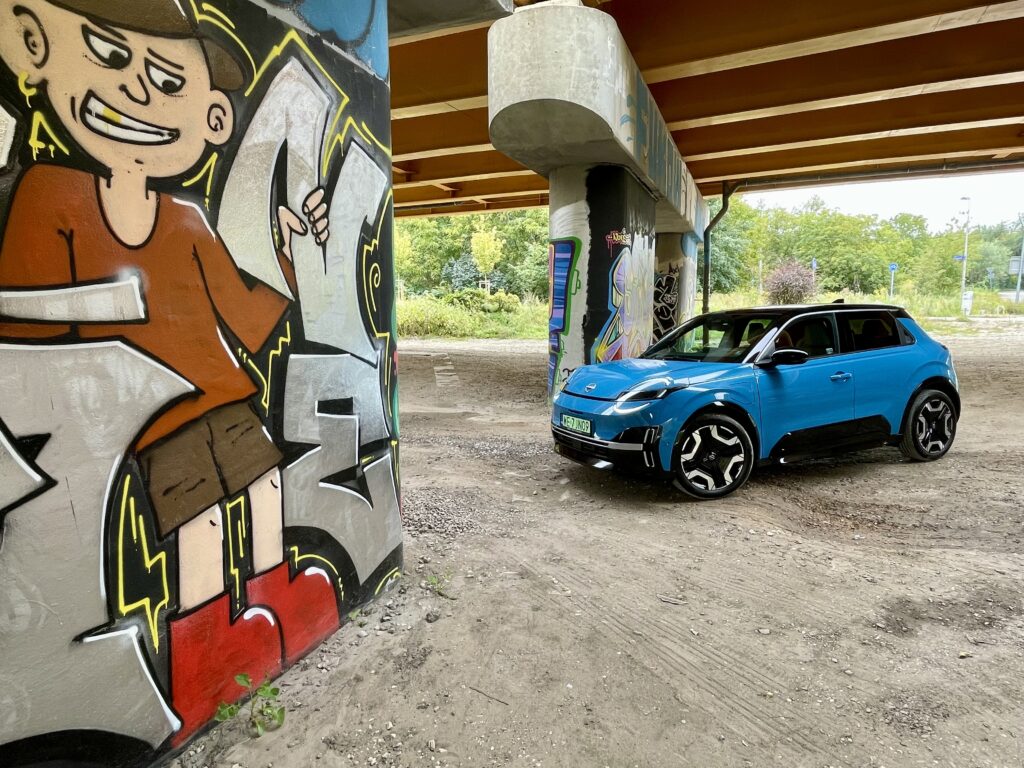
On the outside the e+ model stands out with its blue accents, but the most important changes are in the drivetrain. The motor now produces 217 hp instead of 149, and the declared range has grown from 270 to 385 km.
The cabin is spacious, although the batteries under the floor force the front seats to be mounted very high. The crossover-like driving position will not suit everyone. The boot has a capacity of 435 litres, although part of it may be taken up by a subwoofer, which makes the space harder to use. In that case the effective capacity drops to 320 litres. The car is comfortable to drive; it has a roomy, comfortable interior and a heated steering wheel and seats all round. The small turning circle is worth highlighting.

The Nissan LEAF was the pioneer of the segment and to this day sticks with the CHAdeMO charging system, which looks like a dead end. Others have gone for the CCS / Combo system. The final blow to CHAdeMO was dealt by Tesla when, launching the Model 3 in Europe, it chose the "German" standard rather than the "Japanese" one. But rapid chargers in Poland still have three connectors, and one of them is, of course, the one that fits the LEAF. This is unlikely to change for many years, which may guarantee LEAF owners... shorter queues at charging stations in the future.

Test summary
The Nissan LEAF is certainly a mature car, in which every improvement and new version is based on customer feedback and the experience of thousands of kilometres driven. The LEAF has been on sale since 2008 and there is no sign of its popularity waning. It is at the top of the zero-emission car sales charts, and the consistency with which the company promotes it shows that it pins serious hopes on it.